

Staititai or Ancient Roman pizza
>> Wednesday, September 23, 2009
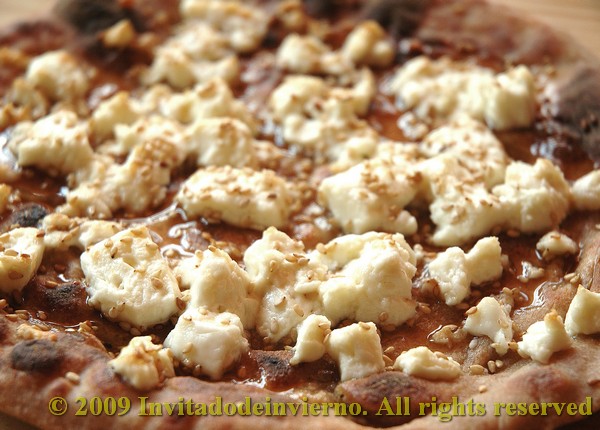
Some time ago I bought a book about Ancient Roman cookery, called exactly Roman Cookery, by Mark Grant, who is a British classics teacher. It includes quite a lot of interesting recipes, but the most interesting thing to me was to realize how different Mediterranean cooking was before the discovery of America and the spreading in Europe of crops that we now feel so naturally Mediterranean like tomato, pepper and many more. Take pizza for example... think about it, without tomato? Well, no problem, that's white pizza. But the dough would be made with spelt instead of white wheat. And you'd have neither red nor green pepper to add for garnish. There's a very simple and delicious pizza-like recipe in this book, cooked on a skillet instead of baked, named Staititai, coming from a book called The partying professors, by the Greek writer Athenaeus. According to Mr. Grant, this Greek book would be widely known in Rome.
The recipe calls for baker's yeast, but I used sourdough instead, because anyway that's what the Romans would have used. I'm trying to be more authentic than the author...
Staititai from Roman Cookery (tweaked for sourdough)
Filling for one pizza (20cm wide)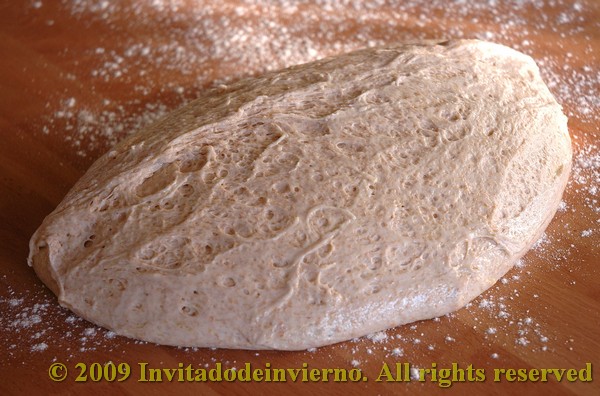
Mix the sourdough with the flour and the water. Leave to autolyse for 15-20 minutes. Then knead around 10 minutes by hand or 7-8 minutes with a blender, until the gluten is developed. Place into an oiled bowl, turn the dough so that the oil covers all the surface, cover with a plastic shower cap and leave till double in bulk. Mine took quite long to double, at least 6 hours. Then tip the dough on the counter, make a neat roll and divide the roll in 5 pieces. These pieces make small pizzas, around 20cm diameter. You can change the size of the pieces if you like by dividing the dough in more pieces (or less). Remember the pieces must fit into a skillet.
At this point I wrapped 4 of the pieces in plastic and put them in the freezer for a rainy day. I left one to proof in my refrigerator overnight, to eat it the next day. I work at home and I eat alone (sounds like an existentialist rhyming couplet). The next day I took the dough out and left it to temper for half an hour. Then I rolled it with a rolling pin to a 20cm-disc, more or less. I put a skillet on low heat, sprinkled it with olive oil and lay the disc of dough. It started to puff up nicely. When the underside showed quite some browned spots, I brushed some oil on the upperside and turned the disc. I waited for the whole thing to brown and cook, it puffed in a similar way to a pita bread. Switch on the oven grill in the meantime.
Fine, now you have a nice browned bread base where you can put the cheese and sprinkle the sesame seeds. The recipe's direction is to add the honey at this point too, but I preferred to add it after grilling. Then put the base with the filling under a hot grill and let the cheese get soft for 5 minutes or so, to your taste. Remember that feta doesn't really melt. You'll start noticing the wonderful smell of the roasting sesame seeds. If you're anything like me, the aromas will make you feel like pouring yourself a glass of white wine... ahem (I did). When it is sufficiently grilled (keep an eye on it, otherwise the bread can brown excessively), take it out of the oven and drizzle with the honey while warm.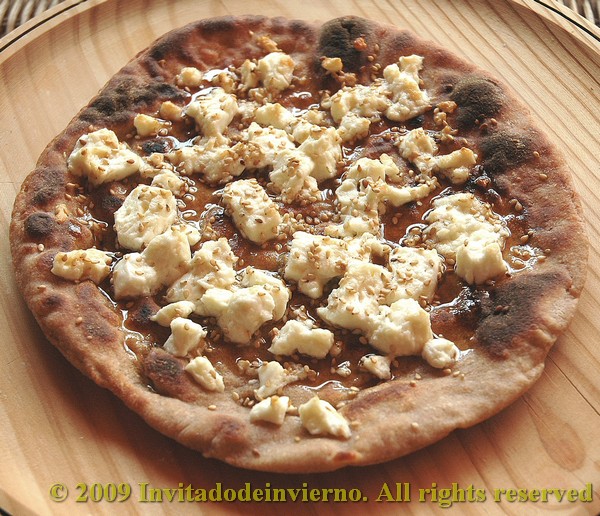
I must admit that I found the result stunning, much better than expected. I didn't think that such a simple combination of ingredients would make such a delicious dish. Trust me, the combination of the toasted sesame seeds with the cheese and the sweet touch of the honey makes a wonderful assembly! I could have eaten another one, no doubt. And this pizza cut in wedges and piping hot can make a very interesting appetizer... alongside some spiced olives... and a glass of wine... yes, I picture myself dressed in a tunic, sitting under a holm oak... overlooking some cliff by the sea... softly playing a lyre... don't you smell the Mediterranean? Wow, I get carried away!
This bread goes to Susan/Wild Yeast for this week's YeastSpotting.