Related Posts Widget for Blogs by LinkWithin

School of tapas: Grilled cuttlefish with roasted garlic alioli

>> Saturday, August 27, 2011
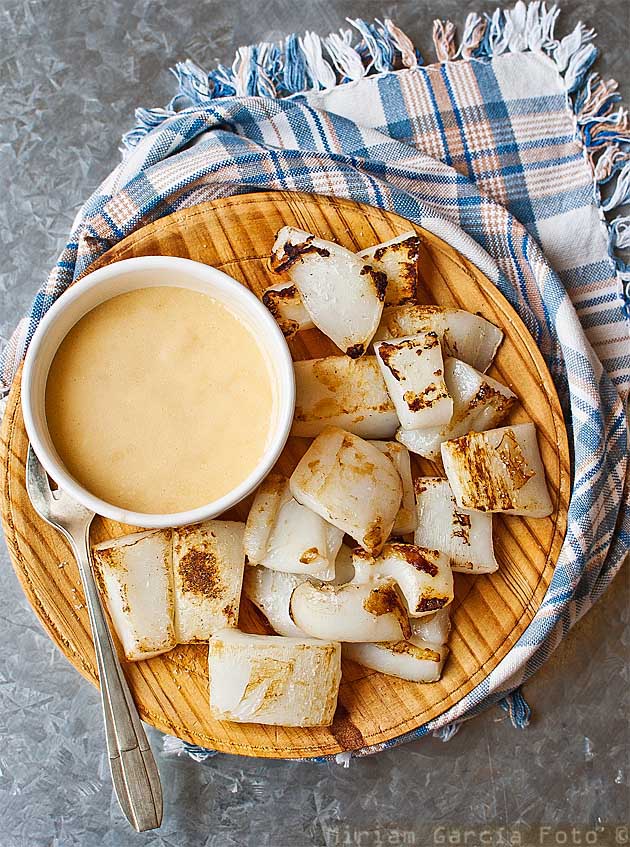
Grilled cuttlefish 2

Grilled cuttlefish... I'm sure many people outside Spain shudder at the thought. And even people from Spain (my kids, for example). But it is a very traditional food in the Mediterranean coast and well cooked and seasoned it can be utterly delicious. In this recipe the grilled cuttlefish chunks are dipped in a tasty alioli made with roasted garlic instead of raw, for a softer taste experience.


Cuttlefish belong to the same family as octopus and squid, and share features of both. In Spain they are easily found already clean at supermarkets, but if you attempt to clean them yourself... well, you can make a real mess in your kitchen. You need to remove tentacles, eyes and beak. Then you have to gut the head and extract the ink sack. After that, you need to get rid of as much outer membrane as possible (yes, cuttlefish have like an outer skin which is better removed). The clean head has a pleasant, firm consistency and a healthy white color. It can be sliced or cubed and cooked in a variety of fashions. On the other hand, tentacles can be cooked in fish stews or used to obtain a broth... have I already discouraged you to cook cuttlefish? Overcome prejudices and you will taste something truly delicious.

On the other hand, in the old days preparing tender cuttlefish used to be trickier than today. The thing can easily acquire a tough consistency, especially if you overcook it. But nowadays the first thing you need to do to tenderize the cuttlefish is to freeze it, if it hasn't been frozen before getting to the shop. Then you need to eliminate as much skin as you can. Lastly, the grill needs to be really hot before placing the cuttlefish chunks on it and they are to be cooked no longer than 1-2 minutes on each side.
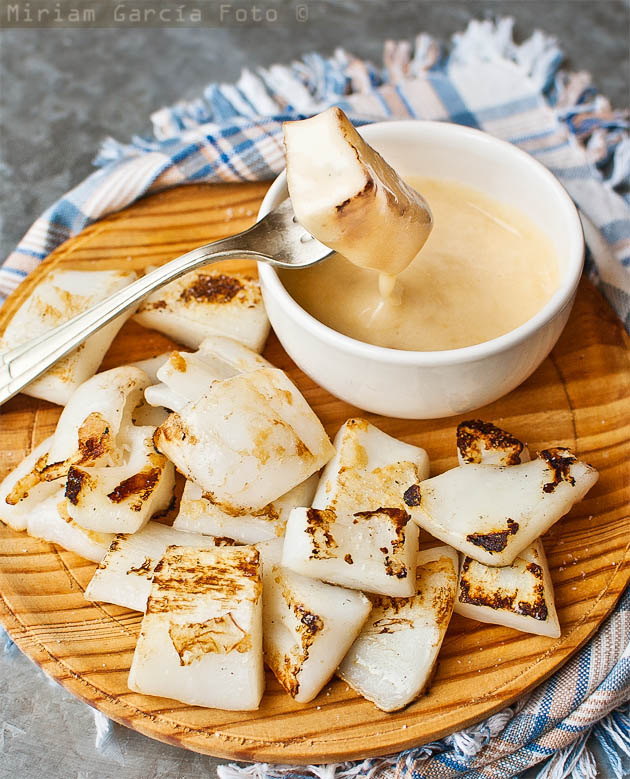
Grilled cuttlefish 1

Grilled cuttlefish with alioli
Yields 2 tapa sized portions

  • 1/2 cuttlefish head, clean
  • Virgin olive oil
  • For the alioli
  • 1 whole head garlic
  • 1/2 tsp salt
  • 1 medium egg and 1 yolk
  • 1 cup virgin olive oil
  1. First to the alioli: wrap the head of garlic in aluminum foil and roast in the oven preheated to 170ºC (340ºF) half an hour or till tender. Let cool and peel. 
  2. Mash the roasted garlic with the salt in a mortar. Transfer the mash to a food processor or blender, add the egg and yolk and mix thoroughly. 
  3. Measure the oil. Turn on the blender or processor at medium-low speed and start pouring the oil in a tiny steady stream, until you finish all the oil. Transfer the alioli to a container and set aside.
  4. Preheat a heavy skillet. Cut the cuttlefish head in bite-sized pieces and brush them with olive oil. When the skillet is hot, place the cuttlefish pieces to grill. They won't need longer than 1-2 minutes per side, in fact overcooking them yields a tough rubbery cuttlefish. 
  5. When done, serve them immediately with a bowl of alioli on the side. 
And enjoy! This roasted garlic alioli is also wonderful with all kinds of grilled meat and fish. So if you don't dare to try the cuttlefish, try at least this scrumptious dip.

Eager to know more?

Pickled aubergines from La Mancha

>> Monday, August 22, 2011

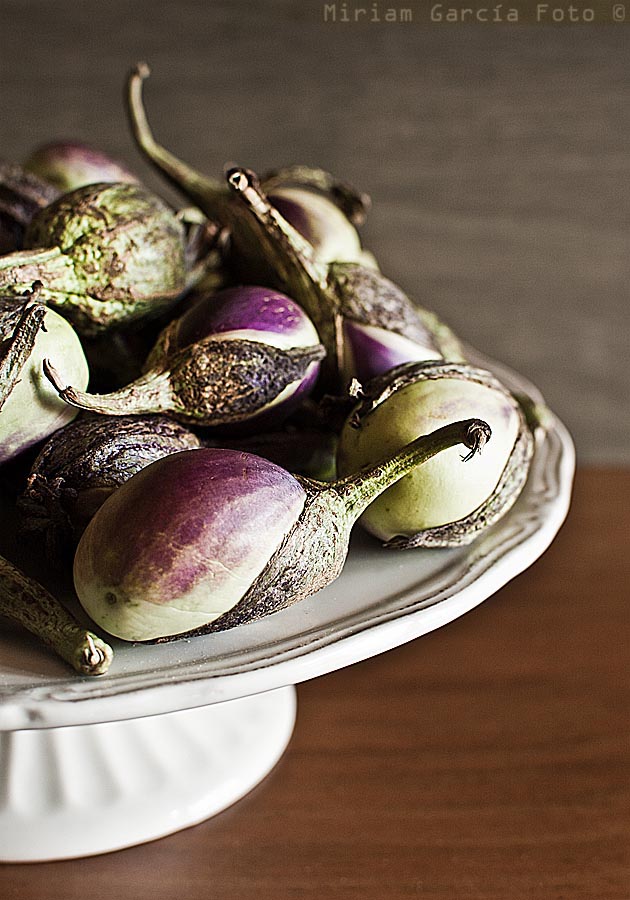
Berenjenas Almagro 2

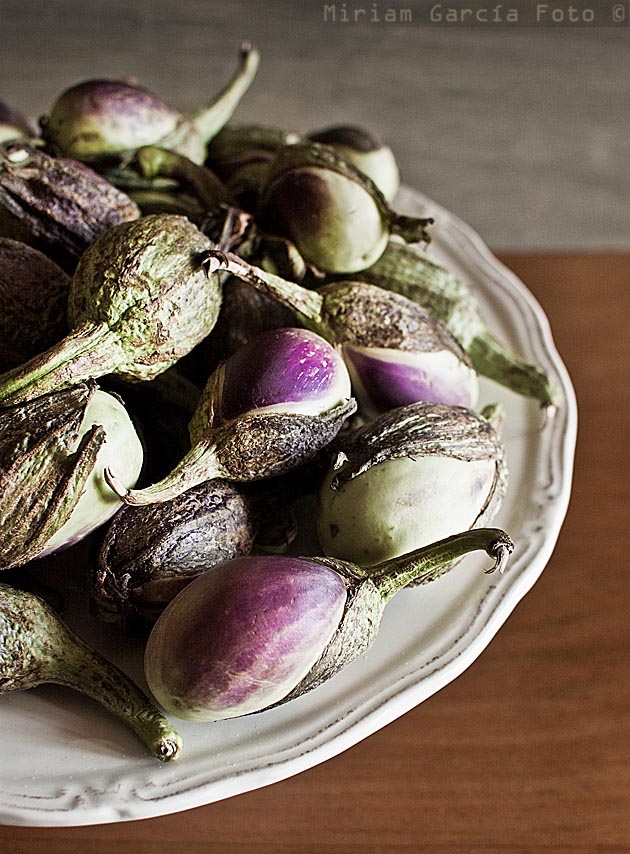
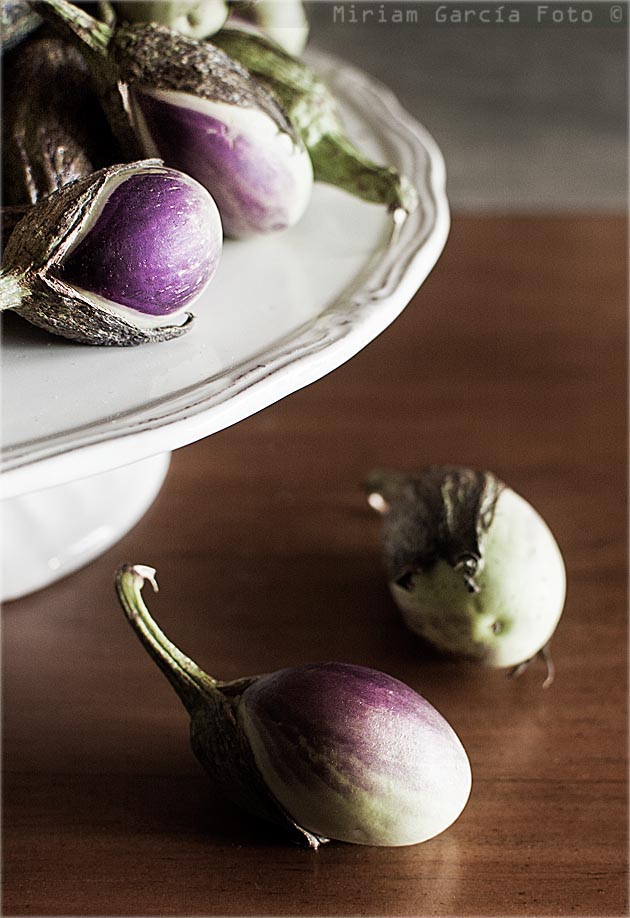
No, I was not missing. I was on vacation. The summer is hot here in the Spanish plateau, so we always flee from here for at least a week and head north. To wherever north. But... to the point: this post deals with Almagro aubergines or berenjenas. Almagro is a beautiful village in the plain of La Mancha, packed with historic highlights and known for its lacemakers and yearly Classical Theater festival. But also for its pickled baby aubergines. I love them. In Madrid you can spot them canned in any good food shop or supermarket, but I had never found them fresh. Till last week. I entered my favourite greengrocer's and there they were. Plump and fresh, waiting for me. So I felt the urge to buy 4 pounds, just in case. In case I get a craving for pickled baby aubergines in the middle of the winter.


Berenjenas Almagro 3

Almagro aubergines are a unique product from several villages of La Mancha. They are harvested while still small and unripe, and marinated in a dressing that normally includes vinegar, salt, cumin, garlic, sweet pimentón and olive oil in varying amounts, where they must remain up to a week before being eaten. They are sometimes stuffed with sweet red pepper. Like all things pickled or marinated, they are very easy to prepare, so their secret lies in the quality of the product and the seasoning. I especially love them on a bread slice, oozing their red sour juices. They are served as a tapa in the land of Don Quixote. I first tasted these eggplants an indecent amount of time ago, while visiting Almagro on a lacespotting expedition. I used to make bobbin lace before I had any kids. Sigh...

Being that Almagro aubergines are hard to find outside La Mancha, you can always try with any baby aubergines you might find.

Pickled aubergines Almagro style

  • 4 pounds (2kg) baby aubergines
  • 1 head garlic cloves
  • 1 tbsp cumin seeds
  • 1 tbsp sweet Spanish pimentón
  • 3 heaped tbsp salt
  • 2 cups (500ml) cider vinegar
  • Virgin olive oil to taste
  • Water to boil the aubergines
Berenjenas Almagro 1
  1. Cut the stalk of the aubergines and half the leaves, and wash thoroughly.
  2. Fill a large pan with water and bring to a boil. Cook the aubergines 5-7 minutes. Then drain and transfer immediately to a bowl of cold water to stop the cooking. Do not throw away your cooking water because it can be used to be added later to the pickling mixture. (The poor aubergines lose their beautiful color the moment they touch the hot water and adopt a greenish-brown hue, but nobody is perfect.)
  3. When cool, cut them lengthwise on one side.
  4. Prepare the dressing by mashing the garlic to a paste, then add all other ingredients. You can put everything, except the water and the oil, in a blender or food processor. A few pulses and it's ready.
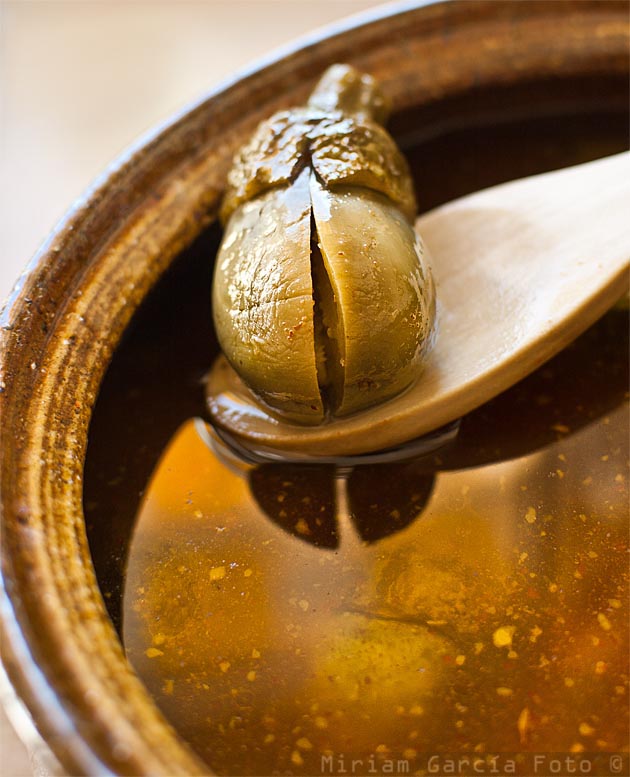
  5. Place the drained aubergines in a clay pot (that's the traditional way) then add the pickling mixture. Top with the cooking water to almost cover the aubergines and then add a good glug of virgin olive oil. I recommend to try the pickling liquid, and add vinegar and salt if it is too weak, or water if too strong. Note that the pickling liquid should be on the strong side to impart enough flavor to the aubergines.
  6. Let stand one week in the fridge, tossing from time to time. After four days you can try an aubergine to check the flavor and adjust the seasoning if necessary.
  7. These pickled aubergines can be preserved; my recommendations for that are the following:
    • Fill the jars leaving the smallest top space possible, well covering the vegetables with the marinade.
    • Use good quality vinegar of at least 6-7%.
    • Use containers and lids of glass or glazed ceramic, which are unaffected by acid.
    • Always use a wooden spoon to remove the vegetable pieces from the jars.
    • It is not necessary to sterilize the jars as the antiseptic action of vinegar prevents the growth of bugs (in spite of that I keep my jars in the refrigerator, just to be on the safe side). They keep at least for a month.
Berenjenas Almagro 4

Now I can face the end of summer sure that my family won't run short of aubergines in a while... Winter is coming.

Eager to know more?

Followers

About This Blog

Lorem Ipsum

  © Blogger templates Palm by Ourblogtemplates.com 2008

Back to TOP