

Related Posts Widget for Blogs by LinkWithin
Showing posts with label walnut. Show all posts

100% rye, cider and walnut bread

>> Tuesday, March 9, 2010
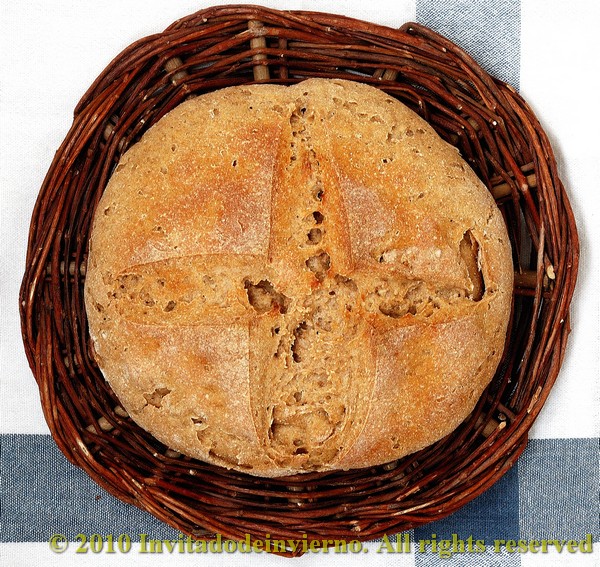
Rye cider bread 4

I haven't been baking bread lately. My sourdough passed away and my efforts to resuscitate it weren't successful. Maybe it's because of this year's neverending winter and my kitchen being the coldest room in the house. And being that I've become a real bread snob, using commercial yeast doesn't seem an elegant option anymore... it would be sooo totally unlike me... ahem. The thing is that I should already be feeding a new sourdough, but the mere thought of it makes me very lazy... However I recently found this recipe and I couldn't resist making it with commercial baker's yeast (yikes!), even renouncing my principles. Let's roll in the mud.


Mr. Lepard man publishes a new recipe every weekend in the British newspaper The Guardian. His recipes are always original; I love them. This recipe was published last February 6th and it caught my eye for various reasons: the first is that it's a 100% rye bread, which I love, the second is that includes cider, and the third is that the baking starts in a cold oven. I wanted to try the cold-oven-thing. I guess that as rye breads hardly exhibit any oven spring, a high start temperature is not as critical as for wheat breads, which need a sudden increase in ambient temperature to rise properly. To spice up the bread a bit, I added a large handful of walnuts, a good match with rye.

100% rye, cider and walnut bread adapted from Dan Lepard

Preferment:

  • 200g dry cider
  • 1 tsp cider vinegar
  • 5g fresh yeast (the original calls for 1 tsp active dry yeast)
  • 150g rye flour
Dough:
  • 150ml warm water
  • 1½ tsp salt
  • 300g light rye flour, plus some more for shaping
  • 2 handfuls walnuts
Use organic flour if possible, with germ.
Rye cider bread 1
  1. The night before baking, mix the cider, vinegar, yeast and flour in a container, then cover and let it ferment at room temperature.
  2. The next day add the rest of the ingredients to the preferment and mix well till you get a smooth paste. A 100% rye mixture can't really be called a dough... you can't knead it. Cover and let it rest for half an hour. The dough smells of cider... if you close your eyes you can imagine you're in a cider brewery.
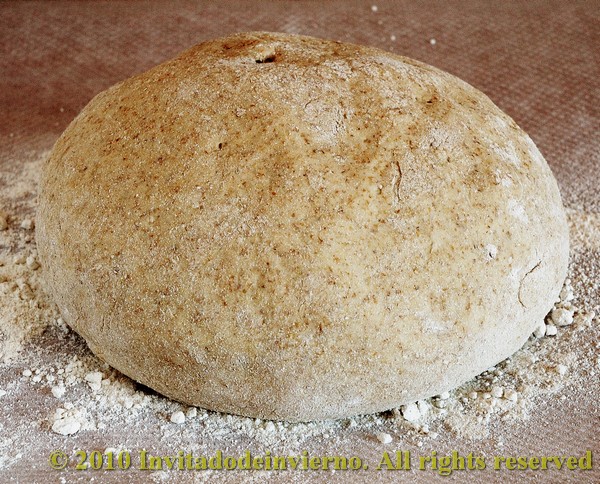
  3. Place the dough on a floured counter and pat it into a ball, not too flat, as it will expand horizontally when fermenting and in the oven. Prepare a nice piece of parchment paper, flour it and lay the ball on it.
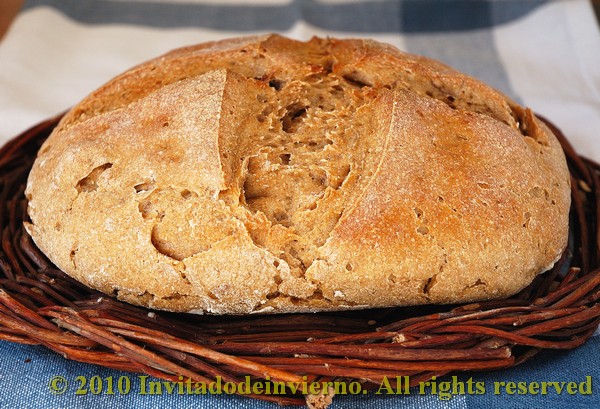
  4. Score a cross on top of the bread, grab the paper, lift the paper awith the bread on and place the whole thing into a Dutch oven or a similar ovenproof pot, large enough to hold the bread. Cover with the lid and leave to rise.
  5. When doubled in bulk (my bread took 1 1/2 hours), put it into the cold oven. Turn the heat on to 200ºC (180ºC convection type like mine) and bake for 30 minutes. Then take out the lid and bake for another 15 minutes. After the first half hour my oven hadn't reached the instructed temperature, so I waited for 5-8 additional minutes for the oven to get to 180ºC. I took the lid off then and baked for somewhat longer than the instructed 15 minutes (the bread didn't look golden enough). As a summary, I baked 35-40 minutes lidded and 20-25 minutes unlidded. The real baking time depends on the oven, so you must watch the bread carefully and adjust the times.
Rye cider bread 3

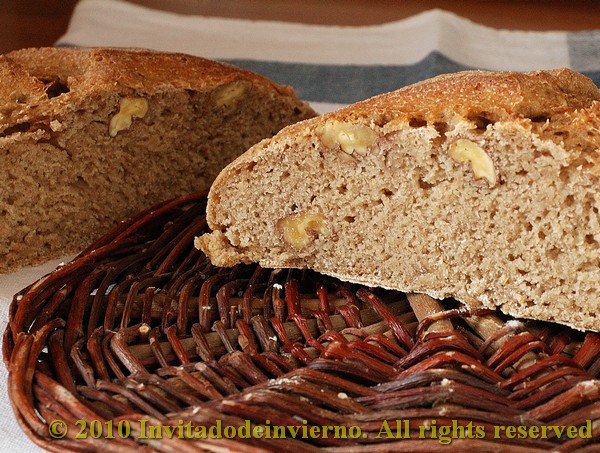
The result is fantastic. A soft bread with a very pleasant cider aroma. The crust could have been a bit crispier, but this way the bread is easier to cut. Sometimes you really have to wrestle with rye breads in order to cut them. This is not the case: Mr. Lepard man, you got it right as usual.
Rye cider bread 5

And after a long time, this one goes to Susan's Yeastspotting!

Eager to know more?

Followers

About This Blog

Lorem Ipsum

  © Blogger templates Palm by Ourblogtemplates.com 2008

Back to TOP