Related Posts Widget for Blogs by LinkWithin

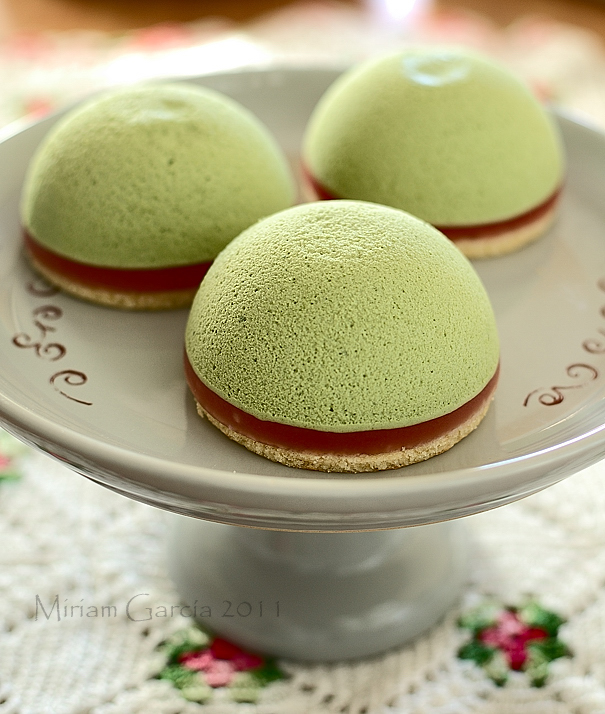
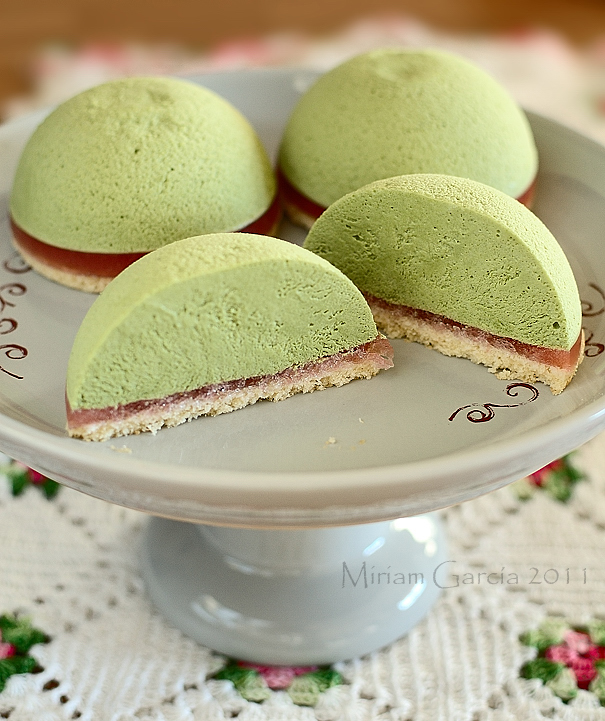
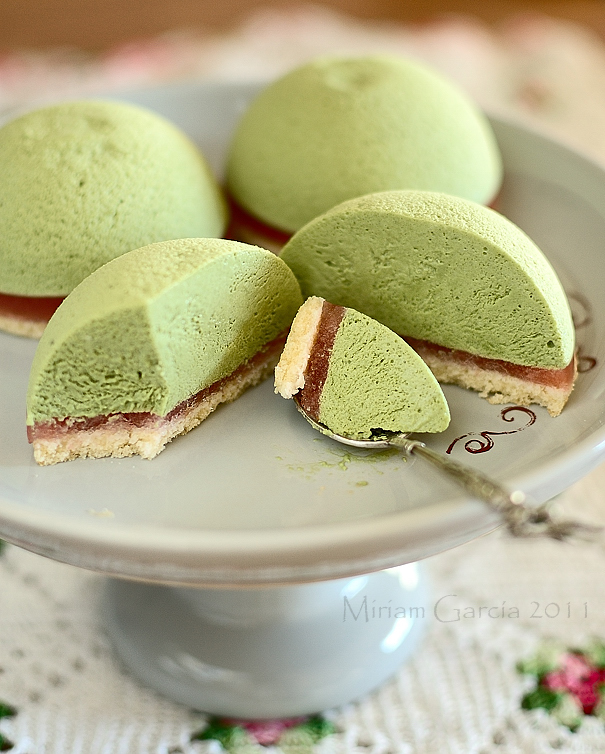
Matcha tea mousse pies and Japan in our minds

>> Monday, March 21, 2011

Image from Wikimedia Commons

No matter how hard we try to plan our lives, they can always be disrupted. And nature is unpredictable. I would have preferred not to have any reason to make this recipe, but Japan is in everybody's mind these days. So in remembrance of the Japanese people I have prepared this simple recipe for little mousse pies. These sweets have the subtlety of flavors so common in Japanese cuisine and are relatively easy to make, and furthermore eye-catching. The post header image is a painting by Japanese painter and engraver Hokusai, of the Edo period, executed between 1830 and 1833, and it is called... tsunami. This artist deserves to be as famous as Van Gogh, at least, but we Westerners are pretty ethnocentric... I love this painting since I was a child because this type of painting unmistakably reminds me of... Tintin books. They are obviously inspired by that art style, just take a look at the next picture. And Tintin stories have always been among my favorite readings.

Image from this blog

Before I give you the recipe, I just want to remind you that there are various charities where you can contribute to the Japanese earthquake and tsunami relief, like the Japanese Red Cross, or even one of those bakesales for Japan that are being organized here and there.

In Spain, a Japanese girl called Makiko and living in Madrid has set up a blog to ask for people to contribute by making an origami crane. The blog is called 1000 grullas por Japón, meaning 1000 cranes for Japan. It is a Japanese tradition to make 1000 origami cranes when you want to make a wish come true. This is my crane:


Once you have your crane, you have to take a picture and send it to Makiko. She will gather all the crane photos and send them to her family and friends in Japan. I found it is a beautiful initiative.

For the matcha tea mousse I have used the recipe I used for this cake, just remember to whip the cream only to soft peaks, so that the mousse is fluid enough to fill all gaps and render a smooth and marvelous little pie. I happen to have a wonderful set of silicone bombe molds, like the ones depicted here, perfect to make these little pies. Oh, and I also recommend that, as in this case the slightly bitter taste of matcha tea mousse is not offset by the same amount of other sweeter mousse, better increase the amount of sugar from 40g to 60g. For the coulis jelly layer I used strawberries, which can already be found in stores.
Matcha tea sweets 1

Matcha tea mousse pies
For the cake base:
  • 100g uncooked marzipan
  • 90g egg (I used 2 medium eggs, which is slightly more than that)
  • 25g butter
  • 30g AP flour
  • 1g baking powder
  1. Preheat the oven to 190ºC.
  2. Weigh the flour and the baking powder, sieve them together and set aside.
  3. Heat the marzipan to 50ºC in the microwave oven. Put it in a bowl and mix with the egg. Whip with a mixer till white and fluffy.
  4. Melt the butter; add it little by little to the marzipan mixture while whipping.
  5. Add the flour mixture and mix well.
  6. Carefully spread the batter on an oven tray lined with parchment paper, with and offset spatula or something similar, as the batter layer needs to be quite thin. Bake for 6 minutes or till browned at the edges. Take it out of the oven and leave to cool on the paper.
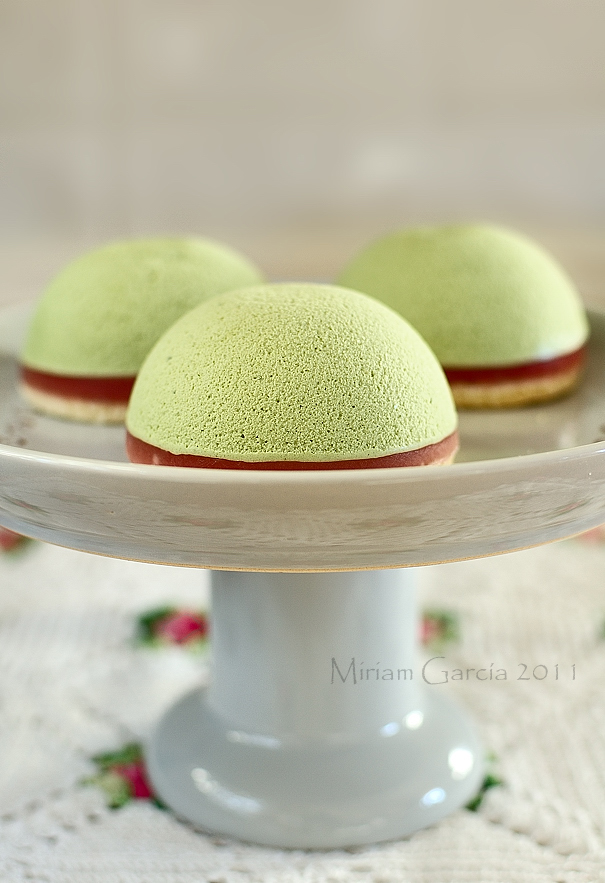
Then prepare the tea mousse as per this recipe (please remember to add 60g of sugar instead of 40g) then pour the mousse in the molds, leave room on top to add the strawberry jelly later (the cake circle can be put on top, there is no need to fit it into the mold). Leave the mousse to set in the fridge.

Matcha tea sweets 2

For the strawberry jelly:
  • 80g strawberries
  • 1 sheet gelatin
  • 1 tsp sugar
  • 100ml water
  1. Put the gelatin sheet in a bowl of cold water to hydrate as per the manufacturer's instructions. 
  2. In the meantime process the strawberries and heat the resulting puree in a saucepan; add the water little by little if it is too thick. Sieve the puree to eliminate the seeds. Then bring it to boiling point again and add the gelatin. 
  3. When the gelatin is dissolved, turn the heat off and leave to cool. 
Matcha tea sweets 3

To put everything together:
  1. When the jelly is at ambient, pour it on the set mousse portions. Take it to the fridge again for the strawberry jelly to set.
  2. Use a pastry ring or large cutter to cut circles off the cake of the same size as the mousse in the molds (I am lucky enough to have a pastry ring of the same size as my bombe molds), then carefully lay them on top of each little pie.
  3. When the pies are thoroughly cold, take them to the icebox, so that they can be easily unmolded without ruining them. When completely frozen, get them out of the molds and wait until thawed. You can leave them to thaw in the fridge.
Matcha tea sweets 4

Of course this mousse can also be used to fill small pastry rings or tiny tart rings, or even use it all in one cake for a layer. It is also good in small glasses, perhaps placing the cake crumbled at the bottom and the mousse on top. Mousses are very versatile, we all know. The recipe amounts are not very balanced, because the mousse was enough for my six bombe molds of about 7cm diameter and a layer for a 20cm cake, while the marzipan cake was just a little over the amount necessary for the 6 circles and for the jelly I had to increase the quantities a little (all changes already reflected in the amounts I am giving). I love mousse desserts, they are light and beautiful. In addition, this mousse in particular is not very sweet and you eat it without hardly noticing...

Eager to know more?

Potatoes sarladaises

>> Monday, March 14, 2011

Pommes de terre sarladaises 1

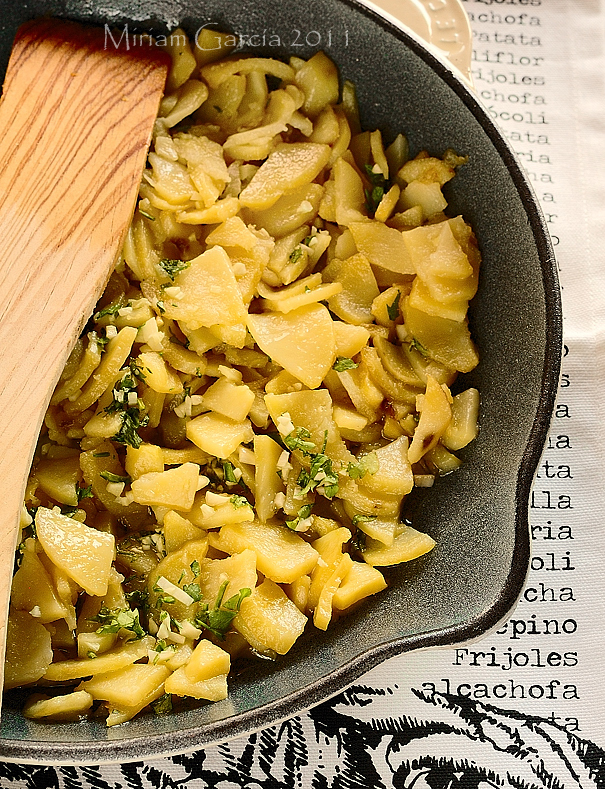
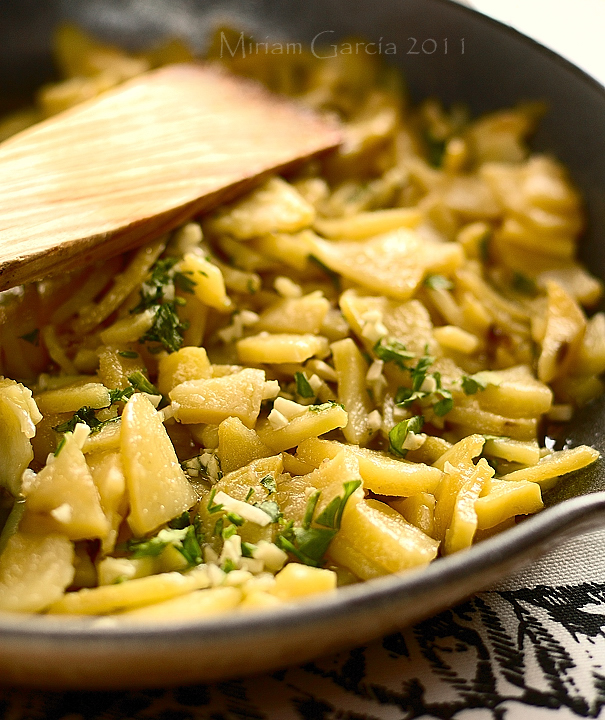
How did I happen to make this French dish? Well, after eating a delicious piece of delicious duck confit I found myself with a bowl of delicious duck fat... If you have ever tried duck confit you know what I am talking about. And with the good intention to use up this very clean and beautiful fat I stumbled upon this recipe. Mais oui. Sarladaise potatoes are named after the town of Sarlat-la-Canéda in the department of Dordogne, Aquitaine region, southwestern France. Another one of the thousands of places where I would love to go. The peculiarity of these potatoes is that they are fried in duck or goose fat, which gives them a wonderful flavor and aroma... If on top of that they are accompanied by some delicious mushrooms for example (or Perigord truffles if you are very lucky)... you have a delighful dish, simple and sturdy for these still cold days, although the trees are already timidly poking their shoots.


In Spain pork lard or duck fat are hardly ever used nowadays. Doctors have outlawed them and olive oil is widely used for frying instead. But from time to time we can look back and use those two fats, very common in the cooking of the past. And all because now we spend the whole day sitted, instead of sweating and toiling in the fields. I could philosophize about the drawbacks of modern life and our sedentary lifestyle, but I don't feel like it today. Besides, I'm not a very sportive person myself... What I find really sad is that modern life imposes on us a reduction in the variety of our food and, above all, taking much less advantage of the produce around us. Instead, we love to eat cherries in winter, just brought from the other side of the world... but I will knock it off now, I don't want to bore you... again.

I stray from the subject. And the subject is that there are leftovers recipes that are at least as good as the ones in which all ingredients are brand-new. Like this one. Strongly recommended. For this recipe I risk clogging my arteries. And this fat can be easily frozen, divided into small containers to add them to dishes like these potatoes, also mashed potatoes, artichokes, beans... you name it. Above all, don't throw it away, please.

Pommes de terre sarladaises 2

Potatoes sarladaises (from French Cooking, de Delorme, Boue y McLachlan)

For 2 servings:

  • 2 large potatoes
  • 7 or 8 heaped tbsp duck fat (or as much as you deem necessary to easily stir-fry the potatoes)
  • 1 large garlic clove
  • Some sprigs parsley
  1. Peel the potatoes. Cut them in four lengthwise and then in 2mm thick slices.
  2. Heat the duck fat in a skillet and add the potatoes. Stir-fry on high heat till they brown a little, then lower the heat and let them sizzle slowly, covered. Keep an eye on them to prevent them from sticking to the bottom, toss every now and then. The cooking time will depend largely on the quality of the potatoes.
  3. In the meantime, prepare the persillade, a mixture of very finely minced raw garlic and parsley. When the potatoes are cooked, turn the heat off, season them to taste and sprinkle the persillade on top. Cover and let them stand 15 minutes, for them to absorb the aromas.
And there you have a great side dish or, as I said before, a great first course when accompanied by a more nourishing ingredient. The French, who are very wise, sometimes accompany them with truffles... but my budget for this month didn't allow for such feasting... In addition, I shouldn't spend more than necessary just to use up the fat... Was I not preaching frugality? Me?

Eager to know more?

Madeira cake and a very British Oscar

>> Tuesday, March 8, 2011

Madeira cake 3

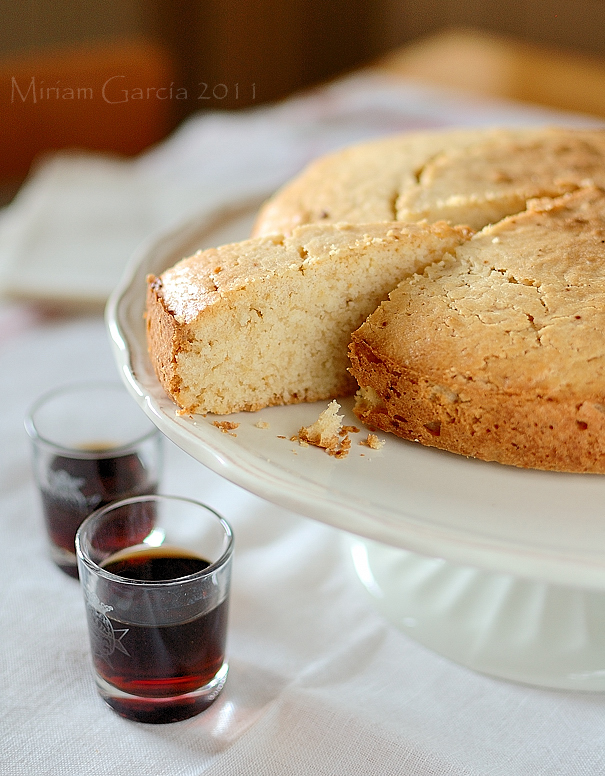
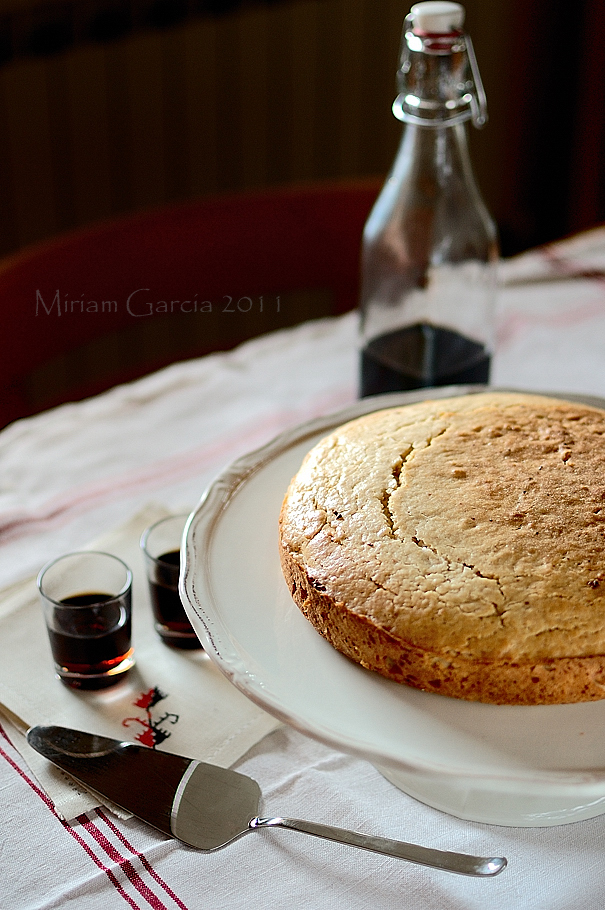
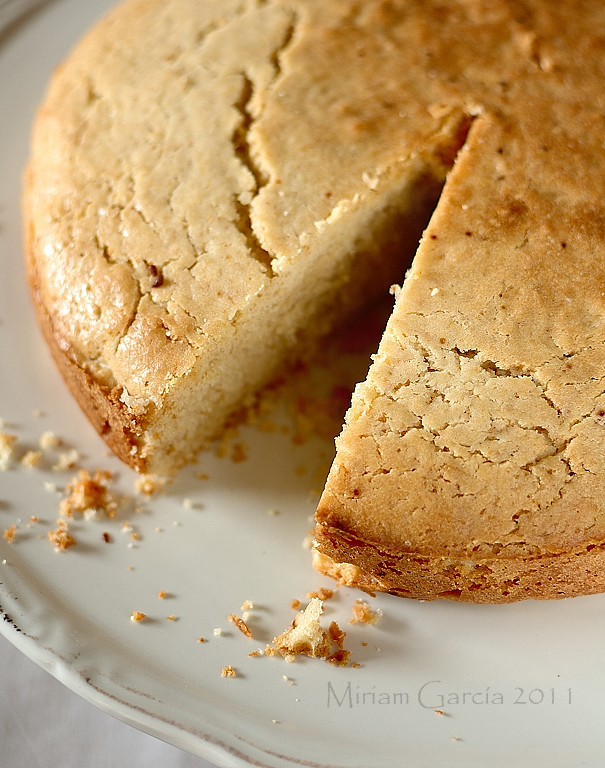
This post is dedicated to Colin Firth. Why? Because I want to. Because I feel like it. For his freshly baked Oscar. Because he's been one of my favorite actors for hundreds of years. Because he's had to wait to have wrinkles, to lose some hair and for his cheeks to drop for critics to appreciate his performing art. Instead, we all know that Nicole Kidman, an instance among many, is a smashing actress ever since she was born. Yeah.. Maybe the film critics are mostly men? That's the reason why I recently made this utterly British classic, that the Britons used to have for high tea while sipping a glass of sweet Madeira wine with their little finger raised, hence the name of the cake... This is a touch of genius, nothing better than sweet wine to accompany this luscious cake... In fact the cake is quite a normal cake flavored with lemon, but if you picture Mr. Darcy tasting it, it suddenly and unexpectedly becomes more appealing...


Precisely because of the almost-zero recognition of movie hunks by the film critics, I worship George Clooney, because the guy must be as sharp as a tack for winning an Oscar before needing a walking stick (okay, who won for a role where he was hardly recognizable, with 20 kilos overweight). Okay, I worship him for this and for some other reasons I will not mention. It's not that I feel quite the cinephile lately, I always do because I love cinema, of course good cinema (you're wondering what good cinema is? In my blog I say what is good... and what is not). I just do not usually talk about it here, it does not usually fit with the recipes I post. This time it did not fit either, but I could not resist myself. What for?

Madeira cake 1

The recipe for this cake, born in the 18th century, comes from a cute British cookbook published by Harrods, oh dear, quintessentially British (the Anglophile in me again). It also caught my attention because it carries a small proportion of rice flour, and since I had a brand new brown rice flour, I told myself this cake was the opportunity I expected. But fear not, the few healthy brown rice molecules are well neutralized by tons of butter...

To the point:

Madeira cake

  • 150g soft unsalted butter
  • 100g caster sugar
  • 225g AP flour
  • 50g rice flour
  • Juice and zest of one lemon
  • 2 tsp leavening agent (or 2+2/3 tsp baking powder)*
  • 4 medium eggs
  • Candied lemon peel (optional)
*To prepare a leavening agent you mix cream of tartar with baking soda. This agent is like any store-bought baking powder, that is, a mixture of an alkaline compound, sodium bicarbonate, with an acid, in this case the cream of tartar. The acid and the alkali get in contact when dissolved in the liquid of the batter and they react. The acid-alkali reaction releases carbon dioxide that makes the cake or cookie rise. In the case of store-bought baking powder, acid usually has a slow-action or is activated only by heat (that is, the reaction will not start until you put the batter in the oven). On the contrary, cream of tartar acts very quickly, immediately on dissolving in the liquid. If the dough has an acidic component, such as buttermilk, depending on the amount it might not be necessary to add the cream of tartar, but only the baking soda. Equivalence between store-bought baking powder and the mixture of baking soda and cream of tartar is as follows:
1 tsp of baking powder equals:
  • 1/4 tsp baking soda + 1/2 tsp cream of tartar or
  • 1/4 tsp baking soda + 120ml acid liquid, like buttermilk, sour milk or yoghourt
The ratio of cream of tartar to baking soda must always be 2 to 1, that is, double amount of cream of tartar. Well... sometimes my past as a chemist just shows. Source: On food and cooking, Harold McGee, and Joy of Baking.
  1. Preheat the oven to 180ºC if conventional, to 160ºC if convection type. 
  2. Whip the soft butter with the sugar till white and fluffy. 
  3. In the meantime, weigh and sieve the solid ingredients, set aside. Zest the lemon and add the zest to the flour mixture. 
  4. Crack the eggs and mix with the lemon juice. 
  5. When the butter and sugar mix is ready, add the solids and the eggs alternately, in 2 or 3 batches, mixing all the time at a slower speed than before. 
  6. Line a 18cm cake pan with parchment paper. When the batter is ready, pour it in the pan (it will be quite thick) and smooth the surface with a spatula. Bake immediately as the cream of tartar will start acting at once.
  7. Bake for one hour. Unmold and let cool on a wire rack. 
Madeira cake 2

I have to agree with the British: the obvious lemony taste of the cake along with its dense texture (but not heavy), coupled with a deliciously crispy crust combines beautifully with a good sweet or raisin wine... hics.


And last but not least (I've been forgeting to mention this for a month already). I was one of the judges for the photographic contest DMBLGIT, January edition, hosted by the very lovely Katherine of A girl in Madrid... Check the winners at her site. I do apologize for not posting this earlier, I kept forgeting all the time! And the experience was a tough one, so many beautiful photographs to choose from... Congratulations to all the winners, it was well deserved.

Eager to know more?

Morcilla beignets by Santi Santamaría and the giveaway winner

>> Tuesday, March 1, 2011

Buñuelos morcilla 1

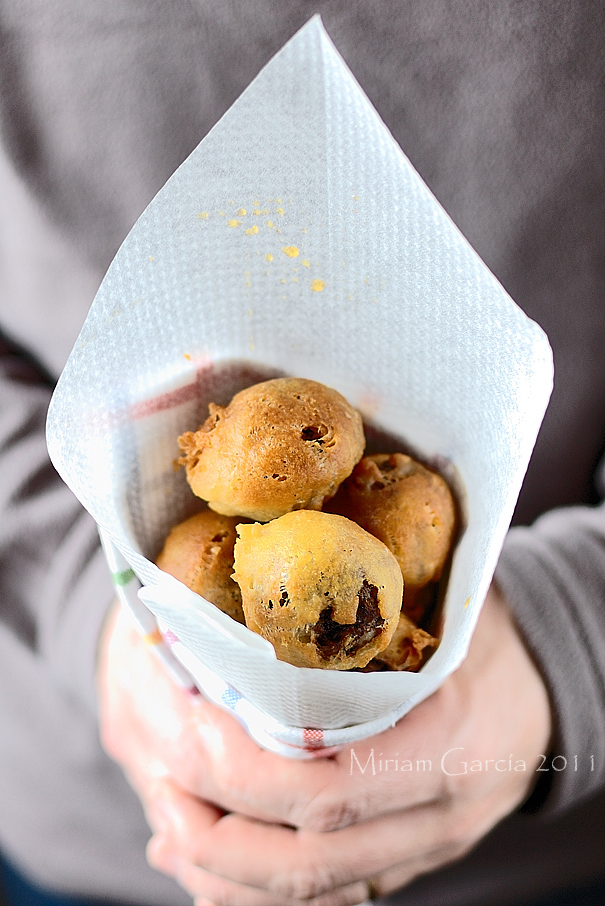
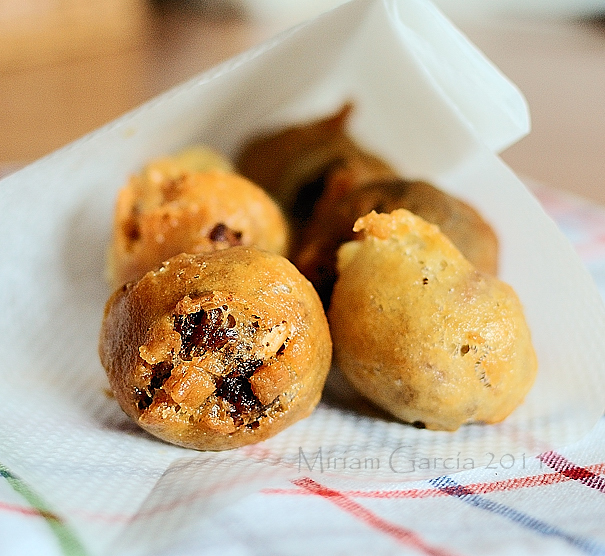
This entry is a humble homage to a good chef, who's recently died at a too early age... Three-star Michelin chef Santi Santamaría was a Catalan chef famous for his restaurant Can Fabes, close to Barcelona. When I learned of his death some days ago, I immediately thought of making one of his recipes, being that I have a couple of his books. But as unity is strength, I decided to participate in the common homage effort started by the Catalan blog De cuina, to get a lot of blogs to cook a Santamaría recipe on the same day. And the initiative was a success. I had been craving for some dish with morcilla, the typical Spanish blood sausage or black pudding (don't sneer), for quite a while, so when I saw Santamaría had a recipe for some wonderful tapa of morcilla beignets my search was over. And the result was well worth the effort.


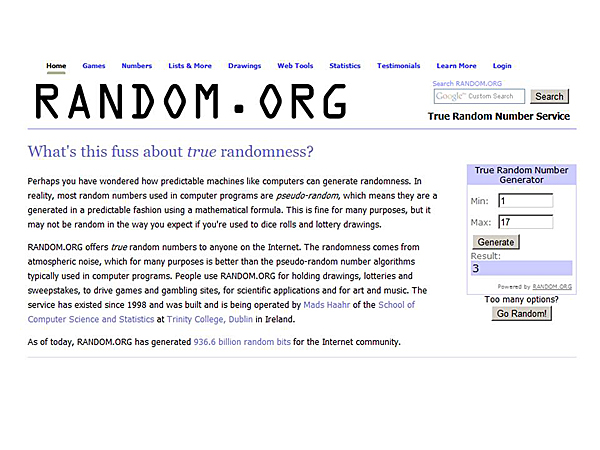
First to the winner of the CSN giveaway! The lucky winner of the $75 gift code is Prerna, from the very lovely blog Indian Simmer! Congratulations, Prerna, I hope you buy something to help you create even more delightful recipes for us to enjoy.

CSN giveaway

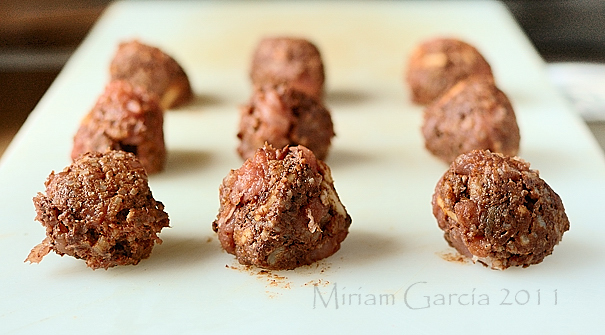
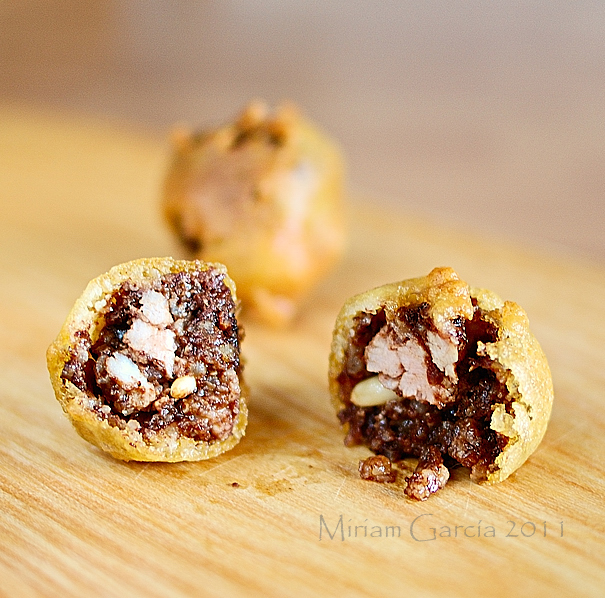
I guess morcilla is one of those things that can make you cringe when haven't grown up with it. I admit the color is not very inviting... humans don't really eat many black foods. In Spain morcilla is a soft sausage made with onion, rice, pork lard, pork blood, salt and quite some spices such as pimentón, pepper, origan, cumin and aniseed in varying amounts. I don't see why this could be more disgusting than having fish raw, or eating slimy creatures like octopus. Or sea urchins. Or even moldy blue cheeses. It's a cultural thing and an acquired taste. And a chance for the ones that have never tried it to be a little more... adventurous (maybe I should ask myself whether or not I am adventurous foodwise before advising the rest of the world to be... I still fill nauseated at the memory of Anthony Bourdain gobbling down a snake heart). I have taken the liberty to modify the filling slightly, eliminating the bread soaked in milk (something I've never really liked in meat balls) and egg. I found my Burgos morcilla unctuous enough to perfectly bind the filling mixture. And I had no desire to lighten the fierce flavor of the sausage, which I love. I added a handful of pine kernels, which to my taste combine wonderfully with morcilla. I am including the directions for the original recipe anyway, in case anyone prefers it that way. And the formula for the frying batter was superb, tasty and unbelievably crispy, undoubtedly a keeper because it stays crisp for a long time.

Buñuelos morcilla 2

Morcilla beignets
Yields 25-30
For the filling:

  • 200g good rice morcilla
  • 120g pork meat (only 100g in the original)
  • 1 good handful pine kernels
  • Salt to taste
  • (in the original: also 100g bread crumb soaked in milk and 1 egg)
For the frying batter:
  • 200g AP flour
  • 25g instant mashed potatoes flakes
  • 15g baking powder
  • 10g sugar
  • 5g salt
  • 45ml olive oil
  • 200-250ml water (depends on the flour absorption ability)
Buñuelos morcilla 3
  1. Grind the pork meat or dice it very finely with a knife.
  2. Peel off the casing of the morcilla, put the morcilla filling in a bowl with the pork meat and mash the soft morcilla filling with a fork. Mix thoroughly. Add the pine kernels and season to taste.
  3. To prepare the frying batter, mix the solids with the olive oil using a mixer. Then add the water little by little in a steady stream while mixing. The final consistency should be that of a thick custard. Leave to rest 20 minutes, for the flours to hydrate and the baking powder to start acting.
  4. Using 2 teaspoons, shape small meatballs the size of a small walnut and set aside.
  5. Heat plenty of olive oil in a skillet for deep-frying the beignets or use a deep-fryer, to approximately 180ºC.
  6. Place the frying batter in a shallow bowl or container and dip the meatballs. Coat them in the batter thoroughly and dip them in the hot oil with a teaspoon.
  7. When golden, take them out to a paper towel to soak some of the oil. And eat them while warm!
Buñuelos morcilla 4

You see, Mr. Santamaría, we will always have your recipes.

Firma 200px

Eager to know more?

Followers

About This Blog

Lorem Ipsum

  © Blogger templates Palm by Ourblogtemplates.com 2008

Back to TOP