Related Posts Widget for Blogs by LinkWithin

Torrijas, a Spanish Easter treat

>> Saturday, April 23, 2011
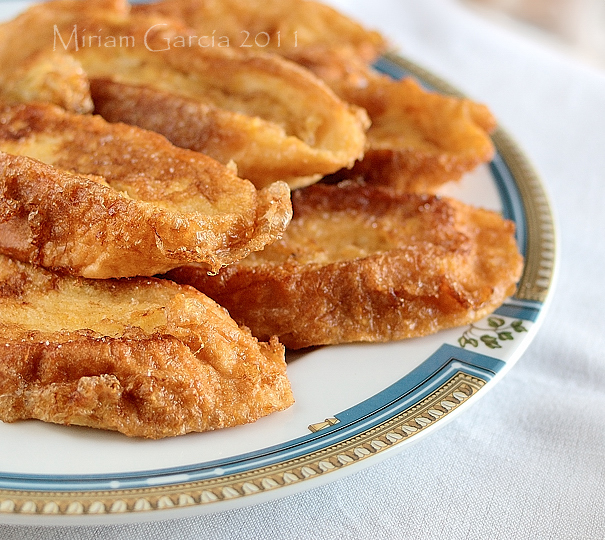
Torrijas 1

All relevant religious holidays in Spain have a reflection in the food. Spain was a strictly Catholic country for centuries with the liturgical periods tightly marking the habits, and with food rules that had to be obeyed. Though nowadays the religious rules regarding food, like fasting on certain days during Easter, are largely overlooked, funnily enough the food traditions remain and making torrijas for the Easter celebration, usually a labor holiday lasting four days, is one of them. Also you can find them in pastry shops, restaurants and bars all over the country during this period. Torrijas are apparently a rather ancient recipe, as they first appear quoted by a Spanish author in the 15th Century. Now... listen to yours truly pronouncing this funny word here.


Torrijas are a very simple dish, very similar to French toast and pain perdu, most often made by soaking slices of stale bread in sugared milk, also flavoured with cinnamon or vanilla, then bathed in beaten egg, fried in oil and sprinkled with a mixture of sugar and powdered cinnamon. In fact, another one of the many ways developed by the not so well-off to use up bread leftovers. Though today bread especially baked for the purpose of making torrijas can be bought. As it usually happens with most traditional dishes, the perfect ingredients and method are controversial matters, torrijas made with sweet wine instead of milk and others bathed in syrup after frying being also popular. And of course, the best torrijas are always one's mother's, no discussion about it!
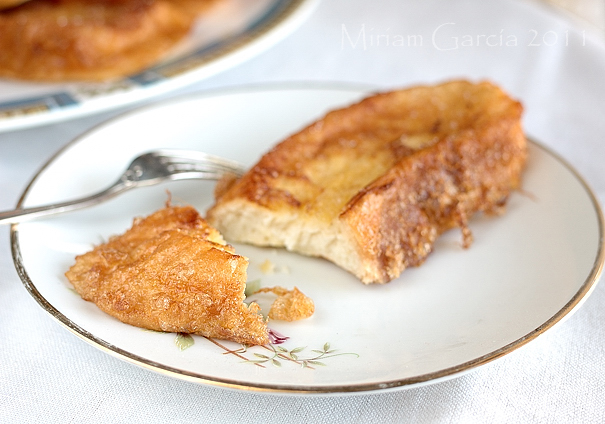
Torrijas 3

Homemade torrijas


By Miriam García
Published: April 23, 2011
Torrijas are a very simple dish, similar to French toast and pain perdu, most often made by soaking slices of stale bread in sugared milk, then bathed in beaten egg, fried in oil and sprinkled with cinnamon sugar.


4.0 stars based on
35 reviews


Prep time: 1 hour 15 minutes
Cook time: 45 minutes
Total time: 2 hours
Yield: 16

Ingredients
  • 4 cups (1 liter) milk
  • 3 tbsp sugar (or honey if you prefer)
  • 1 stick cinnamon
  • 3-4 medium eggs
  • Sunflower oil or other insipid oil for frying
  • Sugar and cinnamon for sprinkling
Cooking Directions
  1. Cut the bread into 1 inch (2.5cm) slices. Arrange them on a shallow dish that can hold the milk.
  2. Put all the milk in a saucepan with the sugar and the cinnamon stick, bring to a boil. Turn off the heat the moment it starts to boil and leave to infuse for 5 minutes.
  3. Pour the milk on the bread and let soak for one hour.
  4. Beat the eggs in a plate large enough to hold at least one torrija.
  5. Heat the oil to medium in a large frying pan that can hold several torrijas at the same time. With a spatula (the bread might be overly soft), carefully transfer the soaked slices one by one into the egg and turn them to coat. Then transfer the slices to the hot oil.
  6. Fry for a couple of minutes on each side, until brown.
  7. Take out to a dish lined with a paper towel and thoroughly sprinkle with sugar and cinnamon. Enjoy warm or cold.
Tips for superb torrijas: I find the result is best when you let the bread go very stale before soaking, so that the slices can soak as much milk as possible and yield a very creamy inside afterwards. So what I do sometimes is to slice the bread before letting it dry overnight, to assure that the loaf dries thoroughly (and because slicing is a lot easier while the bread is soft). And I recommend you make sure that the slices soak as much milk as feasible, so it is best to check how they are doing within say 20 minutes after pouring the warm milk on them, because you can always add a little more if the slices have soaked up all the liquid in the dish, say another cup. For me these are indeed the secrets for a lusciuosly creamy interior that looks and tastes more like pastry cream than like plain milk-soaked bread. Because that is what I really love about torrijas, that the alchemy of soaking and frying metamorphoses the simplest ingredients into something different and truly delicious.
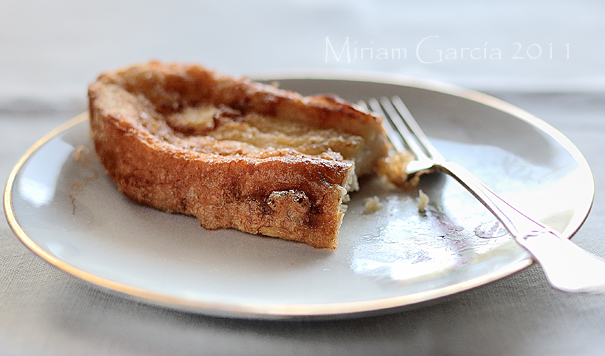
Torrijas 2

Check this article at Honest Cooking.

Eager to know more?

Jijona turrón ice cream

>> Friday, April 15, 2011

Turrón ice cream 1

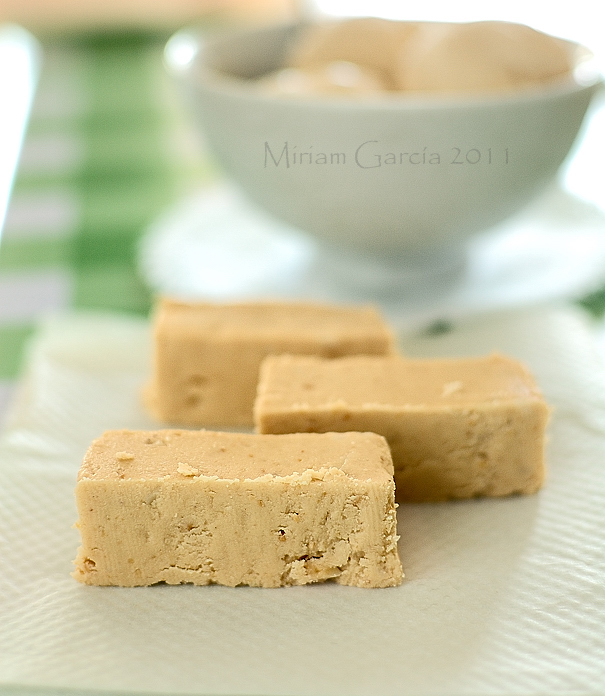
Do you know what turrón is? It is a nougat-like confectionery mostly made with almonds, tons of almonds… and also sugar, honey and egg whites. It is typical Christmas fare all over Spain, although originating from the southeast Mediterranean coast, in the region of Valencia (check here the Spanish pronunciation of turrón). It is usually shaped into either a rectangular tablet or a round cake where almonds can be left whole or ground to a paste to yield the following traditional varieties:

  • Hard (the Alicante variety): A compact block of whole almonds in a brittle mass of eggs, honey and sugar; 64% almonds (premium quality).
  • Soft (the Jijona variety): Similar but the almonds are reduced to a paste. The addition of oil makes the matrix more chewy and sticky; 60% almonds (premium quality).
Jijona is a small town known since the Middle Ages for its excellent honey and productive almond orchards. This local produce gave birth to turrón, referenced for the first time in a document of 1531. Turrón is such a valued confection that today its formulas and quality are standardized and endorsed by a Regulation Council.


Turrón ice cream 2

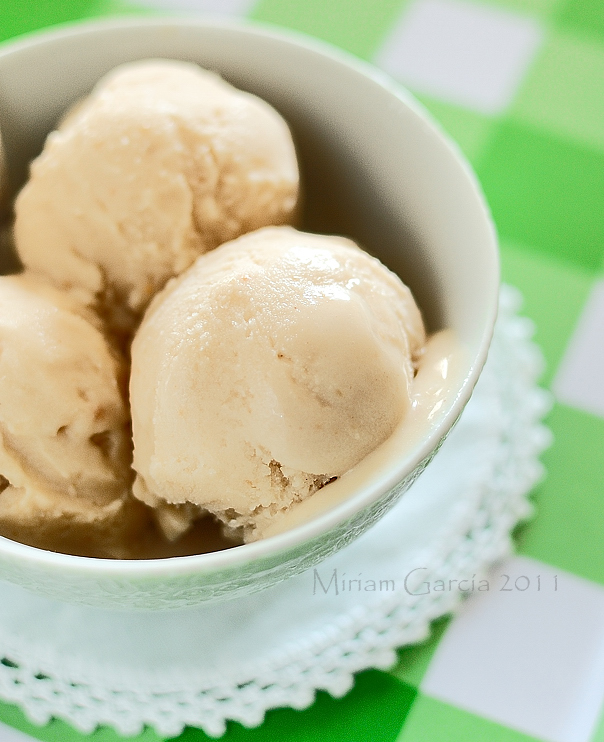
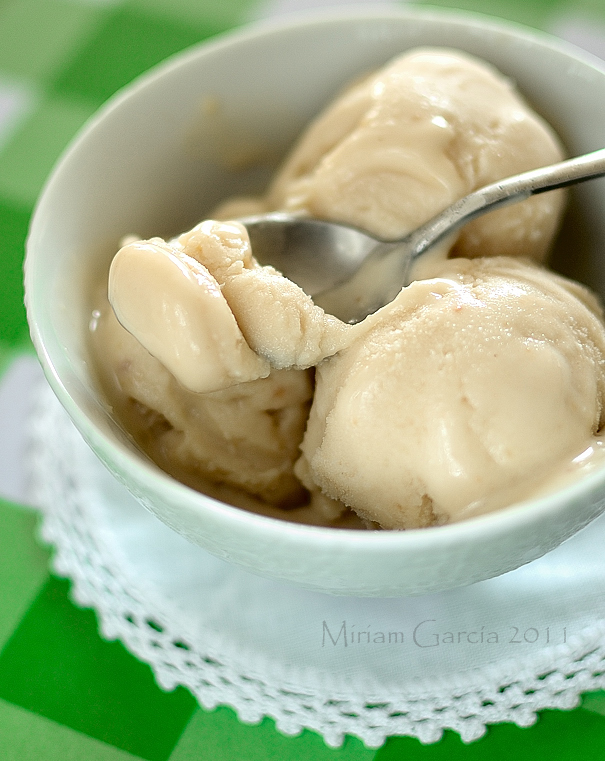
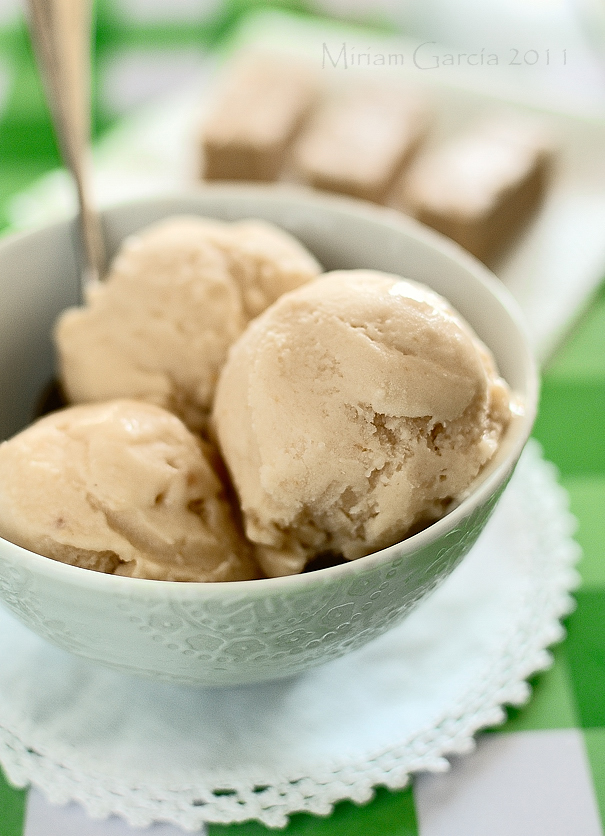
And I guess you are wondering why I am talking about Christmas now, right at the beginning of Spring. Well, because the same as turrón itself reminds any Spaniard of Christmas, ice cream flavored with Jijona turrón is a variety that no Spanish ice cream shop fails to stock during the warm season. And as in Spain it is very common to have turrón leftovers at home after Christmas, this is a wonderful way to give this traditional confection a totally different twist. And that is exactly what I did. So as warmer weather is on its way in the northern hemisphere and just in case you happen to lay your hands on a tablet of Jijona turrón, here is the recipe for this creamy, rich and very Mediterranean ice cream:

Jijona turrón ice cream
Serves 6

For the custard:
  • 0.75 cup (150g) sugar*
  • 2 cups (500ml) whole milk
  • 3 medium eggs (whites separated)
For the flavouring:
  • 0.33oz (150g) soft Jijona turrón
  • 3 tbsp Málaga wine (a good quality sweet Sherry can be used instead)
  • 0.85 cup (200ml) whipping cream
  1. To make the custard, put the sugar, milk and egg yolks in a saucepan and prepare a custard using a bain marie or double boiler, stirring slowly and continuously with a wooden spoon, until the custard is set and it coats the back of the spoon. Watch it closely to avoid any boiling, or it will curdle.
  2. Process the crumbled turrón with the wine into a paste, then add to the custard and mix well. Set this mixture aside and let cool to ambient.
  3. When the turrón custard is cool, whip the cream to soft peaks and add, folding gently till fully incorporated.
  4. Whip the egg whites to stiff peaks and fold carefully into the mixture. Mix gently but thoroughly to avoid any white streaks in the final ice cream mixture.
  5. Leave to freeze in your icebox and whip every hour till fully set or churn in your ice cream maker, if you are lucky to have one, which I am not.
*A note on sugar: the sugar content is a very region-dependent and even personal matter, and it should be adjusted to your liking, so I recommend you try the mixture before churning. Usually European confectioneries, pastries and sweet things in general are less sweet than for example in the United States. And remember frozen desserts should always be on the sweet side before freezing or churning, as the sweetness will be less noticeable afterwards.

Turrón ice cream 3

And there you have it. To my taste this ice cream is so rich that I don’t need any topping or sauce on mine, but feel free to use some chocolate sauce or almond brittle…

Check this article at Honest Cooking.
Turrón ice cream 4

Eager to know more?

Lentil salad with olivada

>> Monday, April 11, 2011

Lentil salad 1

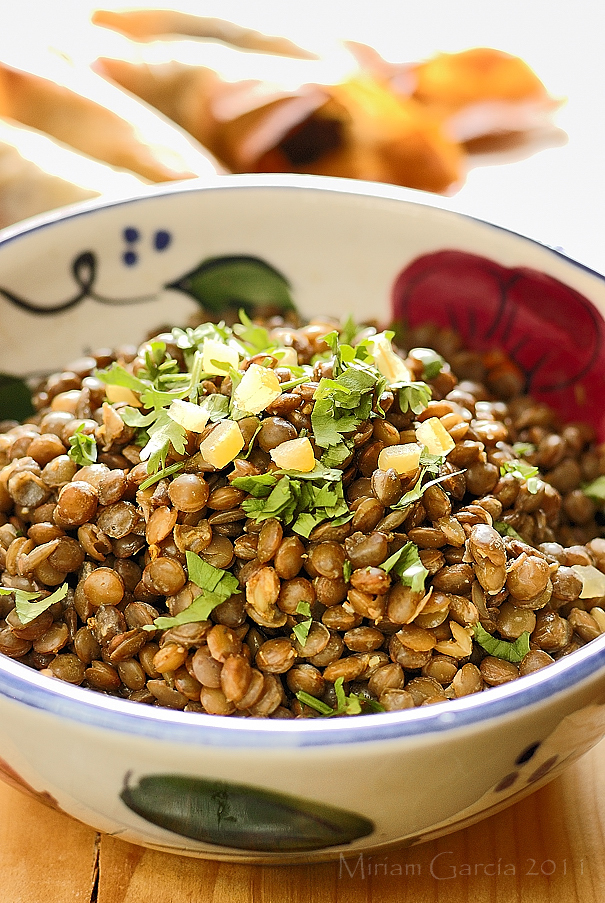
I am in a process of vindicating a more frequent consumption of legumes... before myself. I have never been very fond of this ingredient, though in the last years I have come to love some pulse dishes like falafel and Asturian beans with clams. The Asturian bean, one of man's best friends... woman's too. I still remember with tears in my eyes a few days spent with friends who own a house in Colunga, Asturias. They took us for lunch to a typical merendero, and as I always do when visiting Asturias, ordered some Asturian beans with clams. You should know that in the Principality of Asturias this kind of dishes are customarily served in huge amounts in an enourmous pot, good enough for several people, so you can eat as many servings as you want... or can. It seems that day my stomach was extensible such as a boa constrictor's, because I had all the pot by myself (of at least four servings, no kidding), while my table mates stared at me with one hand on the mobile phone to call an ambulance in case I suffered a stroke. Well, it might be the sun, the fresh air, the good company, the excellent food... a planetary alignment or something, because it has not happened again after that. But back to the topic at hand, we know that vegetable salad recipes get mixed results. That is why I consider this recipe found at the French magazine Elle à Table a great success, also because I have discovered a new addiction: salt preserved lemons.


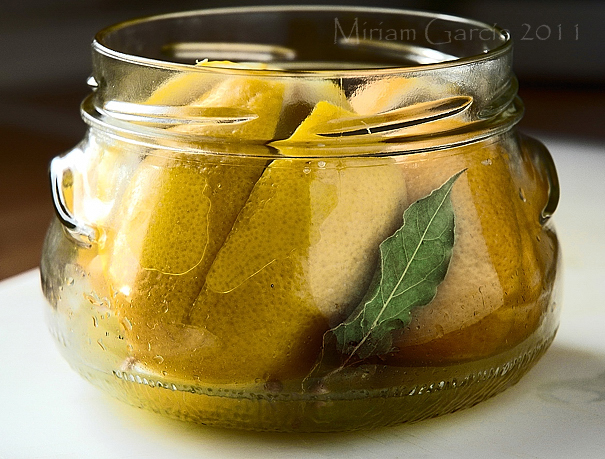
Yes, I had kept some Moroccan style homemade preserved lemons in store for almost a year, still had not found time to open the jar and this was the right time. I had never tried these lemons before, but when I opened the jar I could not believe it... The aroma was amazing! All the essence of the lemons in a highly concentrated form. Unbelievable. Exciting. I was speechless. The flavor is so concentrated that a tiny bit of lemon adds lots of sparkle to the dishes.

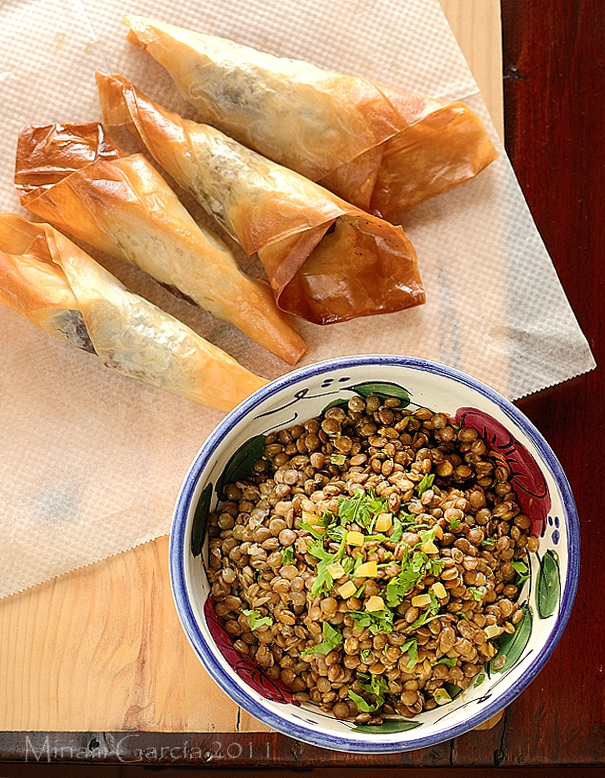
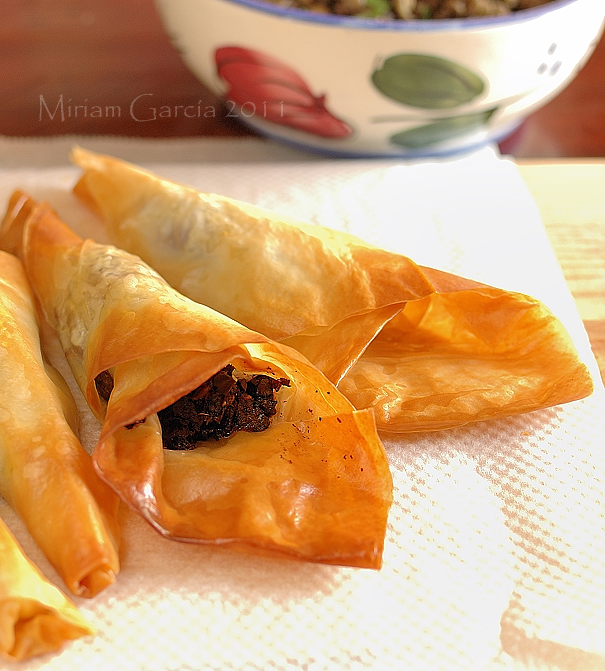
Besides, these lentils are coupled with some beautiful phyllo cones stuffed with olivada...

Lentil salad with olivada (adapted from Elle à Table)
Yields 4 servings

For the olivada:

  • 250g black olives, unpitted (you better pit them at home, they will have more flavor)
  • 2 tsp pickled capers
  • 2 anchovy fillets (I had none and I used the same amount of nori flakes)
  • 1 large garlic clove
  • 50g virgin olive oil
  1. Peel the garlic, then pit the olives, if needed, mix everything and process to the desired fineness.
  2. With the food processor on lower speed, add the oil in a steady stream. Set aside.
For the lentils:
  • 120g lentils (French lentils like Puy are best)
  • Some fresh cilantro sprigs
  • 1 bay leaf
  • 1 tsp ground cumin
  • 1 tsp strong mustard
  • 1 quarter preserved lemon peel*
  • Salt to taste
Salt curing lemons

*Lemons preserved in salt are a very typical ingredient of the Moroccan cuisine which can be found in specialty stores, but that are also very easy to make at home. There are tons of recipes in the net, for example this one. You only have to take into account that the lemons need to cure or mature for a minimum period of 2 weeks.
  1. Leave the lentils to soak in water overnight. The next day, change the water and cook them with the bay leaf, until tender.
  2. Drain and salt to taste. Then add the mustard, the ground cumin and toss to distribute evenly.
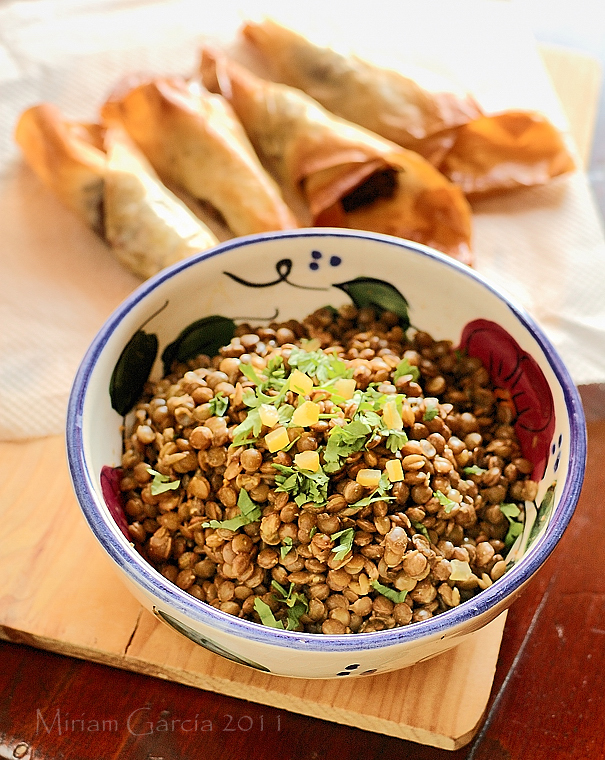
  3. Dice the lemon peel (and only the peel) and add too. Then cut the cilantro and sprinkle on top of the salad.
  4. Set aside.
Lentil salad 3

For the phyllo cones:
  • 2 or 3 phyllo sheets
Olivada in phyllo 4
  1. Cut the sheets in 10cm squares or to your liking.
  2. Place a teaspoon of the olivada and wrap it in the phyllo dough, shaping it into a cone. Place the finished cones on an oiled oven dish.
  3. Bake in the oven preheated to 180ºC for 10 minutes or until brown.
Serve the salad side by side with the olivada cones and take alternate bites: lentils, cone, lentils, cone... Amazing. I believe I am in love with cumin, do you think it can be serious?

Lentil salad 2

Eager to know more?

Soldaditos de Pavía or codfish beignets

>> Saturday, April 2, 2011

Soldaditos Pavía 1

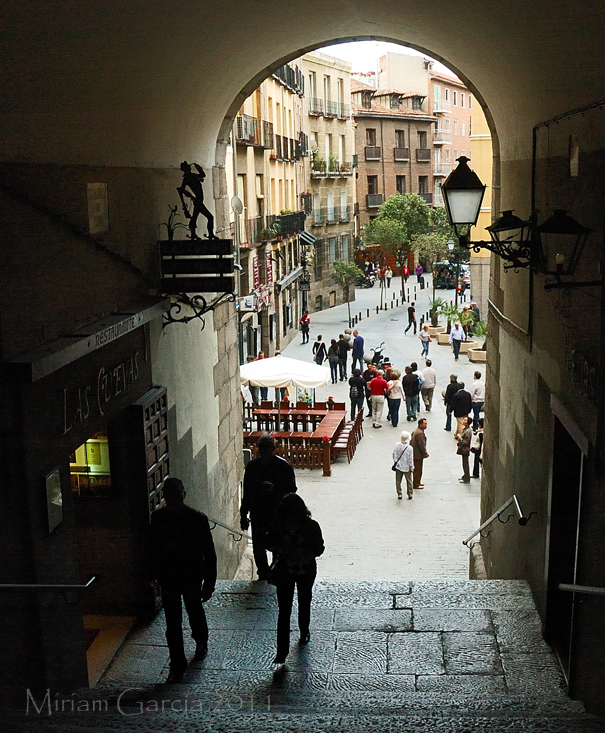
I have wonderful news to share: I will be a contributor to the new online food magazine Honest Cooking! I am soooo excited! And I am in great company there, with colleagues like Nancy from Spicie Foodie, Simone from Junglefrog Cooking, Joan from Foodalogue, Asha from Fork Spoon Knife or Maria Laitinen from Scandi Foodie among many outstanding bloggers. You can check my published articles anytime by clicking on the cute Honest Cooking logo on my sidebar. For my debut at Honest Cooking I have chosen a very typical dish of my hometown, Madrid, the capital city of Spain. I have lived there most of my life and though in fact I live outside Madrid since 2000, in a small town 40km to the Northwest, I am still in the same province... it feels almost the same. Choosing a dish that is representative of Madrid is not an easy task. Madrid builds upon thousands of immigrants coming from all over Spain through time, so there are not many dishes that are actually exclusively from Madrid. Just take into account that Madrid had around 1 million inhabitants in 1940, after the Spanish Civil War, and it already had 3.1 millions 30 years later, in 1970. More than triple! Everything is mixed.


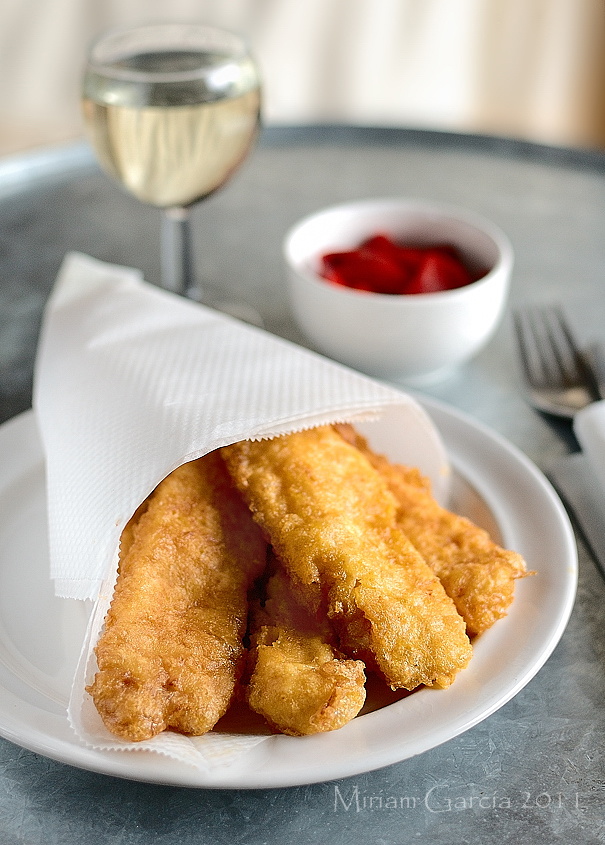
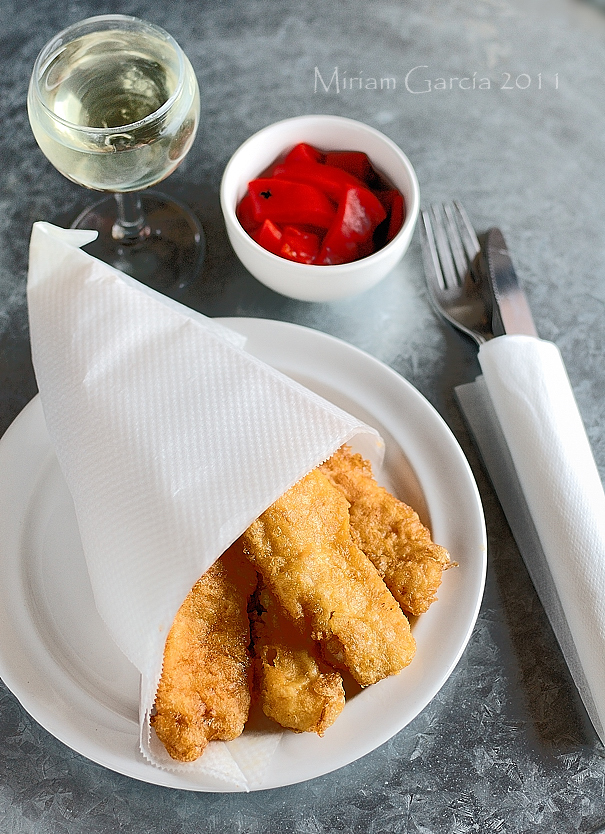
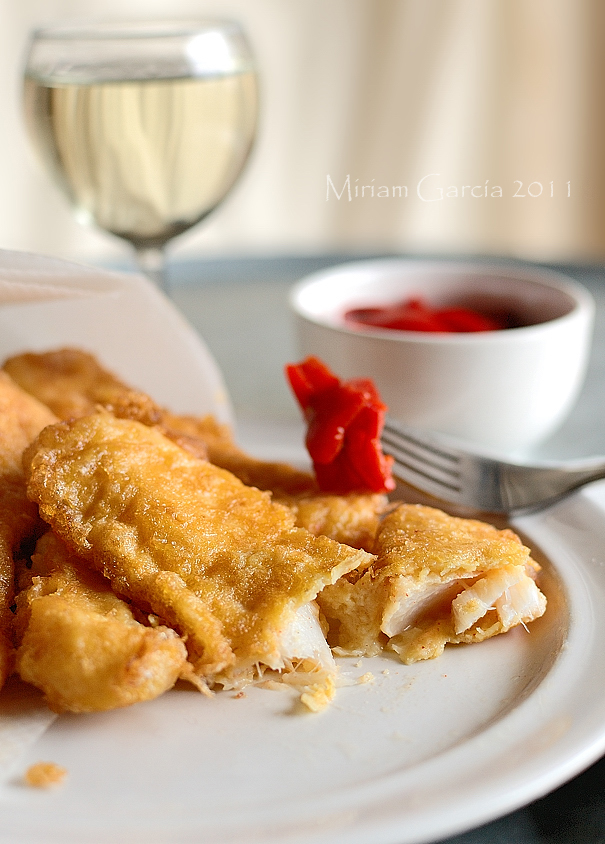
Tercios flagSoldaditos de Pavía, meaning Pavía soldiers, are strips of desalted codfish, marinated in a mixture of lemon juice and Spanish sweet pimentón, then either coated first in flour then in egg, or in a frying batter, deep-fried in olive oil and served with a strip of roasted red pepper around them. About the origin of this funny name there are two theories: the first relates to the color of the soldier uniforms at the time of the battle of Pavia, in 1525. The second relates to the color of the Spanish hussar uniforms during the 19th Century.
(Flag image by courtesy of Wikimedia Commons.)

Cuchilleros

But all this lore is not as important as the recipe for this simple, tasty and healthy appetizer or tapa, found in a lot of bars and tabernas in the old quarters of Madrid. So here it comes:

Soldaditos Pavía 2

Soldaditos de Pavía
Yields 4 tapa-sized servings

  • 1.1 pound (500g) good quality salted codfish
  • Juice of 1-2 lemons
  • 1 1/2 tsp sweet pimentón (or more if you like)
  • A dash of white pepper
  • 3 tbsp olive oil
  • First option - simple beignet coating:
    • 1 beaten egg
    • AP flour or chickpea flour
  • Second option - somewhat-time-consuming beignet frying batter:
    • 2/3 cup (100g) flour
    • 1/4 cup eau-de-vie or similar spirit
    • 3/4 tsp (5g) baker's yeast
    • 1 tbsp olive oil
    • 1 pinch of saffron
    • 1 pinch salt
  • Virgin olive oil for deep-frying (essential for real soldaditos)
  • 1 large roasted red pepper, in strips
Soldaditos Pavía 4
  1. Cut the codfish in strips, put them in a large bowl with cold water and leave them to desalt 24 hours. Better if you can change the water at least 3 times during this period. Believe me, you’d rather have to add some salt to the final fried fish than getting a bunch of unbearably salty and inedible soldaditos.
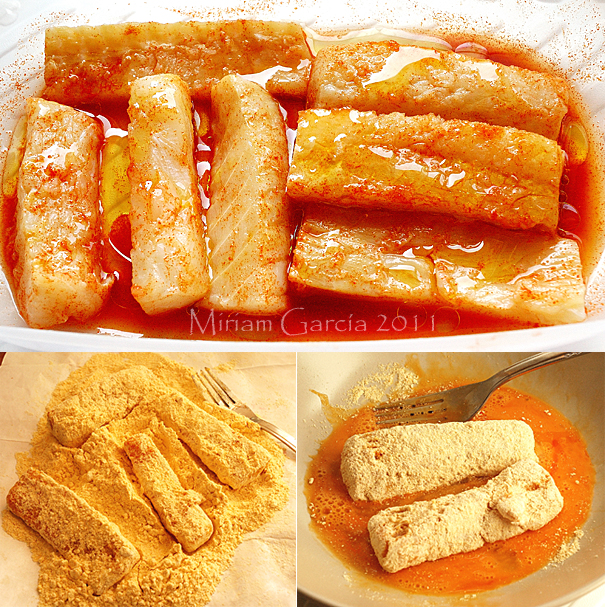
  2. Prepare the marinade in a shallow dish or container, mix the lemon juice with the pimentón.
  3. Pat dry the fish strips with a paper towel and dip them in the marinade. Toss them to coat. Then drizzle the olive oil on the fish. Marinade for 3 hours.
  4. Rinse the fish strips. You won't normally need to salt the strips, as the fish will still retain some saltiness.
  5. Now you can use one of two methods for making the beignets:
    The most simple is to coat the strips first in plain flour (I use chickpea flour like in many places of Andalusia), then bathe them in beaten egg and put the strips straight into the hot olive oil.
  6. The second method, a bit more elaborate, is to prepare a batter for coating the fish. Sift the flour and mix it with the tablespoon of oil, the saffron, the spirit, the salt and the yeast. Leave to rest in a warm place for the yeast to act. When the mixture has risen slightly and it's bubbly on the surface, dip the fish strips and fry them on medium-hot olive oil. Place the fried fish on a paper towel.
Soldaditos Pavía 3

Serve while still warm with a strip of roasted red pepper across them. I have used piquillo peppers here instead, as they are pretty good with anything. Enjoy the juicy, lemony, flaky goodness of the fish inside the soft crust. The perfect appetizer for a warm Spring noon with a glass of beer or Fino. Better sitting on a patio.

Eager to know more?

Followers

About This Blog

Lorem Ipsum

  © Blogger templates Palm by Ourblogtemplates.com 2008

Back to TOP