Related Posts Widget for Blogs by LinkWithin
Showing posts with label seafood. Show all posts

School of tapas: Grilled cuttlefish with roasted garlic alioli

>> Saturday, August 27, 2011

Grilled cuttlefish 2

Grilled cuttlefish... I'm sure many people outside Spain shudder at the thought. And even people from Spain (my kids, for example). But it is a very traditional food in the Mediterranean coast and well cooked and seasoned it can be utterly delicious. In this recipe the grilled cuttlefish chunks are dipped in a tasty alioli made with roasted garlic instead of raw, for a softer taste experience.


Cuttlefish belong to the same family as octopus and squid, and share features of both. In Spain they are easily found already clean at supermarkets, but if you attempt to clean them yourself... well, you can make a real mess in your kitchen. You need to remove tentacles, eyes and beak. Then you have to gut the head and extract the ink sack. After that, you need to get rid of as much outer membrane as possible (yes, cuttlefish have like an outer skin which is better removed). The clean head has a pleasant, firm consistency and a healthy white color. It can be sliced or cubed and cooked in a variety of fashions. On the other hand, tentacles can be cooked in fish stews or used to obtain a broth... have I already discouraged you to cook cuttlefish? Overcome prejudices and you will taste something truly delicious.

On the other hand, in the old days preparing tender cuttlefish used to be trickier than today. The thing can easily acquire a tough consistency, especially if you overcook it. But nowadays the first thing you need to do to tenderize the cuttlefish is to freeze it, if it hasn't been frozen before getting to the shop. Then you need to eliminate as much skin as you can. Lastly, the grill needs to be really hot before placing the cuttlefish chunks on it and they are to be cooked no longer than 1-2 minutes on each side.

Grilled cuttlefish 1

Grilled cuttlefish with alioli
Yields 2 tapa sized portions

  • 1/2 cuttlefish head, clean
  • Virgin olive oil
  • For the alioli
  • 1 whole head garlic
  • 1/2 tsp salt
  • 1 medium egg and 1 yolk
  • 1 cup virgin olive oil
  1. First to the alioli: wrap the head of garlic in aluminum foil and roast in the oven preheated to 170ºC (340ºF) half an hour or till tender. Let cool and peel. 
  2. Mash the roasted garlic with the salt in a mortar. Transfer the mash to a food processor or blender, add the egg and yolk and mix thoroughly. 
  3. Measure the oil. Turn on the blender or processor at medium-low speed and start pouring the oil in a tiny steady stream, until you finish all the oil. Transfer the alioli to a container and set aside.
  4. Preheat a heavy skillet. Cut the cuttlefish head in bite-sized pieces and brush them with olive oil. When the skillet is hot, place the cuttlefish pieces to grill. They won't need longer than 1-2 minutes per side, in fact overcooking them yields a tough rubbery cuttlefish. 
  5. When done, serve them immediately with a bowl of alioli on the side. 
And enjoy! This roasted garlic alioli is also wonderful with all kinds of grilled meat and fish. So if you don't dare to try the cuttlefish, try at least this scrumptious dip.

Eager to know more?

La Buena Mesa: a cookbook review and garlic shrimp

>> Thursday, July 21, 2011

Gambas ajillo 1

Some weeks ago I received a request from Hippocrene Books to review their recently launched book La Buena Mesa, by Elizabeth Parrish. I eagerly accepted, only too flattered that someone thought I had something to say about Spanish cooking. And flattering is the best way to get people going, don't you agree? Do you know what was my first impulse when I got the book on the mail? Checking the gazpacho recipe. Because I knew in a book on Spanish cooking there had to be one, of course. And for me, that is a rather accurate indicator of the soundness of a book on Spanish cooking. Well, when I read the recipe I could not help but smile; I found it flawless. No fancy ingredients and above all no horrible chilli additions, like I’ve seen too often outside Spain (the idea of a hot gazpacho gives me the creeps… We Spaniards are very particular about our gazpachos).


And… I started browsing through the recipes. I love cookbooks that read like a novel and this is one of them. The recipes are arranged by region and they are interspersed with brief accounts on essential ingredients or aspects of Spanish cooking; I found particularly sweet the story about cazuelas, the ubiquitous earthenware recipient for cooking all kinds of stews and other different dishes. All the recipes start with a brief introduction on some funny or intriguing related aspect. The author totally won me over when I saw her recipe for Galician sourdough rye bread! I say, that is one-daring-food-writer! If there’s one region in Spain that boasts delicious bread, that’s Galicia, so it's worth having bread recipes in such a cookbook, a subject most Spain-published cookbooks overlook.

What else can I say? Mrs. Parrish is an American expat living in Tarragona, region of Catalonia, who has lived and cooked in Spain for more than 20 years already and her book shows the author’s love for the subject. I only wished the book was not that short. So if you intend to set out on a journey into Spanish cooking, La buena mesa is undoubtedly a very good place to start.

Therefore, to illustrate how far you can get with this book, I thought I’d cook one of its recipes. I had been wanting to write a post about gambas al ajillo or garlic shrimp for ages, so I rose to the occasion. Garlic shrimp is a very simple tapa made by stir-frying shelled shrimp in olive oil and garlic. Elizabeth calls for a dash of dry sherry too, which I had never tried before, so I was intrigued by this boozy addition.

Gambas ajillo 2

Gambas al ajillo
Yields 4 servings

  • 1 pound (500g) shelled shrimp
  • 4 cloves garlic 
  • 4 tbsp virgin olive oil
  • 2 tbsp dry sherry
  • 2 sprigs parsley
  1. Thaw the shrimp if frozen. Peel them if they're not peeled.
  2. Peel and finely dice the garlic cloves. 
  3. Pour the oil in a saucepan (much better in an earthenware cazuela) and add the garlic. Stir-fry just till it starts to brown at the edges, then add the drained shrimp. 
  4. Add the sherry, cover with a lid and cook a few minutes, stirring occasionally, till the shrimp are pink and cooked through.
  5. Sprinkle with parsley and serve in small earthenware dishes.
This has been truly one of my favourite tapas ever since I was a child. The flavors meld perfectly, with the garlic not overpowering the delicate flavor of the shrimp. For those fearful of the fierceness of garlic, the flavor is largely tamed when fried. As it happens with a lot of Spanish dishes, this will be as good as your shrimp; premium quality ingredients make for a premium quality dish.

Cartel gambas

Full disclaimer: I have not been paid for this review, at least I haven’t received any payment other than the book itself. Well, I truly liked it.

Eager to know more?

Gnocchi with shellfish sauce, seaweed and a winner

>> Friday, November 19, 2010

Ñoquis patata 1

A Spanish blog was challenging us to prepare gnocchi this month. As I had already tried my hand at gnocchi in the past, in order to bring a little joy into my humdrum life, I decided to add a-not-so-common ingredient: seaweed. Because I have a confession to make: I like seaweeds. Not because I have tried them in sushi, I had tasted seaweeds before trying the ubiquitous sushi, (no, not before sushi was invented, I'm not that old). I must say sushi doesn't really thrill me, to put it mildly. However, some seaweeds can be really good when fried or boiled in a salad. So I added powdered nori to the gnocchi dough and ate them with an accompaniment of fried sea spaghetti. This is what I call an adventurous life... And my Italian readers, if any, will probably be shocked at my impudence.

Hmmm, and I'm also revealing the name of the winner of the CSN giveaway!


First to the winner of the CSN giveaway: Domestic Diva! I will soon give CSN your name and e-mail address for them to send you the code.

Giveaway 2

And... back to the recipe, for the gnocchi sauce we were free (whoops!) to make whatever we wanted, so I decided to do some refrigerator cleaning by using up some crab boiling juice that had been frozen since the Jurassic, and because this week seemed to be my improvisation week so far I devised a roux sauce of crab and saffron. The recipe for the gnocchi is the following:

  • 1kg potatoes
  • 300g pasta flour
  • 1 egg
  • Salt
  1. Wash the potatoes, unskinned, and cook them in salty water until tender. Leave to cool a bit to peel them without too much suffering, skin and pass through a food mill. Cover the mashed potato with plastic and allow to cool.
  2. Add the beaten egg along with salt to the puree in the bowl of a stand mixer and mix well. Then add the flour and knead until you get a smooth dough that doesn't stick too much to your hands and can be manipulated. I do not know if it is very normal, but I had to add much more flour than the recipe called for, for dough to be manageable, so that at one point I gave up weighing the flour. I am afraid my potatoes were overcooked. I know, it's not very technical nor professional to ignore the total amount of flour I added... how I miss those times when the recipes instructed you to "add as much flour as it can take on" and everyone understood. If you think this is a cookbook, you are mistaken, it's a therapy-blog. If I did not write here I would be seeing a therapyst or something. Note that I spend most of the day alone, working on my stuff, without any nice colleagues to make caustic remarks nor a jerk boss to criticize... and I'm forced to swallow all my desire to criticize, gossip and talk-bad-about-my-neighbor... this healthy and relieving habit. And all that repression ends up accumulating in my stomach. As soon as I start to feel it, I write a post. Or something similarly blameworthy.
  3. I added a teaspoon of dried powdered nori to the dough, but it was hardly noticeable, maybe because of the loads of flour.
  4. Make little rolls of 1.5-2cm wide and cut them with scissors or a knife into pieces of about 2 cm. You can find an enlightening gnocchi-making video here. Each little dough pellet is crushed with a fork so that it gets the imprint of the well-bred gnocchi. Put them on a floured surface.
  5. If you intend to cook them immediately, get plenty of salt water to boil. When boiling, but not rolling boil, toss the gnocchi in and when they rise to the surface, they are al dente. Drain them and serve with the sauce. If you're not going to eat the gnocchi right away, they freeze beautifully on trays, apart from each other so that they do not stick together. When frozen you can keep them together in freezer bags.
Azafrán

For the crab sauce (yields enough for 3-4 servings of gnocchi):
  • 1 small onion
  • 1 carrot
  • 1 tbsp flour
  • 1 cup of crab, shellfish or plain fish stock
  • 1 pinch saffron
  • Water
  • 4 tbsp virgin olive oil for the sofrito
  • Salt
  1. Dice the veggies and fry them in the olive oil on medium heat till tender.
  2. Add the tablespoon of flour and stir-fry a couple of minutes.
  3. Lightly toast the saffron (I put it on a piece of aluminum foil and use a lighter to heat it from underneath), crush it in a mortar and add it to the sofrito.
  4. Then pour the stock, add some water if needed, puree everything and leave to cook on low heat until it thickens, around 5 minutes.
  5. Try the seasoning and adjust if needed.
I know, if the sauce had pieces of crab or fish it would be tastier, but this is good enough for an improvised sauce.

Ñoquis patata 2

For the sea spaghetti crisps:
  • 1 bunch of sea spaghetti (himanthalia elongata)
Himanthalis

In Spain seaweeds are sold dried or canned. I buy them dried, they last very long and you can hydrate them for use at any time. You take the dried seaweed and place it in a bowl with water, as long as directed on the package, to be well hydrated. Separate the stems and drain well. Then fry the strips in a deep fryer or skillet until crispy, about 2 minutes. Then you can add the seaweed to the dish in small bits, like you would add some shavings of toasted Serrano ham. And both ingredients have the umami flavor. Long live the umami. Oh, and you better try seaweeds and like them, because very soon they will be the only thing left in the oceans that we can possibly eat.

Then... plate the whole thing by heaping some gnocchi, pouring a generous serving of the steaming sauce and topping it with a bunch of crispy sea spaghetti... the assembly had a deep and delicious sea flavor.

Eager to know more?

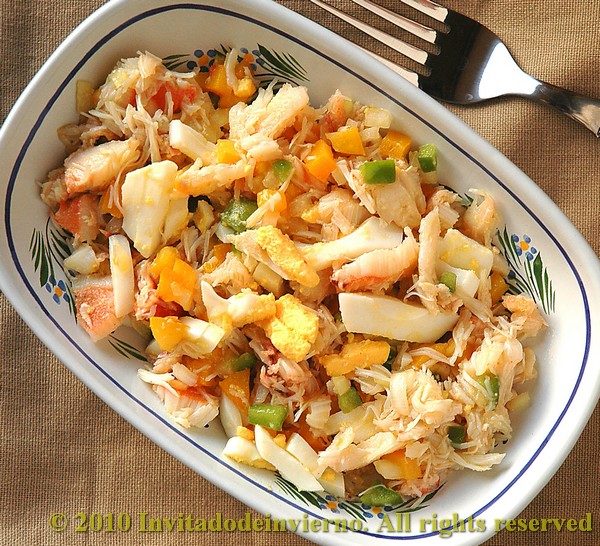
Crab salpicón

>> Wednesday, January 13, 2010

crab salad
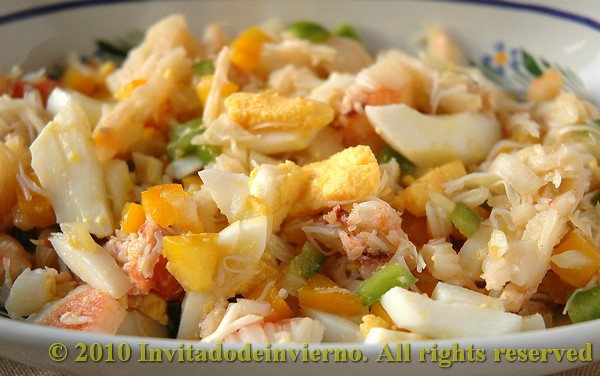
Salpicón is a very popular Spanish seafood salad, normally made with an assortment of shellfish, green pepper, onion, garlic, sometimes tomato, of course seasoned with olive oil and vinegar. In Galicia, a region famous for its fresh seafood and fish, both of excellent quality, salpicón made only with crab can be found at many restaurants and bars. I've followed the recipe in this Galician blog, brimming with good family recipes. Almost every summer we spend some time in Galicia (we've got some relatives there) and very likely we have dinner some night at a certain seafood restaurant by the sea, where I very often order crab salpicón. Probably watching the sun set over monte Louro through the large windows. And probably drinking the most delicious albariño... To bring some Atlantic breeze to our table on New Year's Eve, I prepared this dish with the rest of my crab cargo.


Crab salpicón from La Cocina de Lechuza
Makes four servings

  • 2 crabs of 700g each
  • 1/2 yellow pepper (red is normally used, only I saw this color at the market and I picked it, it's quite unusual where I live)
  • 1/2 green pepper
  • 1 medium onion
  • 2 eggs
  • Olive oil
  • White vinegar
  • Salt
Boil the crabs if they're not boiled. Let them cool. Break their shells and pick all the meat from shell and legs. Set aside. Next prepare the vinaigrette; finely dice both peppers and onion. Put 4-5 tbsp olive oil and 1 tbsp white vinegar in a bowl. You can play with the ratio, depending on how strong you like your vinaigrette. Then add one tsp of salt, not heaped. Try for seasoning; it must be on the strong side, enough for giving flavor to the vegetables and crab. Then add the diced vegetables and toss.


Hard-boil the eggs in the meantime. Leave to cool and peel. To serve the salad, put the crab meat on a pretty serving dish, add the vinaigrette and toss to coat. Finely cut the eggs into pieces and lay on top of the salad, you can sprinkle some salt on the egg too. And serve... don't you feel the sea breeze?

crab salad

Eager to know more?

Old-fashioned potted crab by Jamie Oliver

>> Friday, January 1, 2010

potted crab
I'm so thrilled today. It's the first time I prepare a recipe by Jamie Oliver... wow, my first time. This recipe can be found in the book Cook with Jamie which I bought last summer while on vacation at Santiago de Compostela. So cook with Jamie if you dare. I admit Mr. Oliver had never really caught my attention before, except for branding him as a bit... dirty: dear Jamie, how can you mix the salads with your hands? But then I started to read the book, which by the way has the loveliest food photography and well, all I can say is... now I'm a believer, not a trace of doubt in my mind.


I've found this dish delicious, how can not be a mixture of shellfish and butter? The only drawback is that it's somewhat time consuming, as you need to pick all the meat inside the crabs. But it's worth the effort. According to Jamie this was a traditional British way of short-term preservation, used not only with shellfish, but with meat too. It lasts around one week in the fridge.

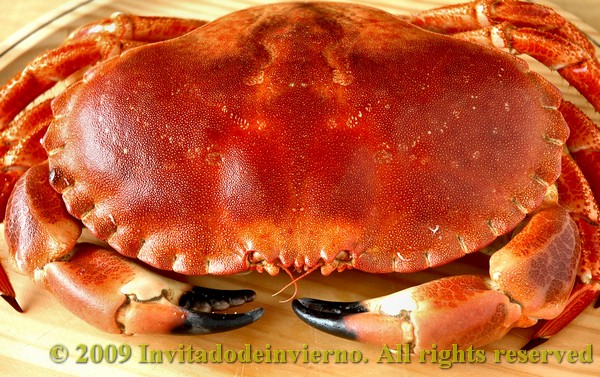
This recipe is easier and shorter to prepare if you buy a crab that's already boiled. I used an Irish crab, which weighed more or less half the weight required in Jamie's recipe. In fact it was a female crab that was full of roe, poor thing. Thanks to that I could gather all the brown crab meat required in the recipe (well, I mean, half of it).

crab
Jamie Oliver's potted crab (adapted)

  • 40g brown crab meat or roe
  • 110g picked white meat
  • 1 small dried chilli
  • 1/4 tsp fennel seeds (I didn't have any and I've never used them therefore I didn't add them)
  • 1 good dash of lemon juice (the recipe calls for lemon zest, but I'm lazy)
  • 2 good pinches nutmeg
  • 100g butter
  • Salt to taste
potted crab
Let the butter soften at ambient temperature. Boil the crab, in case you've bought it uncooked, and let it cool. Then pick all the meat in the crab... be patient. Put the brown meat/roe that's found inside the body of the crab aside from the white meat. Smash the chilli in a mortar and add half the softened butter, lemon juice and all the brown meat/roe. Then mix and smash everything together till you have a soft paste. Add the nutmeg, mix and then the white meat. Mix thoroughly and season well. Jamie recommends to try a small portion on a toast to adjust the seasoning. He advises to over-season the mixture because it's going to be served cold and the flavors are somewhat dimmed.

potted crab
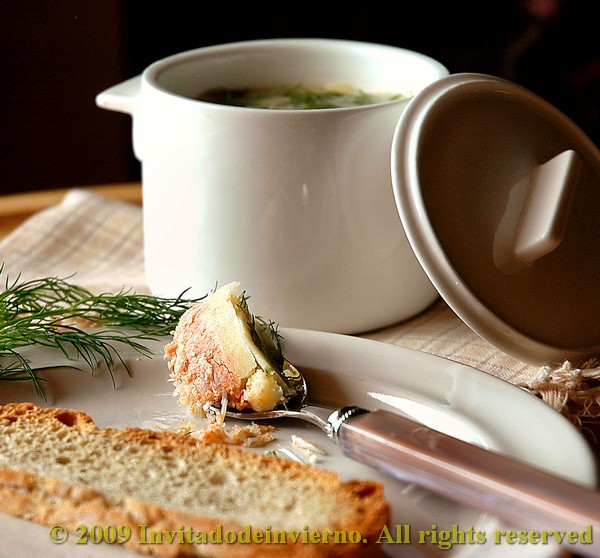
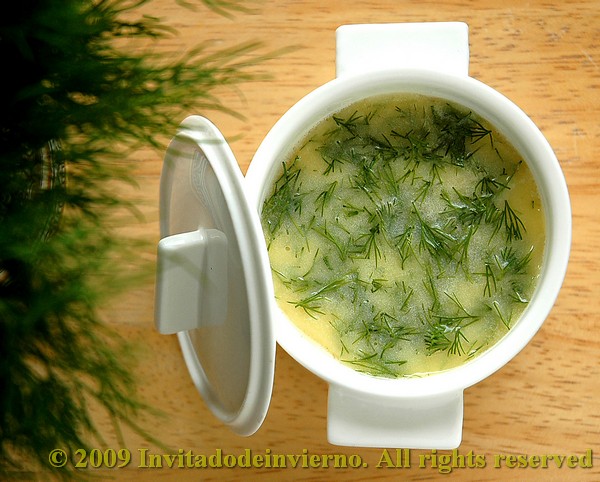
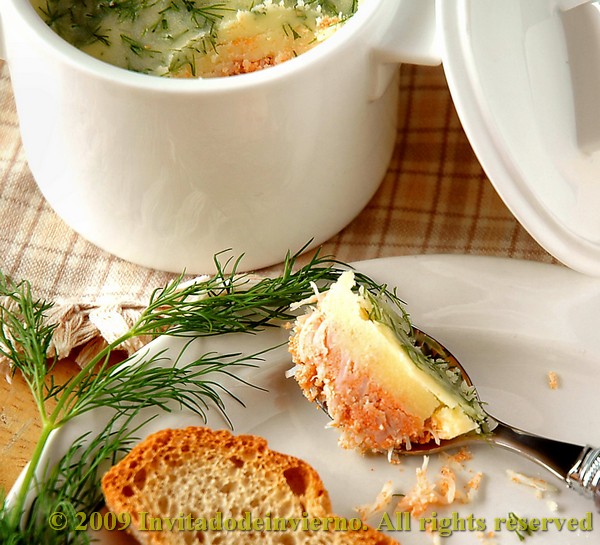
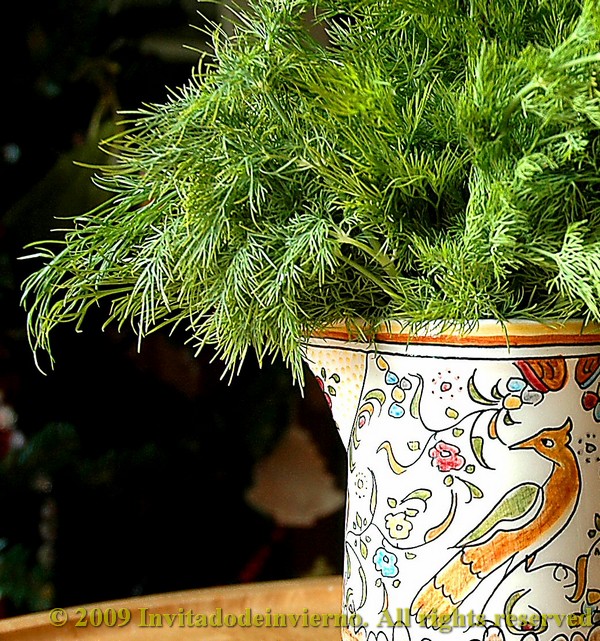
Find a beautiful pot to pot your crab and fill it with the mixture. Flatten the crab and smooth the surface with a spoon, then melt the remaining half butter, mix some fresh herb like dill, and pour it on the crab. Put it in the fridge to set and leave it overnight for the flavors to meld... delicious on a toast.

dill

Eager to know more?

Fish and shellfish soup, Spanish style

>> Monday, November 23, 2009

fish and shellfish soup with picada
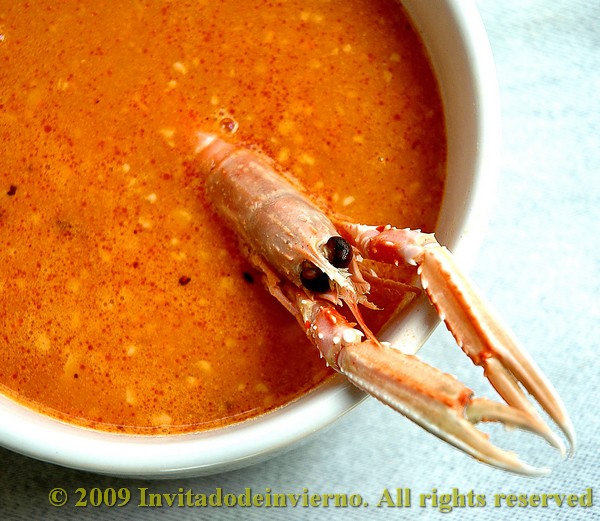
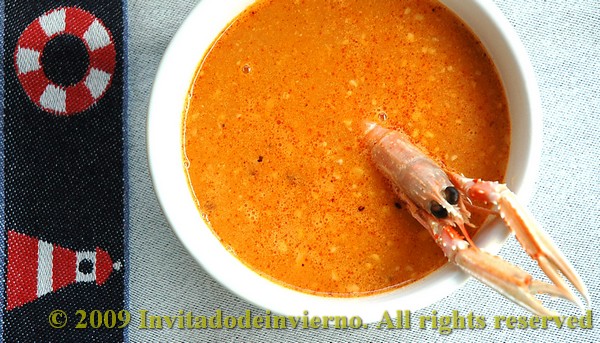
I like the type of fish soup with a somewhat thick and hearty stock, the base for various interesting and floating things like shellfish and pieces of fleshy fish. The Mediterranean in a bowl... yum. My soup includes a base stock made with fish and shellfish, a sofrito made with onion and tomato that's pureed with the stock, a picada that's added almost at the end of the boiling and little pieces of fish, shellfish like mussels or even rice added as garnish to the stock.


Sopa de pescado or fish and shellfish soup (yields around 8 servings)

Base stock:
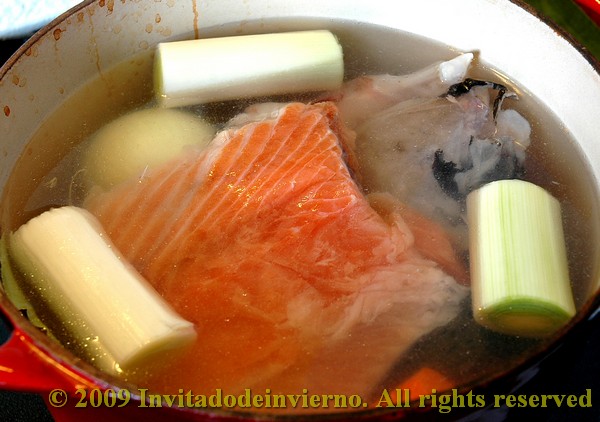
Make a fish stock by boiling the following ingredients in 2 liters of water for half an hour:

  • One large salmon bone and one large monkfish bone (any combination of fish bones is good, but the monkfish is especially flavourful)
  • 1 medium onion
  • 1 carrot
  • 1 leek
  • 1 bay leaf
Discard the solids after the boiling.

fish stock
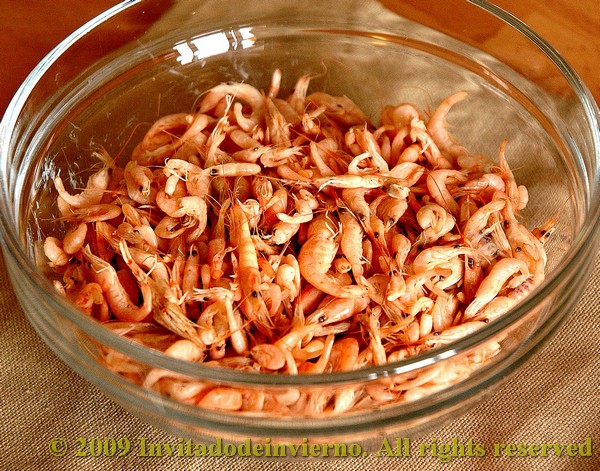
Then, boil the following shellfish in a different pot, in half a liter of water:
  • 10 shrimps
  • 4 small crawfish
I do this in a different pot only because you have to fish the shrimps and crawfish later and shell them, it's easier if you have them in a smaller recipient. Bring the pot to a boil and turn the heat off immediately. Leave it to cool and shell them.

Then pour a glass of white wine in another pot to steam:
  • 10 small mussels
  • 10 small clams
You can pour yourself a glass of white wine too... that will make for a merrier cooking process. This time I used some leftover cava I had in the fridge instead of the wine. Keep the liquid in the pot and leave aside. Shell the mussels and clams and leave aside.

fish stock
Once all the ingredients are cooked, drain all the three liquids and pour them in one single pot, that is, the fish bones and vegetables stock, the shrimps and crawfish stock and the mussels stock. Then start the sofrito by dicing and frying in olive oil the following ingredients:

Sofrito:
  • 1 medium onion
  • 1 clove garlic
  • 1 tsp ñora flesh
  • 1 cup crushed tomato
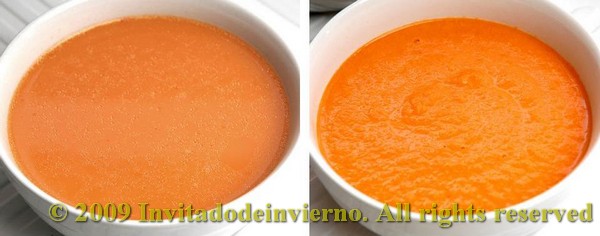
Start by frying the diced onion and garlic. When the onion is wilted, add the ñora. Ñoras are typical Spanish sweet round red peppers. They impart a wonderful flavour and are widely used in paellas, for example. They're usually sold dry and they have to be soaked in water for some time before opening them and scraping the pepper's flesh. Anyway, you can skip it if you don't have it. Then add the tomato and fry everything while stirring, around 8-10 minutes, just enough for the water in the tomato to evaporate. It's the tomato and ñora which give the soup its healthy reddish color.

For thickening the base stock I like to add a hake or whiting fillet at the end of the sofrito, to be pureed later with the vegetables. You can also add some potato if you like your stock even thicker. Then puree the sofrito, you can add some fish stock to make it easier. The puree is added to the stock and everything is heated together for around 5 minutes, for the flavours to meld. Then you can add any kind of garnish you prefer, you can even boil a handful of rice in the stock for a heartier soup. In my case I added the shrimps, crawfish, mussels, clams and also some diced cuttlefish and squid, previously stir-fried with some oil. Try the soup for salt and add if needed.

This time I wanted to try and add some picada. The picada is a thick paste made by pounding garlic, almonds, hazelnuts or any other nut, parsley, saffron and toasted bread together in a mortar, then a spoonful of olive oil is added. It's typically added to all kind of dishes if you want more thickness and flavour. Here's a excerpt from Colman Andrews' Catalan Cuisine:

No other European cuisine has anything quite like the picada - which, as noted, is a thickening and flavoring agent made up of such ingredients as garlic, fried bread, olive oil (or some other liquid), and various nuts, herbs, and/or spices, all pounded together with a mortar and pestle. (...) The picada closest relatives are probably Italy's pesto (which likewise involves garlic, nuts and herbs crushed in a mortar) and gremolada ( the Milanese herb-and-garlic mixture traditionally added to osso bucco) - but pesto clearly is a sauce, and both substances, unlike the picada, have limited and highly specialized uses, and a more or less regularized composition.
Picada:
  • 2 cloves garlic
  • 15 almonds, toasted and skinned
  • 15 hazelnuts, toasted and skinned
  • 1 slice toasted bread (I prefer it fried with oil)
  • 1/4 tsp salt
  • 2 stems saffron
  • Olive oil
The paste must be thoroughly pounded, until no pieces of nut can be discerned. Hard job for me, I'm quite a weakling. Then add the paste to the soup, boil for a further 2 minutes then turn off the heat. Try for salt again and adjust if necessary. I loved the effect of the picada, you could make out a faint raw garlic flavour, and the nuts give the soup more thickness... delicious.

fish and shellfish soup with picada
Serve the soup in bowls, as rustic as can be. I also love to float a fried slice of bread on top of each bowl... why all things fatty are so good? One of the misteries of the Universe.

Eager to know more?

Andalusian tortillas de camarones

>> Friday, June 26, 2009


Tortillas de camarones from Andalusia are made with a tiny type of shrimp called camarón and are typical of the Cádiz province. They are delicious with a glass of chilled fino or manzanilla, on a bar terrace...

I've got to confess: I've never been to Cádiz in my life. I don't have any relatives in the area. I don't even have friends from Cádiz. I've only eaten tortillas de camarones in an Andalusian restaurant close by. With this I mean that I'm not an expert in the subject. But I'm crazy about them all the same and I admit my crime: I cook them in my own kitchen. Therefore I ask all connoisseurs of tortillas de camarones out there to have mercy on me. Although I'm more than willing to learn and am open to any recommendations for the next time I make them...


Fine, after this apology I can say anything I want about tortillas de camarones... The recipe I normally use was found at the site Pisto y Nopisto. You can find in the Internet long and brainy arguments in Spanish about what bar is the best place in Cádiz to eat the tortillas. Some say it's Casa Balbino at Sanlúcar de Barrameda and some people even warn you about the impossibility of preparing decent tortillas de camarones out of Cádiz province... because, among other reasons, ingredients are hard to find. Camarones are tiny shrimps that are cooked whole, because it would be impossible to shell them. Even in Spain they are not easy to find everywhere. The same happens with chickpea flour. You can make your own flour with a stout food processor from chickpeas though.


Tortillitas de camarones (adapted from Pisto y Nopisto)

  • 1 cup all-purpose flour
  • 1 cup chickpea flour
  • 1 cup camarones (you can substitute shelled shrimps, but not too big. It won't be the genuine thing, but I'm sure it will be delicious anyway)
  • 1 cup finely diced onion and parsley (I didn't have any parsley this time, so no nice green touch)
  • 2 cups water
  • 1 teaspoon sea salt
  • Virgin olive oil for frying


Mix thoroughly both flours with the water to avoid any lumps. Then add the rest of the ingredients, mix well and leave to rest for two to three hours. I guess the purpose is the hydration of the flours.

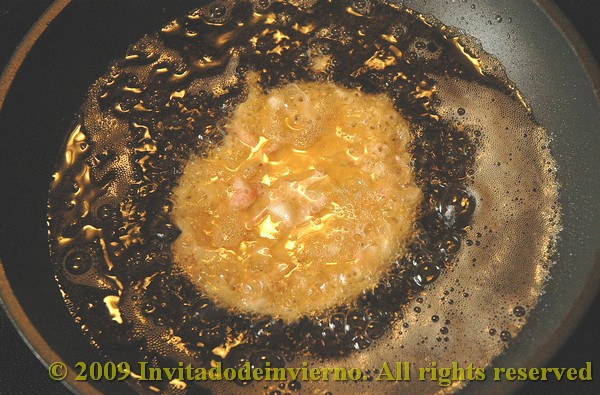
Pour olive oil in a shallow and wide pan to a height of 1-1.5cm and put the pan on medium-high heat. When the oil is hot enough, pour a tablespoon of the batter in the oil. Pat it with the spoon to spread it a bit and get a thin tortilla. At Casa Balbino they recommend that the oil shouldn't go higher than 80 ºC. According to my experience, that's the secret for getting uniformly browned tortillas: to cook them on medium temperature, even if it takes long. If the oil is too hot, the edges will brown too soon and the center will be softer and puffier. I like them this way too, but my family prefers them crispy. You can try both ways. As a sidenote, the oil will splash quite a bit, so prepare yourself to make a mess on your range. In my case, I cook and D. does the cleanup... (holding back a smile).


Then put in the pan as many tablespoons of batter as you can fit. Flip them over when they are nicely browned on one side. And... that's all folks. Lay them on a paper towel as you go to absorb some of the oil (yes, they do soak quite some oil) and... just eat them... I like them in any way, even when I burn my tongue or when they are cold... Should I be punished for that?

Last advice: please don't use any other kind of oil but olive oil for frying these... it would be sacrilege.

Eager to know more?

Followers

About This Blog

Lorem Ipsum

  © Blogger templates Palm by Ourblogtemplates.com 2008

Back to TOP