Related Posts Widget for Blogs by LinkWithin

Trinxat, Catalan cabbage and potato dish

>> Sunday, October 31, 2010

Trinxat 1

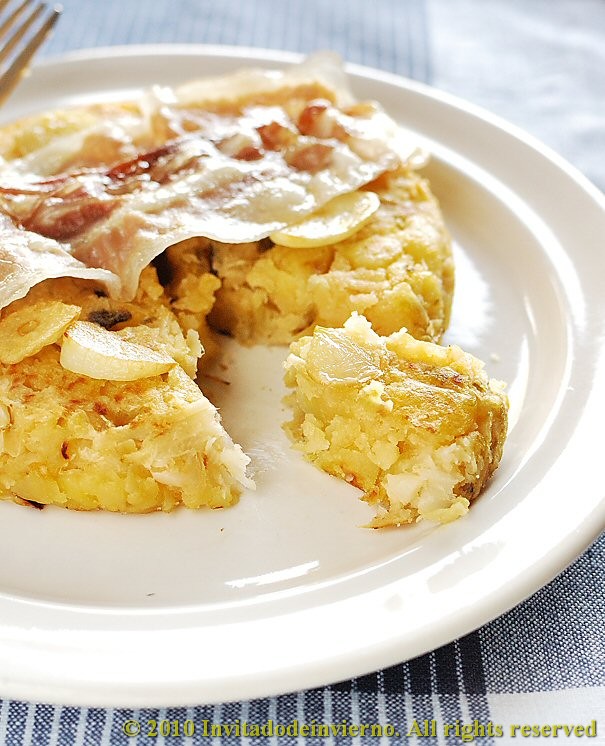
I like cabbage in various ways, in spite of its supremely stinky smell when cooking. I like it raw in salads, sautéed with pimentón and otherwise. But this preparation is one of the best I know. Trinxat is a typical dish from Catalonia, more exactly from the region of Cerdanya, humble and simple, a sort of non-egg omelette made with boiled potatoes and cabbage, then roughly mashed, stir-fried and accompanied by garlic and charcuterie. It is also tasty and cheap for these times, and accompanied by grilled fish or fried egg makes up a wholesome and delicious dinner. It is ideal too for a windy and cool autumn day. Trinxat even has a festivity of its own, celebrated at the town of Puigcerdá... It is well deserved...


I recommend this dish to all those who claim that they do not like cooked cabbage... like my partner. The first time I prepared this dish he said: you don't notice it is cabbage... So maybe you will also change your mind. It is never too late. And this dish can not be easier. Even a six-year old could make it... so bring a six-year old.

Trinxat 2

Trinxat de la Cerdanya
Yields 4 servings

  • 1/2 large cabbage
  • 3 large potatos
  • 4 somewhat thick slices of bacon
  • 4 garlic cloves
  • Olive oil for frying
  • Salt
  1. Cut the cabbage into pieces, removing the thicker stalks, and cook in salted water along with the potatoes, skinned and cut into large chunks.
  2. Meanwhile, chop the bacon into small pieces (or leave it in large rashers) and sauté in a skillet over low heat with the very fat it renders, until crisp to your liking.
  3. Peel garlic and cut into slices, and sauté in the same bacon fat, add oil if necessary. When done, remove and set aside.
  4. When thoroughly cooked, put the drained cabbage and potatoes in the skillet where you just fried the garlic. Sauté everything slowly while mashing it roughly with the side of a spatula. Stir continuously for the flavors to meld, until you have a coarse puree. Add salt to taste.
  5. When you consider that it is well mashed and mixed with the bacon fat and oil, use a spoon or spatula to pat it into a sort of flat cake like a Spanish tortilla and let it get brown (you may need to add a little more oil), over a somewhat stronger heat. When done on one side, turn it carefully with a lid or plate, so that the other side browns too.
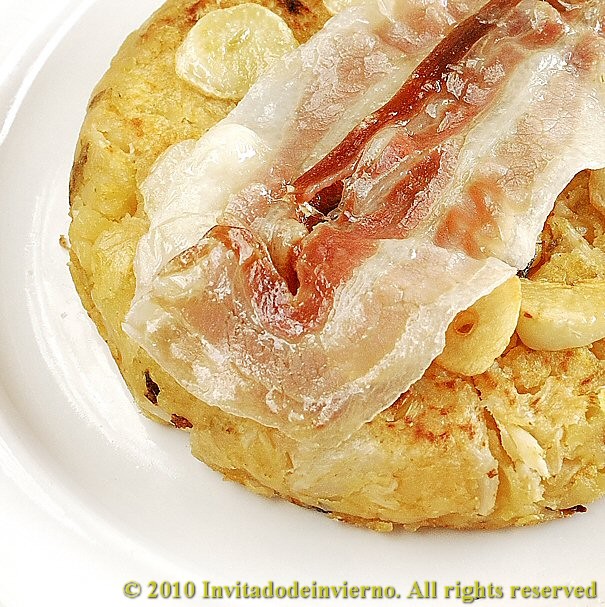
  6. Serve it warm with the bacon and garlic on top. You can also make individual or small snacks and serve them as tapas... delicious. To make small patties you can use pastry rings or egg molds, which are placed on the pan itself.
Trinxat 3

And again, if you have not ever tasted it you will be surprised, because the mixed flavor of cabbage with potatoes, garlic and bacon is fantastic. This is what I call culinary sinergy.

And by the way, stop by lovely Nancy's blog, Spicie Foodie, for a great roundup of Your Best Recipe for October including a recipe of mine, enjoy!

Eager to know more?

Dutch cookies: Arnhemse meisjes

>> Sunday, October 24, 2010

Arnhemse meisjes 1

Regarding my summer vacation, I still had to devote a post to the Netherlands, where we spent some fantastic time trying to lose ourselves among the natives, that means that we barely used the car and used the bike a lot. Although in our case, losing ourselves is quite unlikely, since the Dutch are all at least two heads taller than we are (do you know that the Dutch have the highest average height of Europe?). First we spent a couple of nights in an idyllic rural cottage north of Amsterdam, to see the Sail 2010 up close, an impressive gathering of tall ships from around the world that is held every five years in the Ijhaven, the port of Amsterdam. After that we spent five days in Delft comfortably installed at our friends L. and H.'s place, enjoying their generous hospitality (scrounging?). I lived in Delft a year and a half from 1989 to 1990 and I love the town. I always love to return, but this time I particularly enjoyed it. And my family feels the same. Delft is a beautiful place with a lot of history, and for me one of its greatest charms is to be the hometown of Jan Vermeer that happens to be one of my favorite painters (I highly recommend viewing the film Girl with a pearl earring, which besides being a beautiful film, depicts a recreation of Vermeer's paintings that is unsurpassed). And be sure that the light that he portrayed is still there...


Image courtesy of Wikimedia Commons: Woman with a water jug, Metropolitan Museum of Art, New York

During those five days we had the pleasure to reencounter some old friends (thanks R. and G., M. and J. for two wonderful evenings) and we received our graduation as Dutch apprentices with a dreadful shower in the wind during a night bike ride... So what? In the Netherlands even infants are used to such things. But understand that we are native to an arid continental plateau and this is unusual for us. But on the other hand, it is a pleasure to move around a city by bike, the kids had a blast and the adults too. And despite the high population density in the area, nature always seems to be just around the corner...


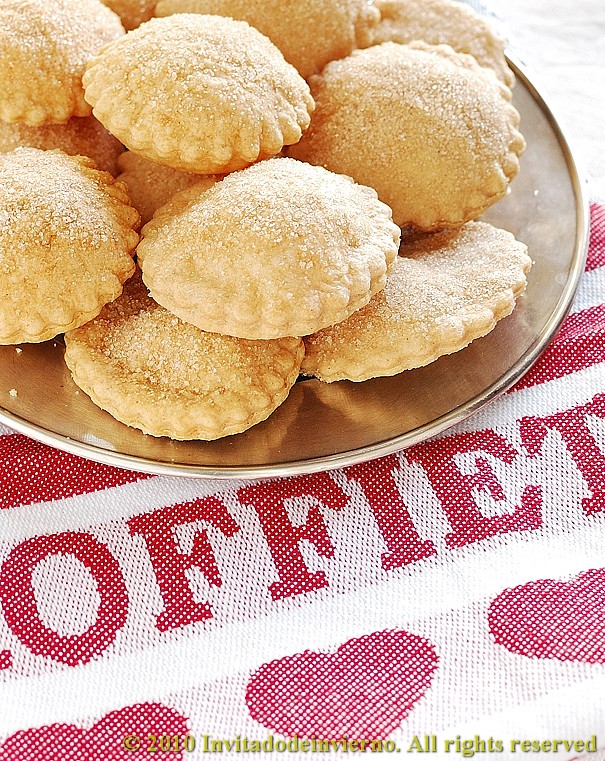
To choose a recipe to represent the country's cooking is no easy task, because Dutch cuisine is not... How shall I put it?... exactly wide and varied. But in all parts of the world there have always been a liking for sweet things and is not rare to find a wealth of sweetmeats comparatively higher than savory dishes, even in the Netherlands of austere Calvinist past. By the way, these cookies are among the favorites of Roald Dahl, so he tells in the cookbook that I mentioned in this post. These famous cookies have their origin in the city of Arnhem, a name that we relate to World War II, don't we? Arnhemse Meisje literally means Arnhem girl (check here the pronunciation of Meisje). These cookies consist simply of an oval flaky pastry studded with large sugar crystals, baked until they are well toasted and caramelized. They originated in the 19th century in the bakery Zalinge, former establishment of the city of Arnhem, owned by the Hagdorn, which still manufactures them. After a thorough study of the matter (ahem...), to prepare these cookies I've chosen Dahl's recipe, which he claims to have received from the very owner of this bakery. Although in my Dutch cookbook and in many websites the recipe calls for common puff pastry... I also followed the step by step procedure in the web of King Arthur flours, which in spite of not crediting the source, oddly enough follows Mr. Dahl's recipe almost exactly. These cookies are made with baker's yeast.

Arnhemse meisjes
Yields around 50 with a 5cm cutter

  • 190g flour
  • 100g milk
  • 4 lemon juice drops (okay, maybe I dropped 6 or 7 drops, should I be punished?)
  • 5g fresh baker's yeast
  • 105g butter at ambient temperature
  • Sugar for glazing the cookies *
* Sparkling sugar is best for this purpose, so that the cookies really sparkle. I did not have any, so I used regular sugar.

Arnhemse meisjes 3
  1. Weight the flour, the milk and the yeast and mix on low speed with the lemon juice in a stand mixer.
  2. Divide the butter in eight parts and add them one by one on medium-high speed. Wait each time for the dough to absorb the butter, around one minute. You will get a smooth and satiny dough. Put the dough in a bowl covered with plastic and put it into the fridge overnight. The recipe instructs to chill the dough to make it more manageable, given the huge amount of butter it carries, but I believe it is equally desirable to give it time for some fermentation to happen.
  3. The next day preheat the oven to 140ºC.
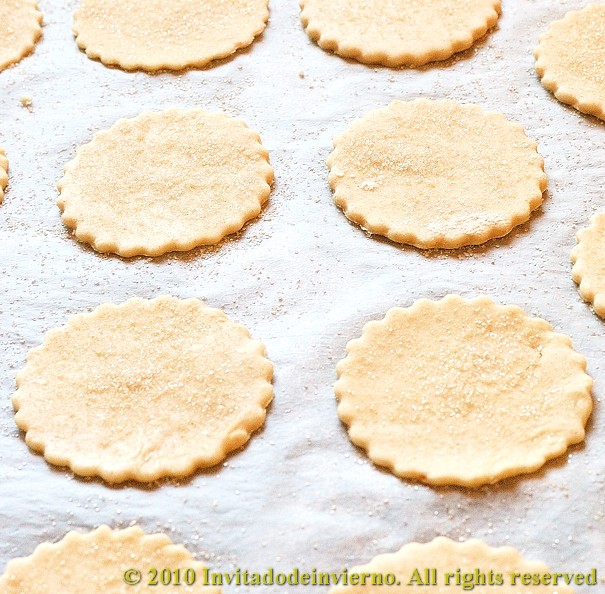
  4. Line a couple of cookie trays with parchment paper and roll the dough on a floured surface. I could not notice any rising in the dough. The actual shape of the cookies is oval, but I have no oval cutter, so I've made them perfectly round. Instead of flouring the countertop surface, you can also just spread the sparkling sugar and roll the dough on it. I think this is a good idea if you're going to cut the cookies into diamonds, for example, and you hardly have trimmings left, but if you are going to use a curved cutter, the dough in the trimmings will take up sugar and I do not like the idea. Flour the surface repeatedly because the dough tends to stick and you have to roll it very fine, something in between 1 and 2 mm.
  5. Generously dust the cookies on the trays with sugar, remember the dough itself includes no sugar. Press lightly for the sugar to stick to the cookies.
  6. Bake for 45 minutes, until golden. The girls of Arnhem puff up nicely in the oven... Take them to a cooling rack.
Arnhemse meisjes 2

I found these cookies very "Dutch"... something uncomplicated and that can be delicious with good ingredients. Although as I have not ever tasted the genuine Arnhemse Meisjes, I have no reference. They are very crunchy, with a penetrating aroma of butter... I do not know if they should be more caramelized, but with that oven temperature it is impossible because it does not reach the caramelization of sugar (that's why they have such a bland color). And although it is not faithful to the original recipe, I think a touch of cinnamon would do them good.

I'm sending these cookies to Susan's Yeastspotting at Wild Yeast.

Eager to know more?

Tortas de aceite or sweet olive oil wafers for World Bread Day

>> Saturday, October 16, 2010

Tortas aceite 1

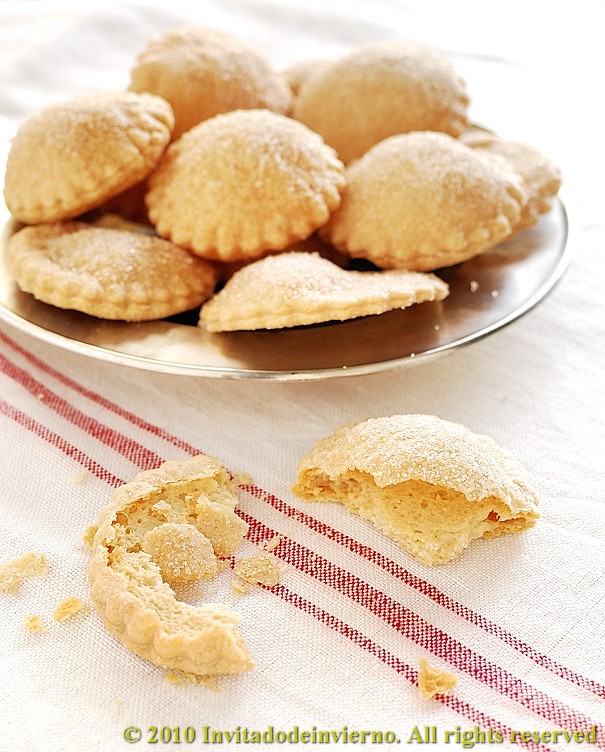
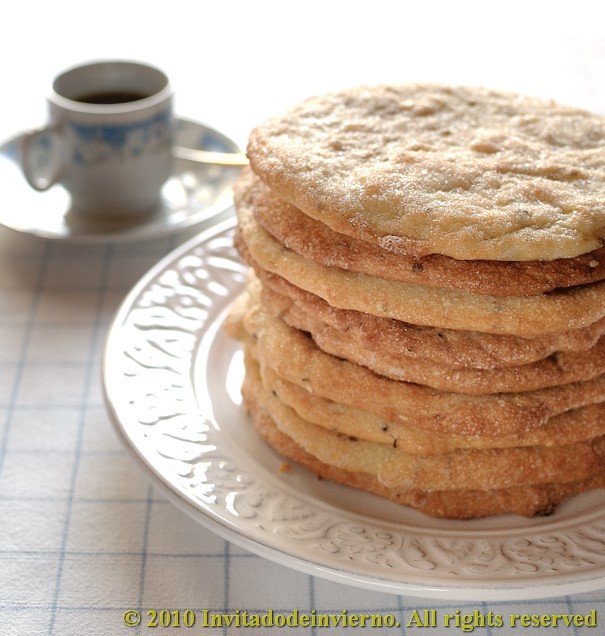
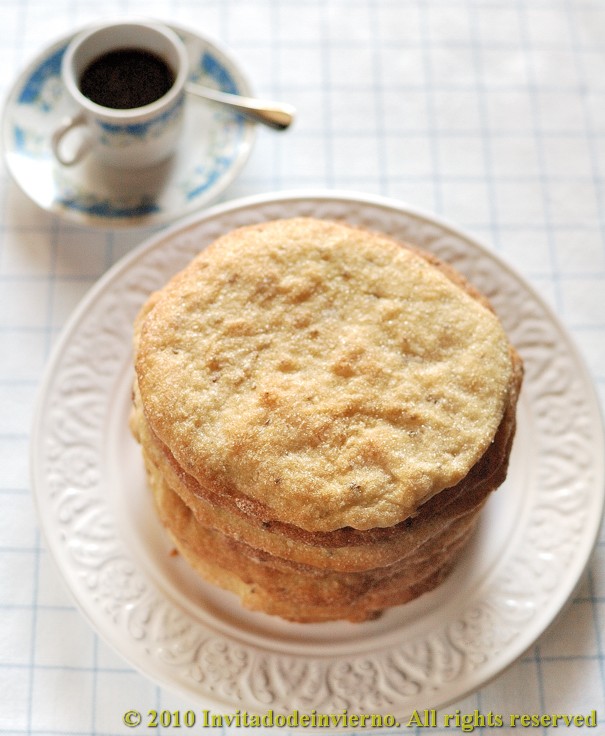
These tortas de aceite, meaning olive oil wafers, originate from Andalusia and they are one of those sweet things that are well known and widely eaten throughout Spain because they are just delicious. They are one of those wafers you eat unnoticedly one after another... to regret it after a few days when you cannot button up your trousers... And it was one of those recipes that has been in the pipeline since years ago, so what better occasion than the celebration of the World Bread Day to tackle them. It is also one of those miraculous cases where the taste of the homemade product is identical to the purchased one... yes, I tell you, it's unbelievable, they are just as delicious, with their anise flavour. Only their looks are not just as wonderful, but you can not compare a home oven with an industrial oven. The taste though... mmm.


The recipe is taken from the Andalusian government specification for the production of tortas de aceite, but modified and fine-tuned according to some hints found here and there, even at Wild Yeast (Susan succeeded in making wonderfully looking tortas). This is what the Government of Andalusia tells us about these tortas:

The name "TORTA DE ACEITE" expresses the specific characteristics of the product since it is a confection made from extra virgin olive oil in a proportion 27.7%. The combination of this factor with its fully manual processing, gives the product its most precious qualities: a light, thin crust, a flaky interior and its distinctive flavor and aroma of olive oil.
Tortas aceite 2

Well, that's it, all you need is good virgin olive oil (bushels of oil...), and to pour a lot of love in preparing them.

Tortas de aceite y anís, sweet olive oil wafers
Yields around 25 tortas
  • 660g AP-flour (the recommended flour is W=100 strength, that means something in between all-purpose and bread flour. I used 350g spelt and 310g AP flour. You know the exact amount can vary depending on the flour absorption qualities.)
  • 27g inverted sugar *
  • 230g water
  • 13g fresh yeast
  • 280g virgin olive oil
  • 10g aniseed
  • 7g sesame seeds
  • 3g salt
  • 10g plain sugar
  • 0,3g aniseed oil or essence
* Inverted sugar is commonly used to retard sugar crystallization in the food industry and to retain moisture in packaged foods and expand shelf life (source). It's very easy to make at home, by heating common sugar in some water with lemon juice and sodium bicarbonate. I guess the recipe includes inverted sugar only because it is a commercial formula. At home it could be omitted and you could use plain sugar, in which case, as invert sugar has a sweetening power of 130 compared to 100 of sucrose, the final amount would be at 27g·130/100 + 10g = 45g of normal sugar. Although it would be necessary to slightly adjust the amount of flour, as invert sugar is liquid and plain sugar is solid.

Tortas aceite 5Tortas aceite 6
  1. Weigh the flour and put in a bowl. Add the liquid ingredients and mix well (I do this in a stand mixer).
  2. Add the solid ingredients and knead a couple of minutes. It really is not necessary to develop the gluten, I did it because I love to knead.
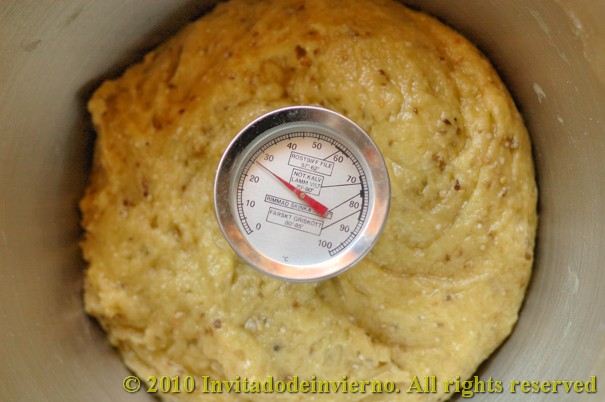
  3. Cover the dough with a shower cap and let double in bulk. Allow the yeastie-beasties to enjoy the moment, after all these happy little creatures believe that life is nothing but eating and replicating... unaware that they live and work for a supreme being until they are slaughtered in an oven... How poignant. The specification indicates that the dough must be between 25º and 28ºC after kneading... Mine scored a perfect temperature, as you can see in the photo.
  4. Preheat the oven to 190ºC if convection type, higher if radiation.
  5. When the dough has doubled in bulk, put on the counter and pat it to deflate. Pinch dough balls the size of an apricot and roll them into circles of about 20cm in diameter and about 3mm thick. There is no need to flour the countertop because oil oozes from every pore of the dough. Put sugar on a plate and coat one side of each torta by resting it on the sugar. Place the wafers on parchment paper with sugar side up and bake around 10 minutes. Be careful when approaching the end of the baking, because my experience is that since the edges start to toast until they get completely browned it may take less than a couple of minutes. This may be due to the fact that invert sugar caramelizes at a lower temperature than sucrose.
  6. When done, take them out to a cooling rack. The aroma throughout the house is fantastic. I recommend to bake these wafers if you have visitors whom you wish to ask some favor. They will not refuse.
Tortas aceite 4Tortas aceite 3

This bread goes to the celebration of the World Bread Day at the blog 1 x umrühren bitte.

Eager to know more?

Sephardic veal stew

>> Wednesday, October 13, 2010

Sephardi stew 2

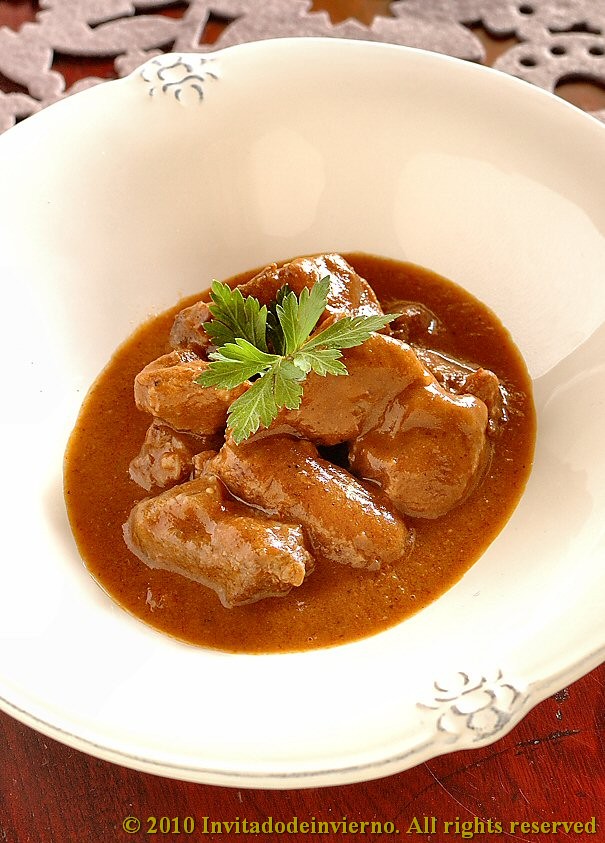
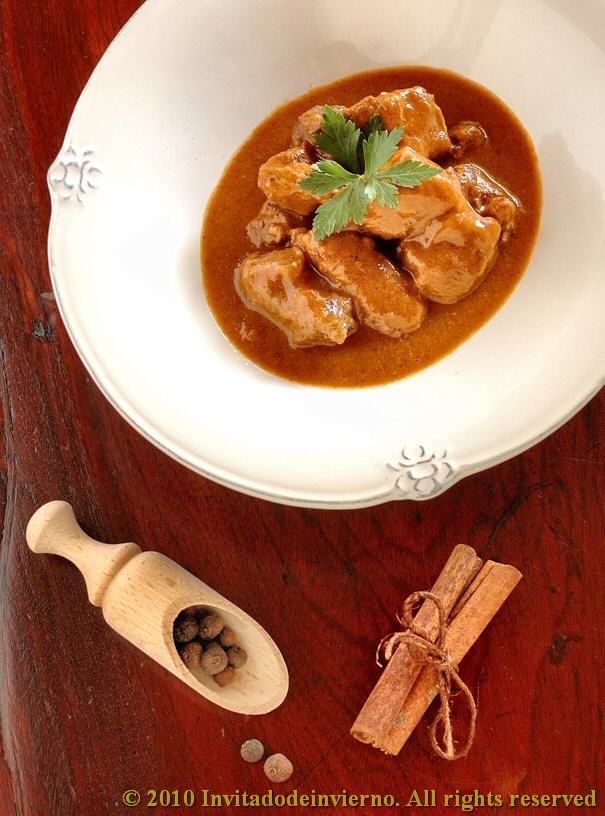
This dish has been a classic in my family for some time already. It comes from one of my favorite cookbooks, in my collection for over 10 years, The Sephardic Kitchen, by Rabbi Robert Steinberg. It's one of those cookbooks that reads like a novel, and brings us closer to the kitchen of a culture that keeps many ties with Spain. The writing is very entertaining and the recipes are mingled with Sephardic folktales. It contains lots of very healthy and tasty dishes, many of those I still have to attempt... This hearty stew is one of those cases where the result is more than just the sum of its parts. A paradigmatic representation of this is a good torrija (Spanish style French toast), which makes you doubt that its creamy interior can consist only of bread soaked in milk. The succulent sauce of this stew is a perfect combination of ingredients, without any dominating over the others, and in which they all combine to create "something else" beyond the mere mixture of red wine, vegetables, honey and spices. You see, this amazing sauce inspires me and brings out the poet in me... Mmm, yum. Olé to this sauce...


And now to some historical background (an excerpt from this site), because in Spain most people know what Sephardim are, but I doubt the same holds outside Spain:

Sepharad is the Hebrew word for the Iberian peninsula that includes Spain and Portugal. (...) Jews lived in Spain long before the Visigoth (Germanic) tribes invaded in 412, however after the Moorish invasion of Spain in 700, there was a large influx of Jews immigrating to Spain. In the tenth and eleventh centuries, Spanish Judaism flourished under Muslim rule, producing poets, scholars, and courtiers - what is known as "the golden age of Jewry." By the mid-thirteenth century, however, the Christians controlled all of the Peninsula except for a small area from Granada to the Mediterranean. In March, 1492, King Ferdinand and Queen Isabella decreed the expulsion of the Jews from Spain. Many Jews converted or left while others went to Portugal, where Judaism could still be practiced freely. But Portugal expelled its Jews in 1497, and the tiny kingdom of Navarre followed suit in 1498. Judaism could be practiced openly nowhere in the Peninsula. Driven from home, the Sephardim established their own congregations in such places as Morocco, Italy, Egypt, the Ottoman Empire, the Land of Israel, and elsewhere.

Mr. Steinberg tells us about this sopado, original name of this dish in ladino, the Judeo-Spanish language:
It is a sweet and spicy veal stew, a typical Sephardic dish that was popular throughout the Jewish Mediterranean. The seasoning varies from one community to another. The recipe that follows is that used in Thessaloniki, Macedonia and northern Greece. Sopado reminds of Hungarian goulash, which only differs in the amount of onion and paprika employed.
Claudia Roden, in The book of Jewish food, tells us about Sephardic cooking:
What we call Sephardi cooking today is the cooking of Mediterranean and Oriental Jews. There are four broad styles. Judeo-Spanish, which is Turkish and Balkan, is the cooking of the Jews of Iberian ancestry who went on to live in the Ottoman heartlands. North African or Maghrebi Jewish cuisine includes Moroccan, Tunisian, Algerian and Libyan. Then there is Judeo-Arab cooking, which is at its best in Syria and Lebanon, and the Jewish cooking of Iraq and Iran. (...) Sephardi cooking is sensual, aromatic and colourful. It makes use of anything that gives flavour - seeds, bits of bark, resins, pods, petals, pistils and flower waters. The Sephardim had a sunny, hedonistic nature (...) good eating has always been part of their traditional Jewish life. Their cooking is of a kind that lifts the spirits. The warm and sunny world they lived in had something to do with this, as had their way of life and historical experience.

Sephardi stew 3

Sephardic veal stew
  • 1,5kg veal or beef for stewing, cut into large dice
  • 8 scallions
  • 500g onions
  • 4 cloves garlic, peeled
  • 2 tsp Spanish sweet pimentón
  • 1/2 tsp Spanish hot pimentón (if the stew is aimed for children as well, you can ommit this and add the same amount to the sweet pimentón)
  • 1/2 tsp allspice
  • 1/4 tsp ground cloves
  • 1 stick cinnamon
  • 2 bay leaves
  • 1 cup beef stock
  • 1 heaped tbsp honey
  • 2 cups tomato sauce
  • 1 large glass red wine
  • Olive oil for frying
  • Salt to taste
It's an easy dish to prepare:
  1. Season the meat and heat the oil in a saucepan with a lid to medium-high heat. Stir-fry the meat in batches to seal (I use a cocotte or Dutch oven, which works great for this task). Set aside.
  2. Cut the veggies and stir-fry in the rendered meat fat. When the vegetables are thoroughly soft, add both pimentones and fry the mixture for another 2-3 minutes, but not longer otherwise the pimentón can get a bitter taste. Add the allspice and ground cloves and sauté another minute.
  3. If you are making the sauce in a pan, at this point add the broth and deglaze the bottom. If you are using the Thermomix, also add the stock and at this point you can process the sauce to smooth. I prefer it that way, like a thick, velvety sauce, but I leave it to your taste. Although I do it, the original recipe does not calls for processing.
  4. Then add all remaining ingredients: cinnamon stick, bay leaves, honey, tomato sauce and red wine. Stir well.
  5. Return the reserved meat to the pan, cover well and cook over low heat for about two hours, it may be longer or shorter depending on the toughness of the meat (for example, the last time I cooked this dish one and a half hour was enough). It is not usually necessary to add more liquid, as the mixture of wine, stock and tomato is usually sufficient for a suitable consistency.
  6. When the meat is tender, add salt, further heat for a couple of minutes for the salt to mix and dissolve and check the seasoning. Adjust if necessary. The original recipe calls for a quarter cup of lemon juice at the end of the cooking, but I never add it because I don't quite like the idea and don't miss it in the finished stew.
Sephardi stew 1

Like most stews, this stew is more tasty the next day, when all the flavors have developed and permeated the meat. For that, and because it is delicious, it is a dish that I cook often whenever I have guests, because I can prepare it the day before. Accompanied by a good rice or baked potatoes with herbs it makes a real fiesta dish.

Like a Sephardim would say: Berajá i salú...

Eager to know more?

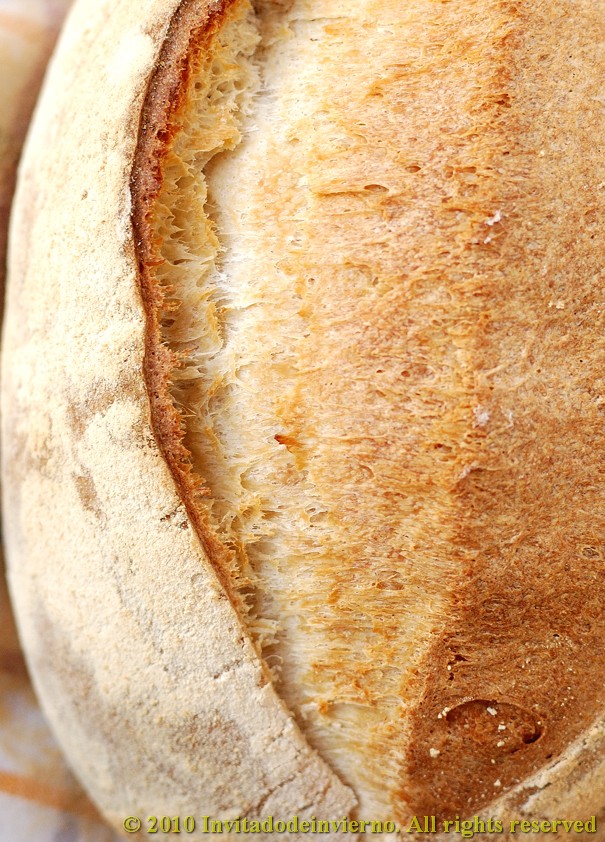
Bread with sparkling water

>> Sunday, October 3, 2010

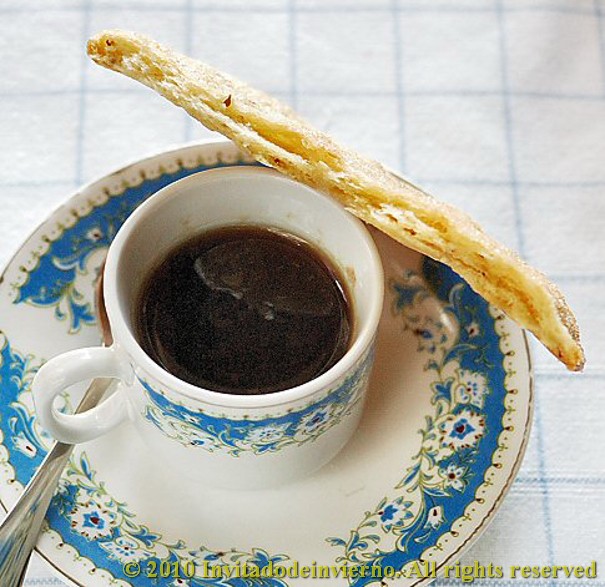
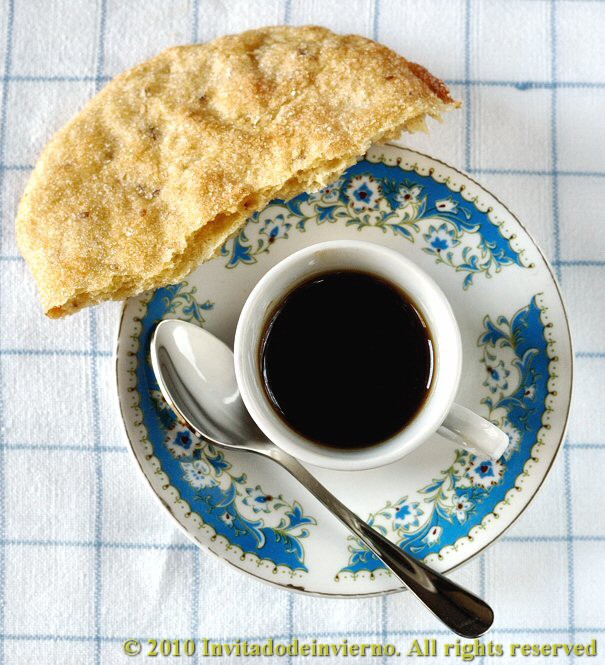
Vichy bread 1

Picture this: you have guests for lunch or dinner and you offer them a drink when they arrive. With the kindness and the greatness that distinguishes you, you offer to prepare some glasses of water with coloring agent, carbon dioxide and tons of sugar or aspartame. Mmm, your guests are sure to salivate at the prospect of tasting this delicious beverage. Well, that sounds exactly like one of the many sodas whose drinking we've come to find normal, though I won't mention its name. Doesn't it sound disgusting? Perhaps it is. You're probably wondering what's this all about. Well, a few days ago a respected Spanish mineral water company offered to send me a bottle of Vichy Catalán. I accepted for three reasons: first because D. and I have been drinking Vichy Catalán for 20 years, the second because I was assured that by the acceptance of this gift I committed to nothing, and the third that this company has the good sense to use glass to bottle the water. And the prospective of talking or not talking about the water in my blog made me reflect on what we drink and why.


At present I only drink water and wine (and gallons of cava when the gods are propitious..., and I don't drink beer because it tastes like pee...). Don't think that this has always been that way, in the past I used to drink that soda whose name I don't remember. Until I started having weight problems and became interested in nutritional issues. And to wonder what foods and drinks are harmful, not only for weight, but for your overall health. I know, many of you will tell me that one can't always stop and think about everything he does. Well, it depends. If I were invited to dinner by George Clooney it wouldn't take me very long to decide if it's good or bad for my body (a few milliseconds, plus it's neither good nor bad, it's sheer science fiction), but when it comes to what I put into my body, you might as well think about it. Others could object that I shouldn't drink alcohol then. Certainly I don't drink it every day, but I take my dose of red wine antioxidant... To cut a long story short, I've been drinking this sparkling water for 20 years because it's delicious, with a nice salty touch of its own. I think it was one of my sisters-in-law who introduced it in the family and her oldest daughter baptized it as spiked water when she was little... It's sad that spring water producers have to fund studies to prove that the mineral water is good for your health... my grandmother knew that. Michael Pollan is right to advise us not to eat anything your grandmother wouldn't consider edible... But it seems that humans have no common sense and we need to be reminded of the obvious.

Vichy bread 2

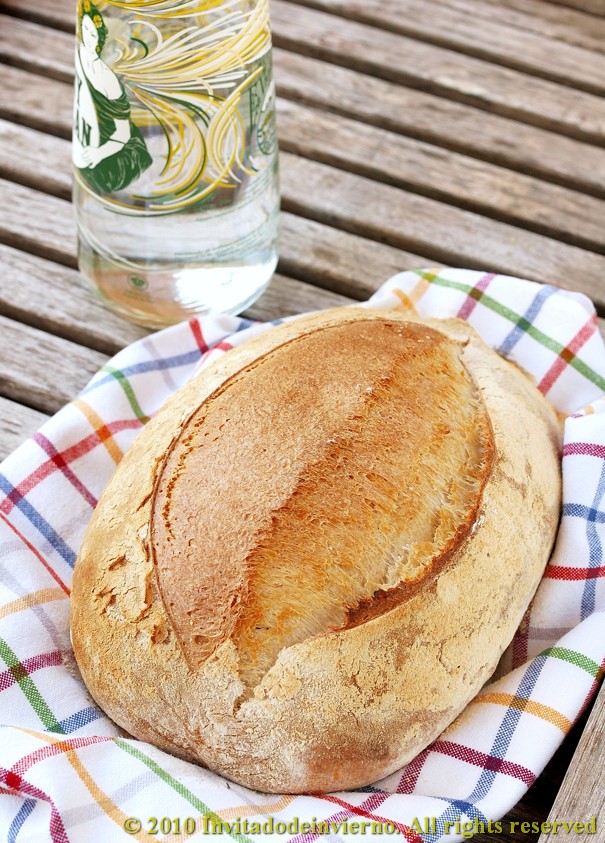
Stop the musings. This gift seemed an ideal opportunity to test the action of carbonated water in a homemade bread, so that's what I did. I used an organic flour that I brought from my trip to Denmark because it showed some nice little pictures of bread in the package... but had rather little gluten, so I noticed when the time came to use it, at least the package read 10% (mmm, and the Roskilde supermarket was a bit out of my way to return the flour...).

Vichy bread 4

Bread with sparkling water

  • 300ml good sparkling water
  • 480g bread flour
  • 135g sourdough starter 100% hydration (50/50 wt.)
  • 2 tbsp oil
  • 5g salt
  1. Mix all the ingredients except the salt, leave to autolyze. I used Dan Lepard's kneading system, shaped the dough into a ball and left it to ferment, covered.
  2. After one hour proofing, I folded the dough once and put it in the fridge to retard overnight.
  3. The next day I left it at room temperature to warm up and resume the fermentation (around 3 hours). When doubled, I shaped it into a plump batard.
  4. Once the bread had doubled, I put it into my oven at 250°C. Since my oven is disastrous, as soon as I opened it four or five times to spray water, the temperature dropped to 230° and remained so throughout the baking. The bread took 40 minutes to score an inner temperature of 92ºC.
Vichy bread 3

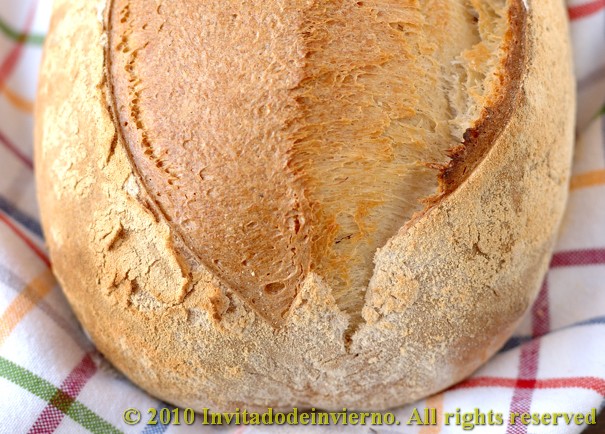
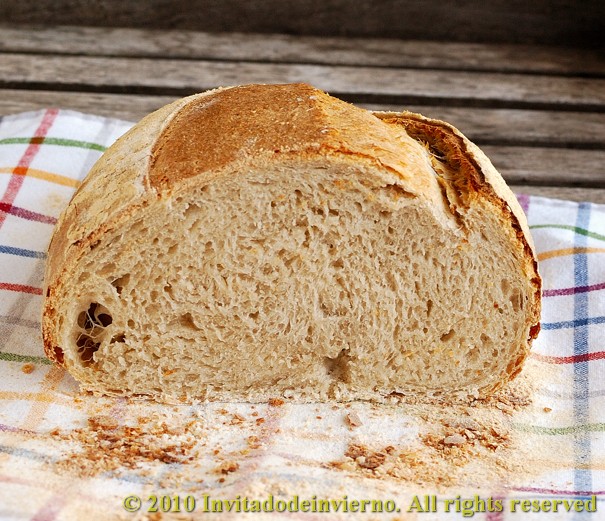
The result was a fairly densely crumbed bread, very tasty and with a nice crispy crust. As yesterday it wasn't my most brilliant day, my results are inconclusive because in order to check the difference sparkling water can make in a bread I should have used my regular flour, as I haven't the basis to compare, because the Danish flour was a bit weird. On one hand I mentioned it showed a very low percentage of protein in the package, on the other hand while kneading it gave me the feeling that the dough was very strong. Perhaps the density of the crumb is due to not having done a thorough kneading... I should have waited till the next day to eat the bread, but I couldn't restrain myself and half of it disappeared on the midday meal. It was gorgeous, despite its faults...

This one I'm sending to Wild Yeast's Yeastspotting.

Eager to know more?

Followers

About This Blog

Lorem Ipsum

  © Blogger templates Palm by Ourblogtemplates.com 2008

Back to TOP