Related Posts Widget for Blogs by LinkWithin

School of tapas: Chorizo a la sidra

>> Friday, June 24, 2011

Chorizo a la sidra

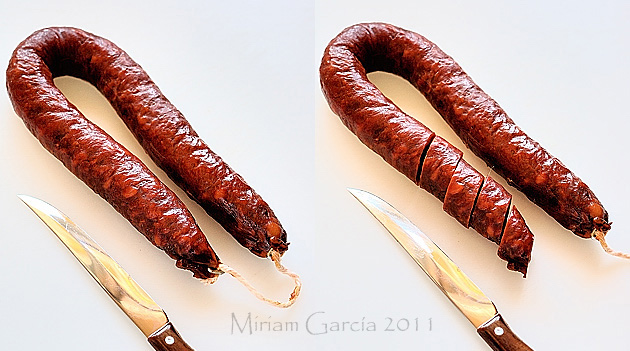
Traditional Spanish cooking is uncomplicated most of the times as it basically relies upon premium quality ingredients. Like good chorizo. Chorizo a la sidra or chorizo cooked in cider is one of the simplest tapas and simplest pairings you can find, fine charcuterie fried in good virgin olive oil and then stewed in cider until the liquid is reduced and the slight sweetness of the drink infuses the chorizo… heaven in a tapa. Skeptical? Don’t judge before you try it. This is a tapa that originates in the northern region of Asturias, a lusciously green, misty and humid area where apple orchards are abundant and so are sidrerías or cider houses. Asturian natural cider is a mildly alcoholic beverage made by fermenting apple juice; it is traditionally poured from the bottle from a certain height so that the liquid crashes into the glass and gets somewhat oxygenated. This fizzying effect only lasts a few seconds, that’s why the cider glassful must be gulped down in one go… Fortunately cider can be enjoyed in this tapa in a less compromising way.


Chorizo a la sidra

Chorizo a la sidra

  • 1 good quality chorizo (not the drier type, but tender)
  • 1 cup natural cider
  • 1 tbsp virgin olive oil
Chorizo a la sidra
  1. Slice the chorizo in 1/2 inch slices and set aside.
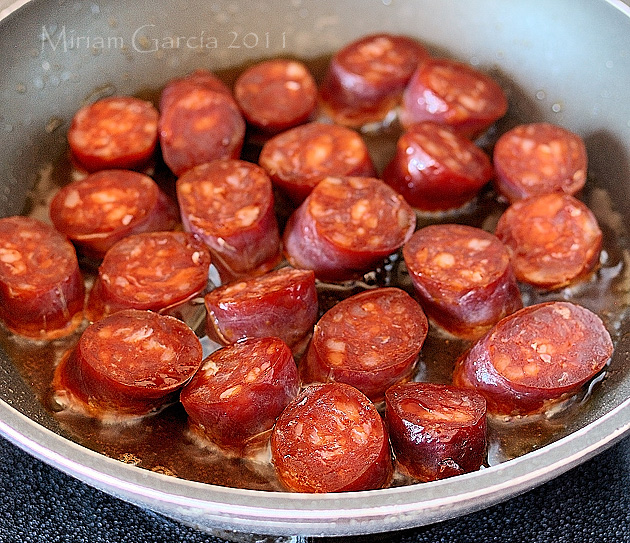
  2. Pour the oil on a skillet and heat on medium. Add the chorizo slices and fry until they change in color, but don’t overdo it.
  3. Add the cider and toss to coat the chorizo. Boil for 10-15 minutes, until the sauce has reduced by one fourth.
  4. Serve in small bowls while still warm, though chorizo a la sidra can also be served at ambient too.
Pour yourself a good glass of red wine or cider and enjoy! And don’t forget to finish the resulting sauce by dunking large pieces of bread in it, what is called mojar in Spanish, literally to wet. I believe the act of mojar is in our genes…

Eager to know more?

School of tapas: Mushroom escabeche

>> Saturday, June 11, 2011

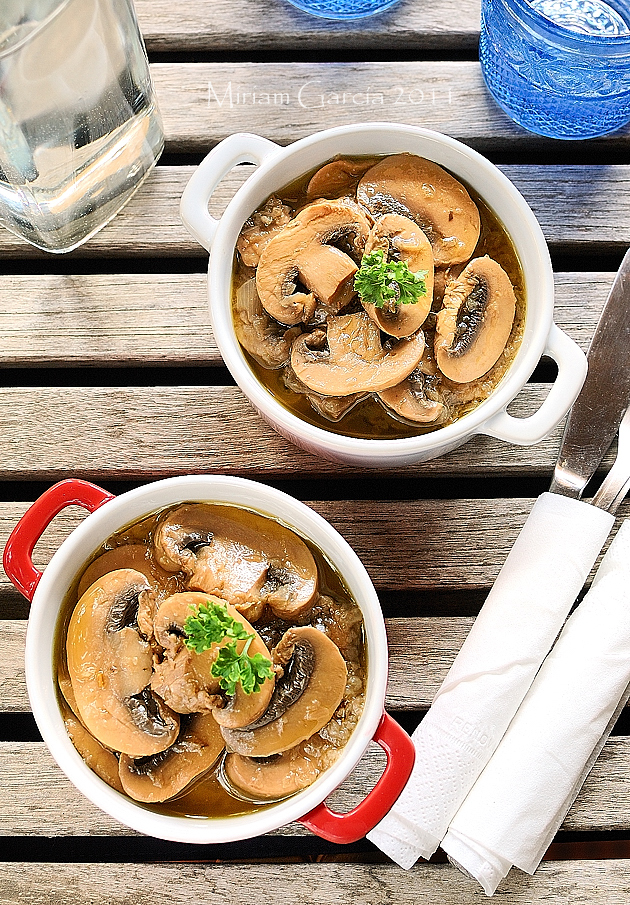
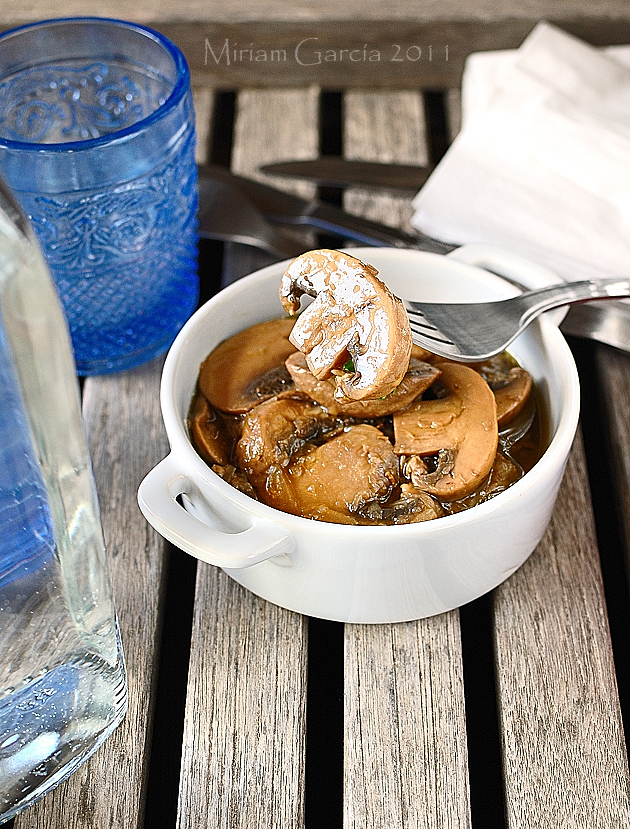
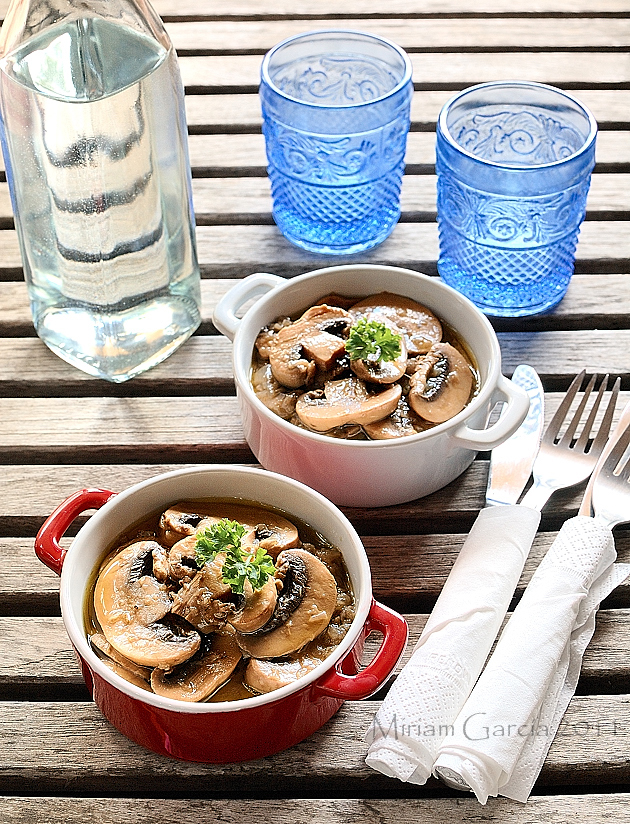
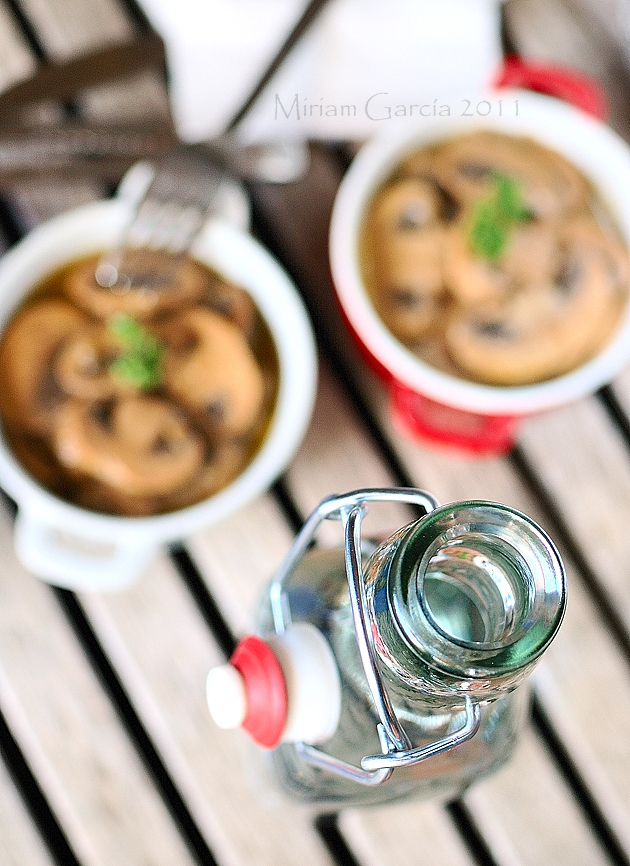
Champis escabeche 2

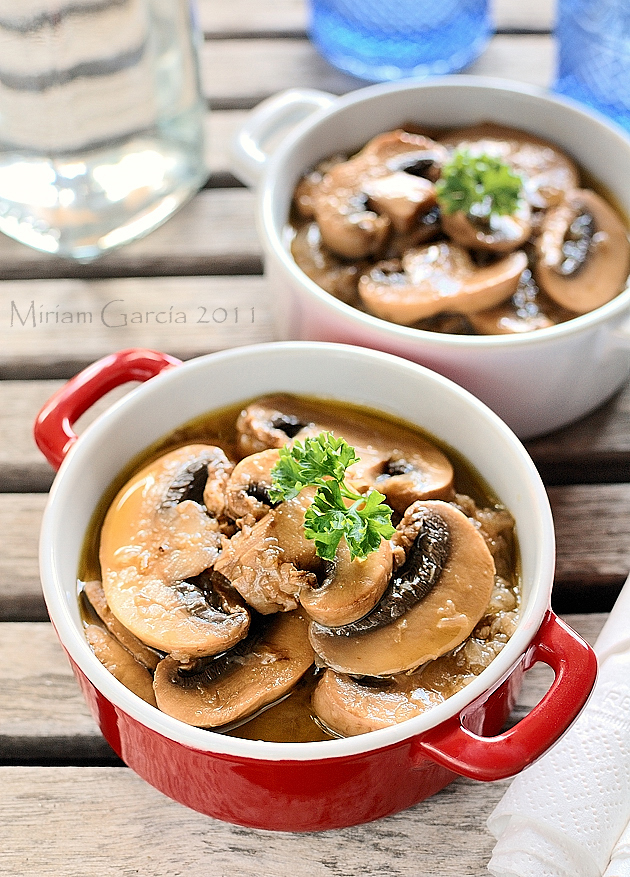
Escabeche is an ancient cooking and preserving method which originates during the Muslim rule of Spain in the Middle Ages. In Spain it usually consists in cooking the food in a mixture of vinegar, white wine and olive oil, seasoned with bay leaves and black pepper, among other spices, and most of the times accompanied by some vegetables like carrots and onion. This method, used for fish and meat alike, easy and versatile as it can get, allows for the food to last at least a couple of weeks in the fridge. What’s more, it is preferred to wait a couple of days before eating it, to allow for the flavors to fully develop. The finished dish is usually served at ambient temperature. Ingredients cooked in this way can be canned as well and kept for months after sterilization. I am a big fan of escabeches, as I enjoy those dishes that can be prepared in large amounts to slowly use them up along several days. The original recipe for this mushroom escabeche tapa is a signature recipe by the recently deceased 3-star Michelin Spanish chef Santi Santamaría.


This is a recipe that is easy and quick to make, very versatile as it is good not only as a tapa but also as a side dish and even in a salad on top of some greens, who could ask for more?

Champis escabeche 3

Champis escabeche 4

Mushroom escabeche, adapted from Santi Santamaría

  • 1lb (500g) mushrooms
  • 4 shallots
  • 3 cloves garlic
  • 4/5 cup (200ml) Sherry vinegar
  • 4/5 cup (200ml) good white wine
  • 3/5 cup (150ml) water
  • 2 2/5 cups (600ml) virgin olive oil
  • 1 bay leaf
  • 1 tsp black peppercorns
  • 1 tsp salt
  • 1 pinch rosemary
Champis escabeche 1
  1. Thoroughly clean the mushrooms, cut off their feet. Wash in a colander, rinse and slice. Set aside.
  2. Finely chop the shallots and sauté in a heavy pot in 4 tbsp of the virgin olive oil until translucent.
  3. Add the vinegar and reduce the liquid by half, until the shallots begin to brown and caramelize (10-15 minutes).
  4. Add the white wine and the water, and again reduce by half (another 8-10 minutes).
  5. Add the sliced mushrooms, the whole peeled cloves of garlic, the seasonings and remaining oil, and cook everything together 25 minutes.
  6. Check the seasoning and add more salt if needed. Let cool the escabeche and keep it in the refrigerator for three days before eating, for the flavors to meld.
Champis escabeche 5

In my humble opinion, this escabeche has a master touch: the caramelized shallots. The mixture of caramel flavor with the taste of Sherry vinegar gives this escabeche a distinctly special character. Simply scrumptious. And if you wonder if you can use another type of vinegar I say yes, the result will be good too, but will not have that much character, because good quality Sherry vinegar has a very special bouquet. By the way, Sherry vinegar is one of the three vinegars protected by a designation of origin status in the European Union, the other two being Condado de Huelva vinegar, also Spanish, and the ubiquitous Italian Balsamic of Modena. I hope I have piqued your interest in this very delicious vinegar…

Eager to know more?

School of tapas: patatas con alioli

>> Thursday, June 2, 2011

Patatas alioli 1

I am starting a new series of articles on the most popular type of dish or at least the best known type of Spain gastronomy: tapas. I already have some tapas recipes in this blog (just click the label tapas at the bottom of this post), but never before thought about making a real series out of this type of dish. The trouble with tapas is that they’re so familiar to Spaniards that we don’t really get the hype about them. It’s not that they’re not delicious. It’s not that an array of colorful tapas is not perfect for entertaining either small or large parties. It’s just that we take tapas for granted.


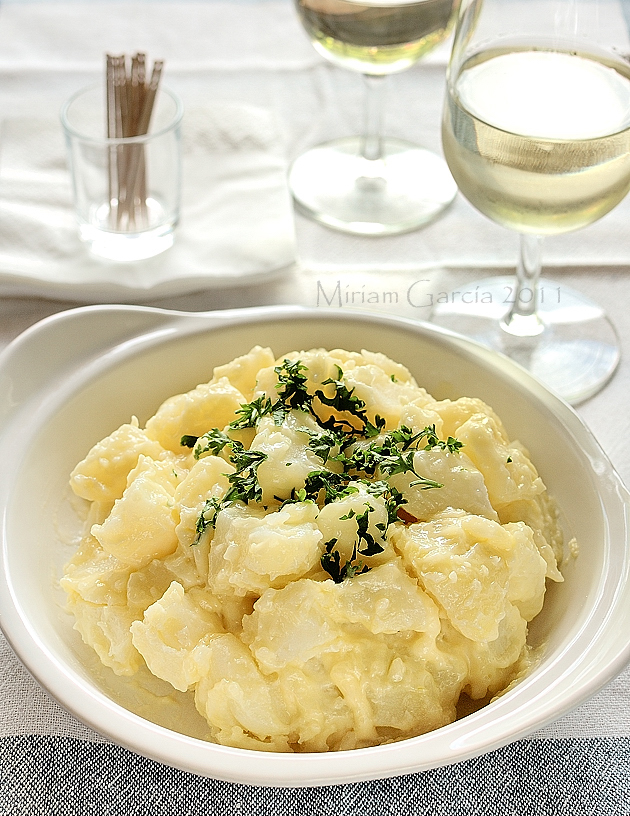
Therefore I intend to change my mindset and try to think like a non-Spaniard looking for scrumptious, colorful and easy-to-make tapas. And what is a tapa? Well, you all know it is essentially a small appetizer that’s always served alongside drinks in Spanish bars and restaurants. Even though today a tapa can be made out of literally anything, with for example stews or soups served in tapa-sized portions, I prefer the very traditional choices, small bites that have been around for many years already. So let’s start with the first element I’ve chosen for this series, a real tapa classic: patatas con alioli, meaning potatoes with alioli sauce. Now that the barbecue season is starting all over the northern hemisphere, you’ll find this potato-salad-like appetizer to be a great addition to any respectable barbecue party. And this tapa can be made in advance and kept in the fridge.
Patatas alioli 3

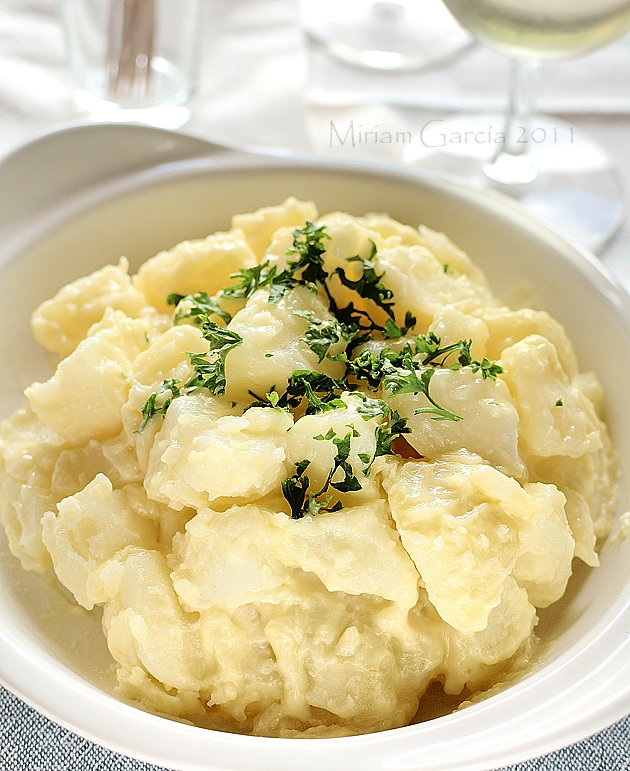
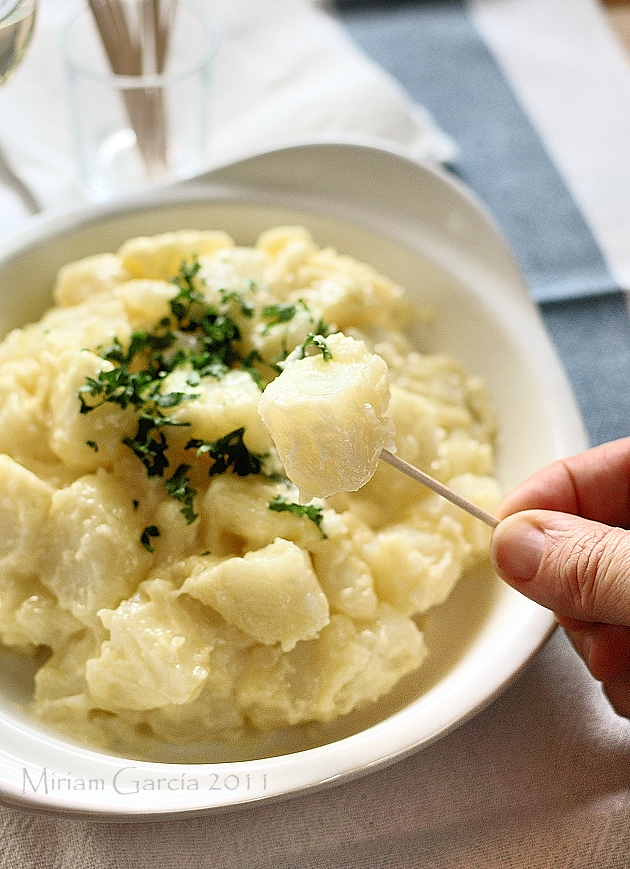
Patatas con alioli is a kind of potato salad dressed with a strong garlic sauce. Alioli is made up of the Catalonian words all-i-oli, which literally translate into garlic-and-oil. Different variations of this sauce are typical throughout the Mediterranean coast of Spain (and it can also be found in France and Italy), where it is prepared by thoroughly mashing garlic cloves in a mortar to release their juices, to which a steady thin stream of olive oil is added until an emulsion is formed that looks whiter and somehow more translucent than classic mayonnaise. Because genuine alioli is not garlic mayonnaise. Although garlic mayonnaise can be used too for this potato tapa. And in fact it is used most often than not; I’m going to use it here because emulsifying the oil with the only aid of the garlic juices is a tricky matter. Believe me, I’ve tried it. It can take you more than one whole hour to add all the oil needed, drop after drop, till you get a reasonable amount of alioli. And spoiling the emulsion during the making process is the easiest thing to do.

Patatas con alioli

For the garlic mayonnaise

  • 1 whole egg
  • 3 garlic cloves
  • 1 dash lemon juice
  • 1/2 tsp salt
  • 1/2 cup sunflower oil
  • 1/2 cup mild olive oil (the oil must be mild, otherwise the sauce will taste too strong)
For the alioli potatoes
  • 4 medium potatoes (1 per person for a tapa-sized portion)
  • 2 tsp salt
  • 1 bay leaf
  • Some sprigs of parsley
Patatas alioli 2

Instructions
  1. Thoroughly wash the potatoes. Put them unpeeled in a saucepan and cover with cold water.
  2. Add the salt and the bay leaf.
  3. Put on high heat, bring to a rolling boil and cook uncovered for 15-20 minutes, depending on the quality of the potatoes. Add more water if needed before the potatoes are cooked. Prick with a knife to check for doneness.
  4. When cooked, turn off the heat and leave the potatoes to temper in the water another 20 minutes. Then rinse and leave to cool completely.
  5. Prepare the garlic mayonnaise while the potatoes cool down: peel the garlic cloves, cut them in half and pry out the germ (the sprout in the center of the cloves), as it is supposed to be the cause of the garlic’s digestive aggressivity. Dice the cloves.
  6. Mash the garlic cloves in a mortar with a pinch of salt or process them to a puree in a food processor (if it can handle such a small amount of ingredients).
  7. Put the egg, which should be at ambient temperature, in a blender or food processor.
  8. Add the garlic, the salt and a dash of lemon juice. Pulse to mix.
  9. Switch on the blender and start adding the oil in a steady thin stream through the lid, till you finish all the oil and the mixture has thickened and emulsified. When done, test for seasoning. If you find the sauce too garlicky for your taste, you can always add a ¼ cup more of oil, but not more as one egg yolk can only emulsify a certain total amount of oil. Also I recommend to keep the sauce on the salty side, as you need the sauce to outweigh the blandness of the potatoes.
  10. Peel the potatoes and cut into chunks, put them in a salad bowl or in individual small bowls. Add the sauce to the potato chunks and toss to cover well.
  11. To finish, finely chop a few sprigs of parsley and sprinkle on top of the potatoes.
Just a warning: as the homemade garlic mayonnaise carries raw eggs, you must get hold of the freshest eggs you can find and always keep the alioli in the fridge for no longer than 3 days.

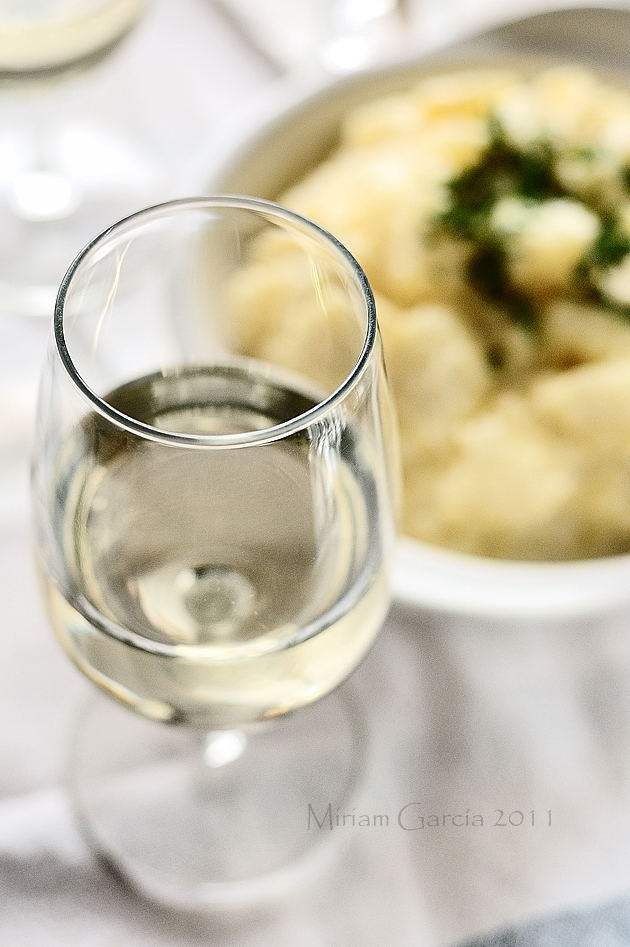
Serve on a warm day with a very cold beer, fino or even better… with a chilled sangría. Salud!
Patatas alioli 4

Eager to know more?

Followers

About This Blog

Lorem Ipsum

  © Blogger templates Palm by Ourblogtemplates.com 2008

Back to TOP