Related Posts Widget for Blogs by LinkWithin
Showing posts with label wine. Show all posts

Sparkling wine jelly and a giveaway

>> Sunday, November 7, 2010

Cava jelly 1

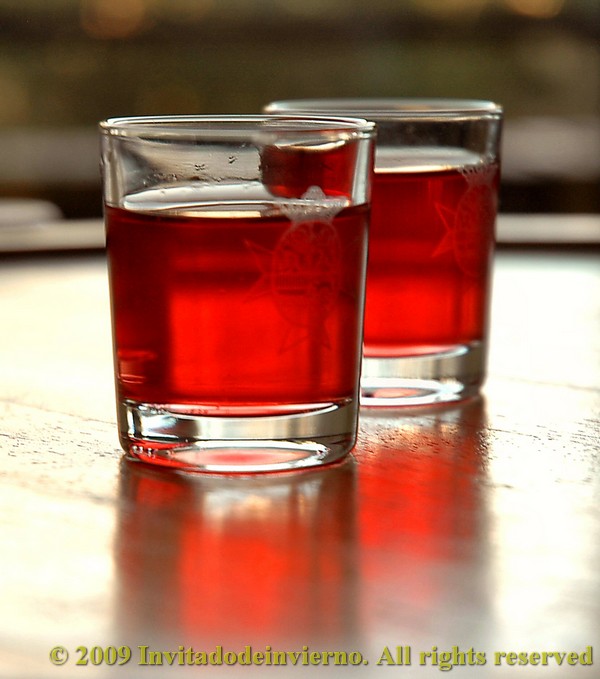
I want to share something with you: my kitchen is one of my favourite places. It has a southern exposure, that means scorching heat in the summer but simply lovely autumn and winter afternoons... Like right now. I go through my many cookbooks sitting there on our bar stools, at our table, and sometimes I take my laptop too. I was there when I received another CSN gift code to giveaway among my readers (are you there?). It's time to start planning Christmas shopping already, don't you think? Maybe you'll also fancy the main ingredient in this recipe for your celebrations. This is a great way to use up sparkling wine or champagne leftovers, now that Christmas is approaching (yes, summer was over and the next thing you know is Christmas is around the corner). But my conscience is at ease because, after all, this is a fridge-cleaning recipe... ahem. Although in my household it is not a common occurrence that there is sparkling wine left while I am around. I know that the first step to overcoming a problem is acknowledging it, and I acknowledge it bluntly but I do not want to change. Nononono, no matter what. I looove a good cava. Slurp. But despite my dedication to the cause, life recently provided us with half a bottle that was quietly degassing, poor thing, and I decided to try this concoction I had seen in a French magazine, here. And I liked it, because in addition to having it for dessert, I find it could make an excellent addition to other dishes, also savory... Can you imagine a good liver terrine with diced cava jelly? And pink colored cava can be very decorative.


As for the giveaway, it amounts exactly to $75 to be spent on any of the varied CSN Stores (my favourite is the kitchen&dining section... go figure). And what do you have to do?

  • Just subscribe to my blog on Google Connect and leave word of it in a comment. All readers already subscribed just need to say so to enter. Complicated? ...
  • Deadline: you have till November 20th, 12pm GMT, to do so, each comment will be given a number and then I will use a random number generator to pick the winner.
  • As usual, unfortunately the giveaway is open only to US and Canada residents.
And now to the recipe. This dessert is so easy to make that I feel almost embarrassed to explain how. Here we go.

Sparkling wine jelly
Yields 2 plentiful glasses or 3 scant glasses
  • 350ml cava brut or other sparkling wine (watch for the sweetness, cava brut is not very sweet, so reduce the sugar or agave nectar if using a sweeter wine)
  • 4 sheets gelatin
  • 2 tbsp agave syrup (say 3 tbsp sugar)
  • Red berries for garnish
Cava jelly 3
  1. Hydrate the gelatin sheets in a bowl with cold water according to the package instructions.
  2. Take a cup of the wine and warm it up to about 60-70ºC, the minimum amount possible in order to dissolve the gelatin. Only a portion is used to prevent degassing the wine completely. Add the softened gelatin and stir in the warm wine until it is dissolved.
  3. Then add the remaining wine and mix thoroughly. Choose some nice wine glasses and pour the jelly very carefully to avoid splashing on the sides, for the sake of an "elegant" presentation just like we deserve... Cool to room temperature first (do not put hot things in the fridge, that's ecological terrorism.) When cooled, transfer the glasses to the fridge to finish setting.
  4. Serve chilled garnished with the red berries, a perfect match.
Cava jelly 2

So what do you think? Do you fancy a glass of chilled cava? I do. (And how very eye-catching are glass objects...)

Eager to know more?

Sephardic veal stew

>> Wednesday, October 13, 2010

Sephardi stew 2

This dish has been a classic in my family for some time already. It comes from one of my favorite cookbooks, in my collection for over 10 years, The Sephardic Kitchen, by Rabbi Robert Steinberg. It's one of those cookbooks that reads like a novel, and brings us closer to the kitchen of a culture that keeps many ties with Spain. The writing is very entertaining and the recipes are mingled with Sephardic folktales. It contains lots of very healthy and tasty dishes, many of those I still have to attempt... This hearty stew is one of those cases where the result is more than just the sum of its parts. A paradigmatic representation of this is a good torrija (Spanish style French toast), which makes you doubt that its creamy interior can consist only of bread soaked in milk. The succulent sauce of this stew is a perfect combination of ingredients, without any dominating over the others, and in which they all combine to create "something else" beyond the mere mixture of red wine, vegetables, honey and spices. You see, this amazing sauce inspires me and brings out the poet in me... Mmm, yum. Olé to this sauce...


And now to some historical background (an excerpt from this site), because in Spain most people know what Sephardim are, but I doubt the same holds outside Spain:

Sepharad is the Hebrew word for the Iberian peninsula that includes Spain and Portugal. (...) Jews lived in Spain long before the Visigoth (Germanic) tribes invaded in 412, however after the Moorish invasion of Spain in 700, there was a large influx of Jews immigrating to Spain. In the tenth and eleventh centuries, Spanish Judaism flourished under Muslim rule, producing poets, scholars, and courtiers - what is known as "the golden age of Jewry." By the mid-thirteenth century, however, the Christians controlled all of the Peninsula except for a small area from Granada to the Mediterranean. In March, 1492, King Ferdinand and Queen Isabella decreed the expulsion of the Jews from Spain. Many Jews converted or left while others went to Portugal, where Judaism could still be practiced freely. But Portugal expelled its Jews in 1497, and the tiny kingdom of Navarre followed suit in 1498. Judaism could be practiced openly nowhere in the Peninsula. Driven from home, the Sephardim established their own congregations in such places as Morocco, Italy, Egypt, the Ottoman Empire, the Land of Israel, and elsewhere.

Mr. Steinberg tells us about this sopado, original name of this dish in ladino, the Judeo-Spanish language:
It is a sweet and spicy veal stew, a typical Sephardic dish that was popular throughout the Jewish Mediterranean. The seasoning varies from one community to another. The recipe that follows is that used in Thessaloniki, Macedonia and northern Greece. Sopado reminds of Hungarian goulash, which only differs in the amount of onion and paprika employed.
Claudia Roden, in The book of Jewish food, tells us about Sephardic cooking:
What we call Sephardi cooking today is the cooking of Mediterranean and Oriental Jews. There are four broad styles. Judeo-Spanish, which is Turkish and Balkan, is the cooking of the Jews of Iberian ancestry who went on to live in the Ottoman heartlands. North African or Maghrebi Jewish cuisine includes Moroccan, Tunisian, Algerian and Libyan. Then there is Judeo-Arab cooking, which is at its best in Syria and Lebanon, and the Jewish cooking of Iraq and Iran. (...) Sephardi cooking is sensual, aromatic and colourful. It makes use of anything that gives flavour - seeds, bits of bark, resins, pods, petals, pistils and flower waters. The Sephardim had a sunny, hedonistic nature (...) good eating has always been part of their traditional Jewish life. Their cooking is of a kind that lifts the spirits. The warm and sunny world they lived in had something to do with this, as had their way of life and historical experience.

Sephardi stew 3

Sephardic veal stew
  • 1,5kg veal or beef for stewing, cut into large dice
  • 8 scallions
  • 500g onions
  • 4 cloves garlic, peeled
  • 2 tsp Spanish sweet pimentón
  • 1/2 tsp Spanish hot pimentón (if the stew is aimed for children as well, you can ommit this and add the same amount to the sweet pimentón)
  • 1/2 tsp allspice
  • 1/4 tsp ground cloves
  • 1 stick cinnamon
  • 2 bay leaves
  • 1 cup beef stock
  • 1 heaped tbsp honey
  • 2 cups tomato sauce
  • 1 large glass red wine
  • Olive oil for frying
  • Salt to taste
It's an easy dish to prepare:
  1. Season the meat and heat the oil in a saucepan with a lid to medium-high heat. Stir-fry the meat in batches to seal (I use a cocotte or Dutch oven, which works great for this task). Set aside.
  2. Cut the veggies and stir-fry in the rendered meat fat. When the vegetables are thoroughly soft, add both pimentones and fry the mixture for another 2-3 minutes, but not longer otherwise the pimentón can get a bitter taste. Add the allspice and ground cloves and sauté another minute.
  3. If you are making the sauce in a pan, at this point add the broth and deglaze the bottom. If you are using the Thermomix, also add the stock and at this point you can process the sauce to smooth. I prefer it that way, like a thick, velvety sauce, but I leave it to your taste. Although I do it, the original recipe does not calls for processing.
  4. Then add all remaining ingredients: cinnamon stick, bay leaves, honey, tomato sauce and red wine. Stir well.
  5. Return the reserved meat to the pan, cover well and cook over low heat for about two hours, it may be longer or shorter depending on the toughness of the meat (for example, the last time I cooked this dish one and a half hour was enough). It is not usually necessary to add more liquid, as the mixture of wine, stock and tomato is usually sufficient for a suitable consistency.
  6. When the meat is tender, add salt, further heat for a couple of minutes for the salt to mix and dissolve and check the seasoning. Adjust if necessary. The original recipe calls for a quarter cup of lemon juice at the end of the cooking, but I never add it because I don't quite like the idea and don't miss it in the finished stew.
Sephardi stew 1

Like most stews, this stew is more tasty the next day, when all the flavors have developed and permeated the meat. For that, and because it is delicious, it is a dish that I cook often whenever I have guests, because I can prepare it the day before. Accompanied by a good rice or baked potatoes with herbs it makes a real fiesta dish.

Like a Sephardim would say: Berajá i salú...

Eager to know more?

Mini Ibérico pork pot pies and a giveaway!

>> Thursday, February 4, 2010

Mini potpie 2

This is my first giveaway ever and in spite of my usual "British" composure (although I'm nothing like British), I must admit I'm pretty excited. I was recently contacted by the people from CSN Stores, which boasts over 200 specialty web-based stores (check out their stools! I have a high table in my kitchen with bar stools, and I wish the variety of bar stools was that wide in Europe). If you visit their site, you'll find a lot of things you need and a lot of things you don't need, but would kill to have! After browsing their stores looking for some interesting goodies to giveaway, I've opted for the cutest Le Creuset ramekins. I happen to own a couple of them myself, two vibrant-red cuties, which make a lovely setup for individual soufflés and gratins, miniature pot pies, clafoutis or cream desserts. And now I'm giving away 6 of these lovely pieces of bakeware to my readers. So keep on reading to learn about how to enter.


Giveaway details: The only thing you have to do to enter the giveaway is to leave a comment about the kind of dish you'd love to use these ramekins for. Easy, isn't it? ;-). Please include your e-mail or make it visible in your profile. As usual, each comment will be given a number and I will post one winner, which will be chosen at random by a random number generator.

But there's more. Besides the mandatory entry to enter the giveaway, you can increase your chances by making extra entries. Just leave a comment letting me know the following:

  • You've suscribed to my blog on Google friend connect
  • You've tweeted about the giveaway (please leave the link!)
This giveaway is only open to US and Canada (sorry, other international readers) till February 20th at midnight (CET). The prize will be sent by CSN. I will collect all comments and use random.org to draw the winner.

And now to the recipe. I found it would be a good idea to use my ramekins to prepare something that could illustrate how beautiful any dish looks in them. So here's a simple and comforting recipe for cold winter days, a tapa-sized pot pie type of dish without cream nor butter, with a Spanish twist coming from the sweet wine used in the sauce and the Iberico pork meat. Lovely served for brunch or as an appetizer.

Mini potpie 3

Mini Ibérico pork pot pies
Yields 4 servings
  • 1/2 kg diced pork sirloin (I used Iberico pork, which is an indigenous free-roaming pork breed, fed mostly on acorns, widely known for its wonderful flavor, like in Ibérico ham. Of course any type of pork will do, only the dish will taste different)
  • 16 prunes, pitted (or more, just figure out how many you want in your ramekin and multiply by 4)
  • 3 scallions
  • 1 large handful chestnuts (if uncooked, you can roast them in the microwave oven for a while. First cut a slit on the shell to prevent them from bursting)
  • 1 cup sweet white wine (Spanish moscatel is best)
  • 1/2 tbsp all-purpose flour
  • 2 pinches thyme
  • Virgin olive oil for frying
  • Salt
  • A sheet of puff pastry for the pot cover (I used some leftovers of homemade flaky pastry)
  • 1 egg for brushing the pastry
Lightly salt the pork dices. Pour 3-4 table spoonfuls of olive oil in a heavy pot (I use my French oven) and fry the chopped scallions on low till wilted. When done, add the pork and stir-fry it on high heat, to seal the juices. Then add the flour and stir for the flour to toast lightly. Add the shelled chestnuts and the prunes, pour the wine and add water enough to cover the meat. Add a teaspoon of salt and let the whole thing simmer on low heat till the sauce is thickened (don't let it thicken completely, as it will thicken further in the oven) and the meat is tender, around half an hour, depending on how tender the meat actually was. Some of the prunes may fall apart in the process, but this only adds to the sauce richness. If you prefer to find firmer prunes on your plate, just add them half way of the cooking. Check for saltiness when the meat is cooked and adjust if needed.

Mini potpie 1

Heat up the oven to 200ºC in the meantime. Divide the stew among the ramekins, fill them almost to the top. Add a little water if you find the stew to be too thick. Roll the puff pastry on a floured surface till 0.5cm thick or thicker if you prefer. Find yourself a round cutter, cup or glass that can yield circles of pastry slightly larger than the ramekins. Cut four circles and set aside (you can see I was lazy and ended up cutting squares... they add to the pot pies rustic look). Brush the edge of the ramekins with some beaten egg and lay the pastry circles on them, pressing the outer edge to seal. Brush the surface with some more beaten egg. Then bake in the oven for 20-25 minutes, until the pastry is golden. Hmmmm, I thoroughly enjoy the moment of breaking the crust... in awe... and releasing all the aromas... Have a forkful of stew and a bite of the crust at the same time... yum.

Eager to know more?

Salmon escabeche

>> Tuesday, January 19, 2010

salmon escabeche
I've said it before, I'm a real fan of salmon. It's a flavorful fish and very versatile, either smoked or fresh. And besides it's an oily type of fish, brimming with healthy fatty acids. On the other hand, I love those dishes you can keep for several days and that get even better after some time, like escabeches, which by the way are incredibly easy to prepare. There are thousands of escabeche recipes, buy I've used the recipe by Spanish chef Martín Berasategui, from his book Cocina en casa con Martín Berasategui, that I got from my mother a few days ago. Of course I've tweaked it a tiny bit... couldn't help myself. This escabeche is the type that includes Spanish pimentón, like the recipe used for the ubiquitous canned mussels in escabeche, different from the one I use for tuna fish.


I like that this very old preservation method, said to originate in ancient Persia, from where it spread all over the Mediterranean to end up as a dish identified as genuinely Spanish, can help us to make refined dishes today.

Salmon escabeche

  • 850g fresh salmon
  • 2 tbsp coarse salt
  • 1 tbsp black pepper grains
  • 2 bay leafs (I doubled the amount, I love bay)
  • 10 sprigs parsley, chopped
  • 2 sprigs thyme (I used plain dried leaves, a couple of pinches)
  • 1 clove
  • 2 tbsp sweet Spanish pimentón (I strongly recommend you to go for the real thing, the flavor is very distinct)
  • 1l virgin olive oil (I think this amount is just crazy, I covered the salmon in oil and half a liter was more than enough. And please, don't use any. Other. Type. Of. Oil)
  • 4dl cider vinegar (I also changed this to adjust it to the oil amount, I used around 1,5dl)
  • 1dl good white wine (Berasategui doesn't include wine, but I like it!)

Get yourself a good-looking and skinned piece of salmon. Cut the salmon in cubes (let's say 2"-3" pieces) and lay them on a shallow pot, large enough to keep the salmon in one layer. Avoid metallic utensils when using vinegar, as it reacts with some metals. Sprinkle the salt first and then the rest of the herbs and spices. Toss the salmon lightly to distribute more evenly. Then pour all three liquids, wine, vinegar and oil and put the pot on the stove; turn the heat on. Bring slowly to a boil and turn the heat off immediately the moment the first bubble appears. Cover with a lid, set aside and let the salmon cook in the remanent heat while releasing its juices.

salmon escabeche
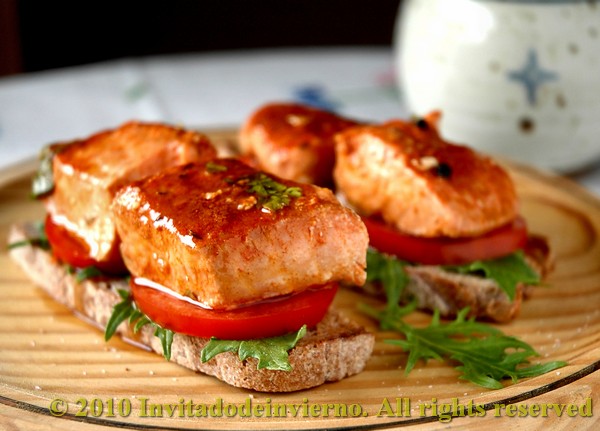
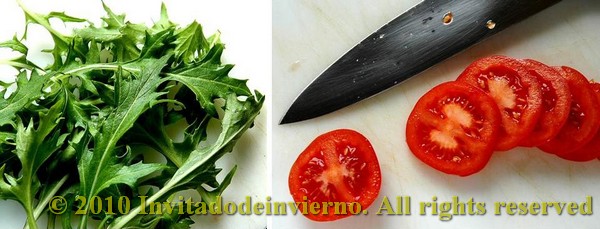
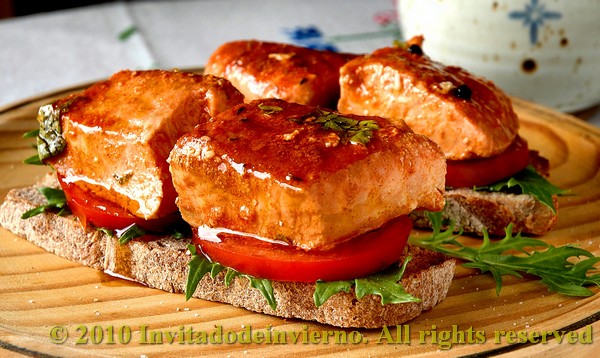
My dear Mr. Berasategui lacks restraint because he instructs to eat the salmon immediately, just after cooling. But I preferred to leave it to rest overnight, just because I have more self-control... ahem. Now seriously, I believe this type of dish needs some time for the flavors to soak into the fish. It easily keeps one week or even longer in the fridge. Escabeche is always eaten at ambient temperature, always let it warm up to ambient. This escabeche is simply delicious as a tapa or pincho on toast with some finely sliced tomato and some greens. It's also brilliant flaked on a salad, on top of boiled and sliced potatoes... just feel free to experiment!

salmon escabeche

Eager to know more?

Spelt carquinyolis or Catalan cantuccini

>> Tuesday, January 5, 2010


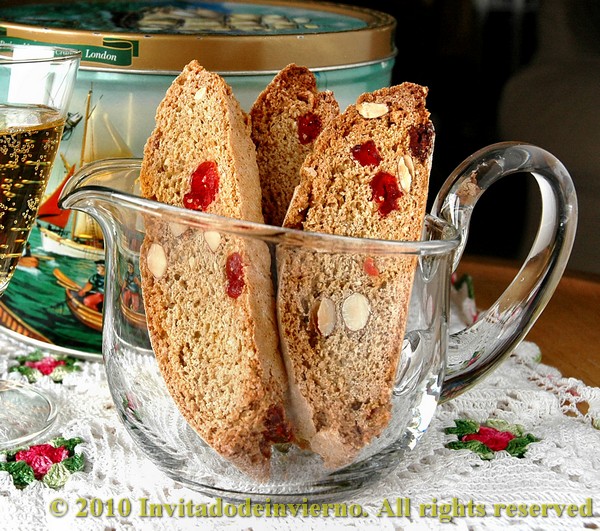
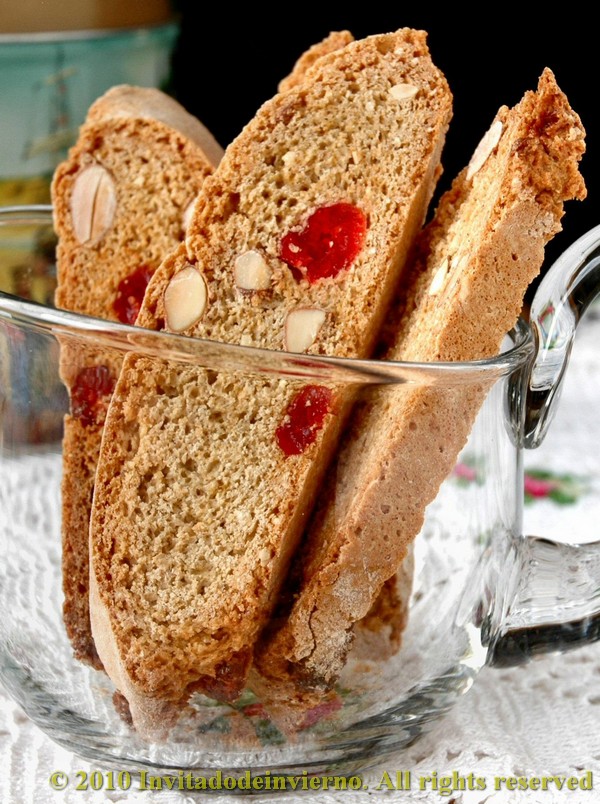
No, no, no... these are not cantuccini... these are carquinyolis... totally different... (ahem). I'd been wanting to make these typical Catalan cookies for a long time (do I start my posts like this too often?...). As you probably know, this type of twice baked cookies, first as a loaf and then sliced, are known as cantuccini in Italy and they also exist in Jewish ashkenazi cookery, with the name of mandelbrot, almond bread. They are typical in Catalonia, on the Northeast corner of Spain. When I was a child we used to spend part of our summer holiday camping in Catalonia and my parents used to buy carquinyolis. I didn't eat them though... didn't know what I was missing.


I've found the recipe at the lovely Catalan blog La cuina vermella. I've increased the amounts by 50 %, I've used white spelt instead of regular flour, and I've "adulterated" the cookies by adding some dried cherries... just to add a colour touch (heresy! I beg the Catalans pardon... please bear with me).


Spelt carquinyolis (yields approx. 35 carquinyolis)

  • 600g spelt flour, white (all-purpose flour can be substituted, of course)
  • 350g sugar
  • 90g almond meal or ground almonds (what's the right name?)
  • 100g unskinned, unroasted almonds
  • 90g dried cherries (or any other colorful dried fruit)
  • 1 tbsp leaven, not completely heaped
  • 3/4 tbsp cinammon
  • Lemon zest
  • 4-5 medium eggs (it depends on the size of the eggs, the dough mustn't be dry, but sticky) and another egg for brushing the loafs before baking
Put the almonds in a bowl with water to soak. Weigh the dry ingredients and make a well in the middle. Add the eggs in the well and mix slowly and carefully with the dry ingredients. Knead the resulting dough until all the liquid has been absorbed. If the result is too crumbly, just add another egg. Finally add the almonds, rinsed and dried with a paper towel, and the cherries. Knead to incorporate.


In the meantime heat the oven to 180 ºC. Divide the dough in two and, on a well-floured counter, form two loafs that can fit in one baking sheet. Transfer the loafs to the sheet, lined with parchment paper. Brush the loafs with the beaten egg (I forgot this step!). Put the loafs in the oven and bake half an hour. The loafs have to be somewhat thin, as they rise quite a lot in the oven. After 30 minutes, try for doneness with a toothpick. Take them out to a cooling rack and leave to rest for 5 minutes. Then slice them with a good serrated knife into 1 cm-thick slices, more or less. I'm not capable of cutting thinner slices. Then put the slices back on the baking sheet and back into the oven for 10 minutes to brown. Turn them once when half baked, to brown on both sides. When done take them out to cool on a rack.


For those who've never had this type of cookie before, they are hard and very crunchy. Catalans dunk them in mistela... mmm. I vouch that at home we have dunked them in cava last Christmas. A lot of cava. Really a lot. Loads of cava. I don't know if this is accepted as a traditional way to have carquinyolis, but what the hell, they're delicious that way...

Eager to know more?

Mulled rosé wine

>> Sunday, December 27, 2009

mulled rosé wine
I love the spiced hot wine typical from Northern and Central Europe, mulled wine, glühwein, whatever... Two of my in-laws live in a nearby street and they have a German neighbor. I remember a copious snowfall, some five years ago, that covered all the village streets in white. It happened on the weekend, so we immediately went out on the street with the kids for a nice stroll on the new snow. This German guy didn't think twice and he went out on the street offering German stollen and some glühwein to celebrate the snow with his neighbors... he was chatting with my in-laws, so we were lucky to be invited. That's exactly the perfect way to taste glühwein...


This time I've bottled some spiced wine in cute bottles for Christmas gifting. For a more transparent and appealing look I've used rosé wine, even though the tradition calls for red wine... I hope the Germans aren't offended, sometimes I'm very disrespectful regarding traditions... I've also made it sugar-free, to help relieve the richness of the Christmas fare.


mulled rosé wine
Mulled wine or glühwein
Yields 3 half a liter bottles

  • 2 bottles of good rosé wine (but not excellent!)
  • 2 sticks cinammon
  • 1 vanilla pod
  • 4 whole cloves
  • 4 allspice grains
  • 4 tbsp agave syrup (7 or 8 tbsp sugar, though the sweetening depends on the type of wine and personal taste)
  • 2 tbsp ginger syrup (optional, just if you happen to have it handy, otherwise add another tbsp agave)
About the ginger syrup, I had some leftover from candying ginger, so I used it.

Put all the ingredients in an enameled pot and heat the whole thing up, but don't bring it to a boil. Just leave it to infuse. As we were not going to drink it straight away, I left it to rest overnight, for all the flavors to develop.


mulled rosé wine
The day after filter the wine (I used a paper percolator coffee filter) and transfer to bottles. You can add some spices to the bottles. I added some allspice which I thought would look good at the bottom of the bottles... but it floated, damn. Give the bottles to your loved ones and advise them to serve it hot.

Mmmm, how I long for the snow now...

Eager to know more?

Sugar-free Christmas compote, Spanish style

>> Tuesday, December 15, 2009

Christmas compote
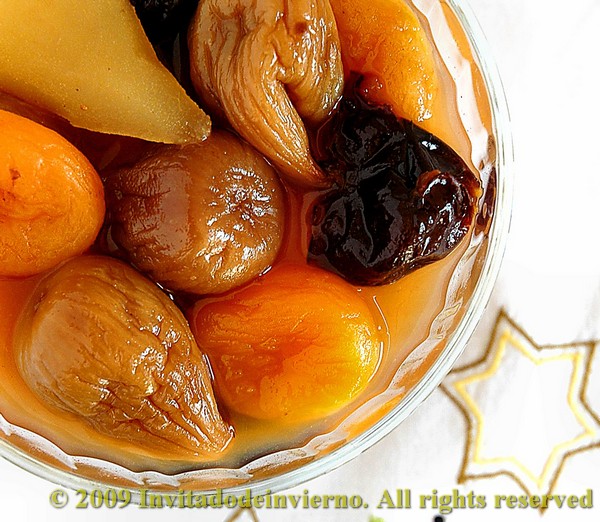
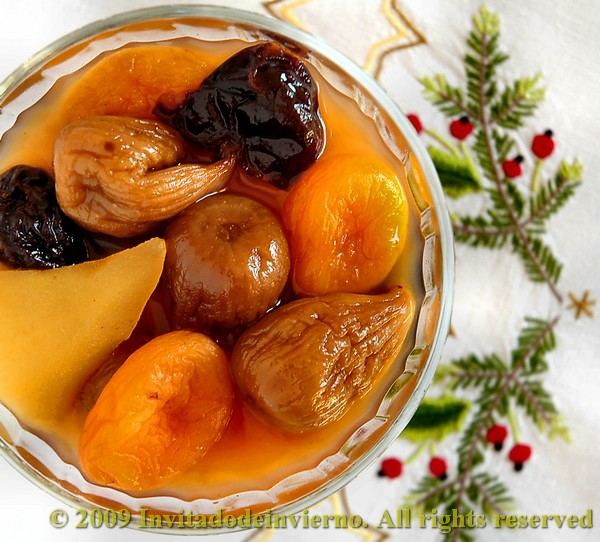
This is a very classic dessert in many countries of Europe, with different tweakings. In my crusade against common sugar, I decided to try and make it sugar-free. It's incredibly easy and you can get as tipsy as ever while eating alcohol-oozing-fruits, but with less bad conscience... my family is gonna give me a medal for that, I know it. Well, most of the alcohol just evaporates during the cooking. Pity. Instead of using red wine for poaching the fruit, which is the traditional ingredient in Spain, I prefer sweet wine, preferrably light in color for a nicer look and a milder taste. I looove sweet wine and besides you don't need to add as much sugar or sweetener in this case, as the sweet wine is... well, sweet, brimming with healthy fruit sugars.


Regarding the fruity ingredients, it's totally up to you. I'm giving here the fruits of my choice, but that's very personal. Some people prefer it with more fresh fruit, others with more dried fruit... Here's my take on this dish:

Sugar-free Christmas compote, Spanish style

  • 250 g pitted dried apricots
  • 100 g pitted dried dates
  • 100 g pitted dried prunes
  • 200 g dried figs
  • 2 firm pears (Conference for example)
  • 500 ml white sweet wine like moscatel (you can use a tawny port too)
  • 500 ml water
  • 1 stick cinammon
  • 1 tsp allspice (optional)
  • 1 dash orange extract or 1 tsp orange zest (also optional)
Some people like to add apple too, but the apples must have a very firm flesh, so that they don't "deconstruct". Please use the best quality dried fruit available. It makes a difference. In Spain dried fruit is very popular and usually of good quality. Dried fruit is eaten in tons around Christmas.

The preparation is pretty straightforward. Peel the pears, quarter them and put all the ingredients together in an enameled pot. Bring to a boil. Simmer until all the fruit is tender, around 40-50 minutes depending on the ripeness of the fresh fruit and the freshness of the dried fruit. I boil the compote without any sweetener and then try for sweetness when done, because you can always adjust it later. In this case the result was, in my humble opinion, sweet enough, which means I was using a VERY sweet wine. So I didn't add anything else. If more sweetness is needed, please avoid filthy synthetic sweeteners like aspartame and use natural sweeteners like agave syrup and maple syrup.

Christmas compote
If you find the liquid too thin, just add some powdered gelatin or agar-agar to thicken it a bit. Remember that without sugar you don't get a syrupy liquid.

There's something that's often overlooked when subtituting sweeteners, whether natural or synthetic, for sugar: its preserving properties. Sugar is a hygroscopic substance, which means that it "scavenges" the water surrounding its molecules. Therefore the sugar molecules "steal" the water that microorganisms need to thrive. I can't give you the reference where I found this... I don't remember. Believe me, I'm a chemist... (pause)... (silence)... you, at the end of the class, I won't tolerate any giggling... Well, that's why this sugar-free compote must be kept in the fridge and I guess its "shelf-life" will be shorter than if it was sugar-full. Of course, you can always store it in jars and sterilize them, like any other preserve. But I'm sure the compote will have no time to go bad at my home. This compote is delicious served with vanilla ice-cream or on a waffle cup with custard... yum.

Eager to know more?

Another chestnut and squash soup

>> Wednesday, October 7, 2009


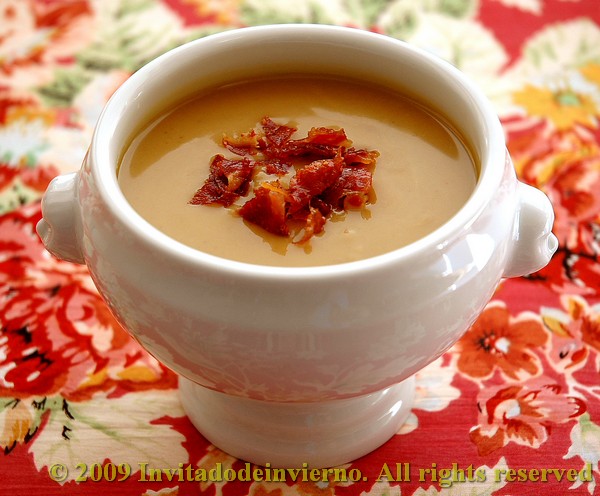
Fall is here. I still keep a certain amount of dried chestnuts in my pantry. My favorite fruit store has squash. Saturn is aligned with Jupiter. Everything pushes me to prepare a flavorful and comforting soup. It's not a very original proposal, but I've renovated the recipe by adding an obscene amount of alcohol...


Boozy chestnut and squash soup

  • 1/2kg squash
  • 250g dried chestnuts (equivalent to 400g fresh chestnuts, though I prefer them dried, at least you don't need to peel them)
  • 1 large onion
  • 1 generous glass sweet wine (OK, two glasses, one for the soup and another one for the cook... I used a Pedro Ximenez wine, Dos pasas, but any good tawny Port or moscatel would do)
  • 1 pinch nutmeg
  • 1l water, chicken or vegetable stock
  • Oil for frying the onion
  • Salt to taste
If you use dried chestnuts, leave them overnight in water to soak. Afterwards I thought it would have been maybe a good idea to soak them in the wine, the flavor could have been stronger. The next day heat the oven to 180°C. Brush the squash portion with oil and roast it for around half an hour till cooked through. In the meantime, boil the chestnuts in the wine and prepare the sofrito with the finely minced onion and a little oil. Test the squash with a knife for doneness. If it's cooked, peel it, cut it in several pieces and add to the chestnut pan. Add the sofrito when the onion is thoroughly soft. Then add the liquid and boil everything until the chestnuts are tender.


Finally add the nutmeg and the salt. Puree the mixture in a blender until very fine. Of course I use my Thermomix. Use a foodmill if your machine is not powerful enough to get rid of little hard chestnut pieces. Once everything is pureed, adjust the salt to your taste. I had to add a lot, more than 2 teaspoons, because all the ingredients are sweet in fact. Adjust the liquid also if needed, depending on the thickness.


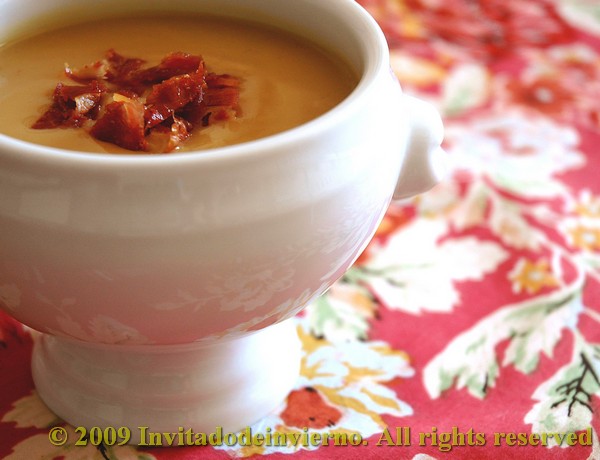
I loved the result, you can clearly notice the sweet wine flavor, therefore I recommend to use a medium-high quality wine (well, not too high, that would be a sin). Funnily enough, you can clearly make out the different flavors: the sweetness of the squash and the onion, and the earthiness of the chestnuts. For serving this kind of soup I find that little slivers of bacon or jamón, fried or roasted till very crispy, are a match made in heaven (no, don't fry or roast Ibérico ham for this! That would be another sin). I cut the slices in little pieces and microwave them. It's quick, clean and easy. Mmmm, this soup matches the Sunday roast perfectly...

Eager to know more?

Postre de músico or musician's dessert

>> Wednesday, September 23, 2009


The Autumn has arrived, my favorite season, and it feels like eating those foods that used to be seasonal, like nuts, which started to be available around this time of the year after the harvest. All fruits and nuts were seasonal not so long ago and we always related them to a certain time of the year. Now we can find almost anything at any time of the year and to tell the truth... a lot of the charm is gone. And I won´t talk about the luxury in bringing food from the Southern hemisphere to the Northern so that you can pamper yourself with oranges in Summer, for example. Nor of how fruit kept in industrial freezers have their season artificially prolonged, so that what we eat is not at its best regarding ripeness and flavor nor of course has the optimal nutrient content. These matters could fill one hundred posts (sigh).


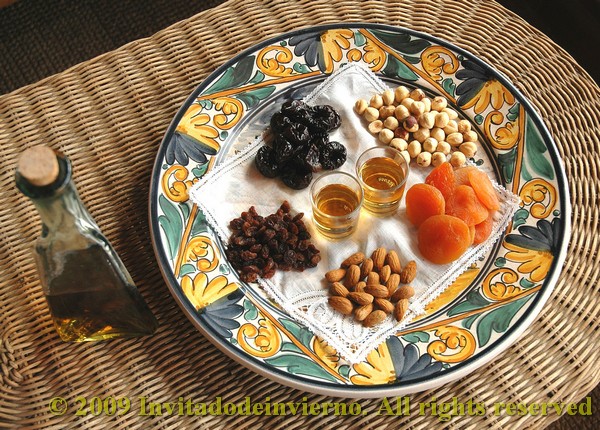
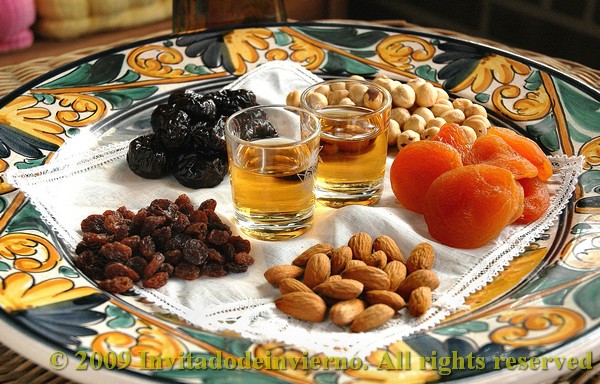
I believe I first tried this dessert in Andorra a long time ago. D. and I love nuts, we eat a lot of them at home. So a selection of our favorite nuts and dried fruits is a very good option for dessert, especially if you combine them with a glass of moscatel... That's exactly postre de músico (músic in Catalan), which means musician's dessert literally, a very traditional dessert in Catalonia. I've hardly found any information about it in the net, but it seems the name comes from the times when traveling musicians used to play in village celebrations and they were invited to eat whatever nuts and dried fruits people had in their homes.


Postre de músico

One handful of each of the following nuts and dried fruits (much better if they're organic):

  • Hazelnuts
  • Pine kernels
  • Almonds
  • Walnuts
  • Dried apricots
  • Dried grapes
  • Dried figs
  • Dried plums

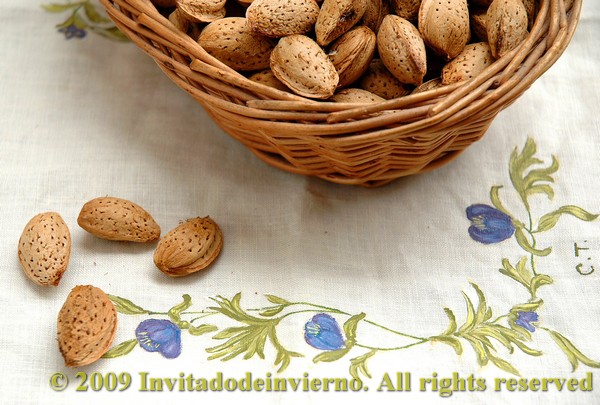
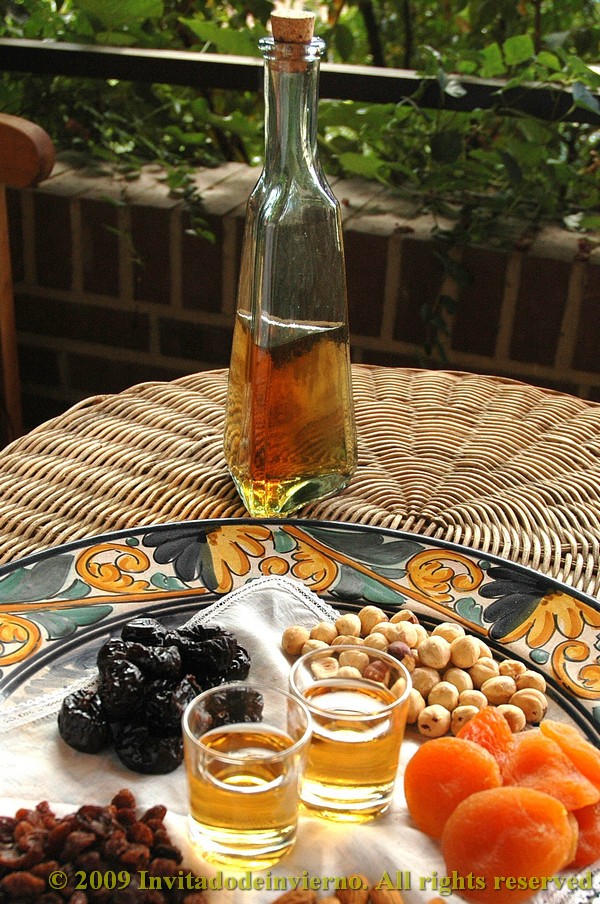
Of course you can vary the ingredients according to your preference or what you have at hand. Put the fruits handfuls on a beautiful large dish, without mixing them, along with the moscatel glasses or a bottle for serving. It couldn't be easier. I used some delicious almonds from my neighbor. A couple of huge branches of his almond-tree overlook my garden. The crop has been enormous this year, the largest in the 9 years we've been living here. It's so frustrating that we are forced to eat such a large amount of scrumptious, hyper-organic and super-natural almonds... We frugal people.


If you have a real sweet tooth you can eat the dessert on waffles, adding honey, maple syrup, custard... you name it. Although there's no need for much garnish if the food is of good quality. And if you have the chance to eat postre de músico on a Sunday afternoon, on a veranda under the already not so warm sun, smelling the Autumn... You should try it.

Eager to know more?

"Shapeless" sourdough bread with wine, rye and spelt

>> Friday, April 24, 2009

Look at the silly title. Maybe to call the post "all-round kitchen leftovers bread" or even "crisis bread", because of using up leftovers, would have been more accurate.

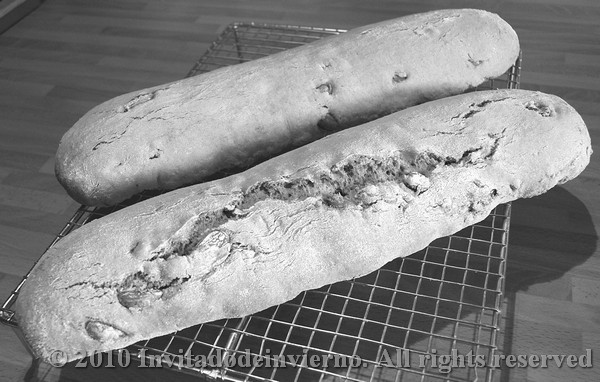
The shapeless thing is because it hardly has any shape, you can see it in the picture. I didn't feel like deflating the fermented dough very much, so I just folded it like a ciabatta, but without much interest. I had a lazy day. Another one. The leftover thing comes from using a mix of a white spelt leftover from a 5 kg sack, mixed with semi-whole rye and spelt, Dutch sourdough and last but not least, some Viña Mayor red wine which had been standing in my fridge for ages. It's not that I don't like wine, but it lately doesn't seem to agree with me and my partner-in-crime prefers beer... damn him. Mr. Lepard, the king of leftovers usage, would be very proud of me.

And... I told myself I could bake half the bread in the artifact that's shown in the picture, just to pass the time. The German name is "Römertopf", the same as the trademark. The meaning is "roman pot", quite nice. As far as I've read it's quite common in Germany. My mother got it as a gift thousands of years ago. She didn't find it interesting to use, so she passed it to me. She knows I love kitchen gear. So far I have used it mostly for roasting chickens. The result is delicious, they get a perfect browned and crispy skin, in spite of the lid, and you get plenty of sauce.

As in any clay pot the heat is well distributed and being that you must soak it in water for 10 minutes before putting it in the oven, all these moisture is supposed to be released inside the pot to keep the food tender and juicy.

Therefore, on a beautiful and warm April night I got down to work... ahem. I'm giving the formula but I don't know what for, it makes no sense:

Leftovers sourdough bread with wine

  • 390 g semi-whole rye and spelt sourdough, 50% hydration, just doubled in volume, perfectly bubbly
  • 130 g red wine (I was afraid to put too much and end up with a black-and-blue bread)
  • 80 g water
  • 120 g white spelt flour (the leftover flour in the sack)
  • 290 g semi-whole spelt flour
  • 2 teaspoons Himalaya salt
  • 2 tablespoons gluten (Mrs. Guru advice, though I didn't dare to add as much as she does
I put everything into my stand mixer (my precioussssss), except the salt, and I mixed it just to blend. I left it to stand for some 10 minutes and then I added the salt. After some brief shakes I left it in an oiled bowl, well covered with a night cap, to proof overnight in the fridge. By the way, after the advice of Nils the Great, I added the wine cold from the fridge.

The next day I took it out of the fridge and left it to temper at around 9 AM. Then I left it ferment for 5 hours, till 2 PM, with an intermediate folding exactly like a love letter. I never get these kind of dough, with spelt and rye, to grow much, so I never quite know when to stop the fermentation. I divided the dough in two parts and folded them like ciabattas, more or less, trying to deflate them as little as possible, and left them standing for another hour. Then to the oven for 45 minutes, previously heated up to 250 ºC. I put then one in the Römertopf (which had been lying in the oven after soaking) and the other one on the tiles in my oven. The latter got 4 water sprays along the first 10 minutes baking. The result is plain to be seen: The loaf in the pot looks wonderful, it's ripped in the middle without any score and has a white floured surface. And I can tell you I got my glasses all misted up when I opened the pot because of the amount of steam inside. The load outside the pot was a lot uglier, too toasted on some sides, and the flour on the surface is not apparent because of the water spraying, I guess. Also the loaf opened down under, uneducated behaviour, what an ill-mannered loaf.

And... the bread is delicious, with a more airy crumb than ever before, I guess because of the added gluten, I don't know. The crust is perfect for me, neither too soft nor too hard, crispy, crispy... mmmm so thrilling. I've already had two slices and I only regret that I've run out of butter, damn damn damn. It has the sour flavour of sourdough, but I hardly notice the taste of wine, it's not even evident in the color. My fear to add too much wine was pointless. Next time I will soak the bread in wine... hics.

Eager to know more?

Followers

About This Blog

Lorem Ipsum

  © Blogger templates Palm by Ourblogtemplates.com 2008

Back to TOP