Related Posts Widget for Blogs by LinkWithin

Chocolate turrón, Spain's Christmas fare

>> Friday, December 31, 2010

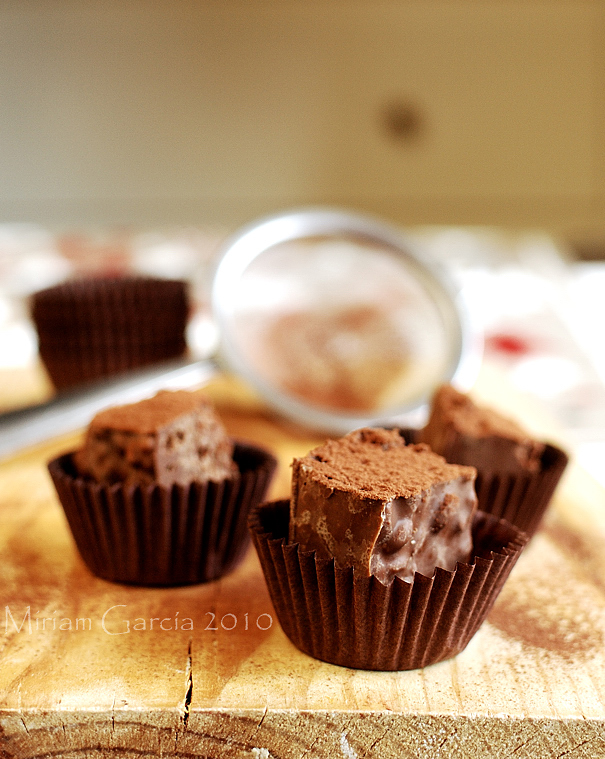
Chocolate turrón 2

A Spanish Christmas celebration is not such without turrón, as it should graze the table of every respectable family during the holidays. Everybody here likes turrón of some type, and those who do not are regarded as hopeless individuals. Turrón is a confectionery typically made of honey, sugar and egg white, with toasted almonds or other nuts, and usually shaped into either a rectangular tablet or a round cake (check here the Spanish pronunciation of turrón). As found in Wikipedia, Spanish turrón may be roughly classified as:

  • Hard (the Alicante variety): A compact block of whole almonds in a brittle mass of eggs, honey and sugar; 64% almonds.
  • Soft (the Jijona variety): Similar but the almonds are reduced to a paste. The addition of oil makes the matrix more chewy and sticky; 60% almonds.


Eager to know more?

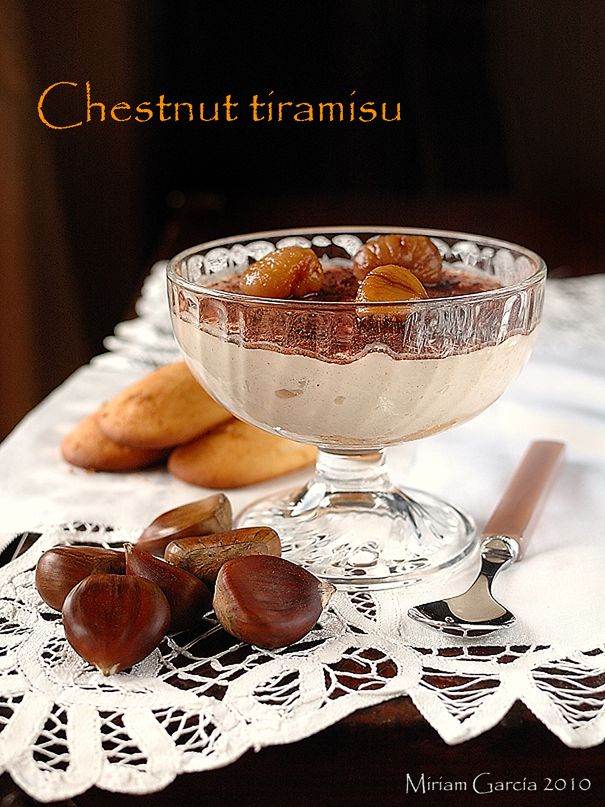
Chestnut tiramisu

>> Friday, December 17, 2010

Chestnut tiramisu 1 script EN

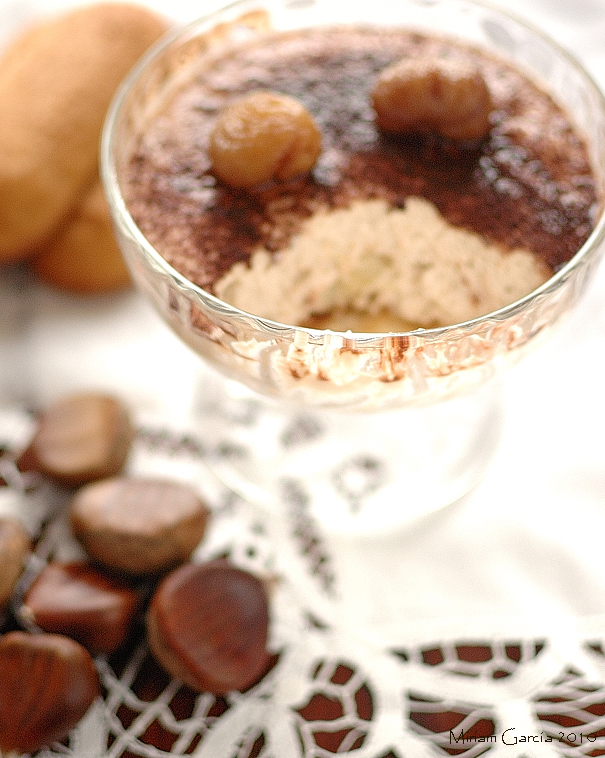
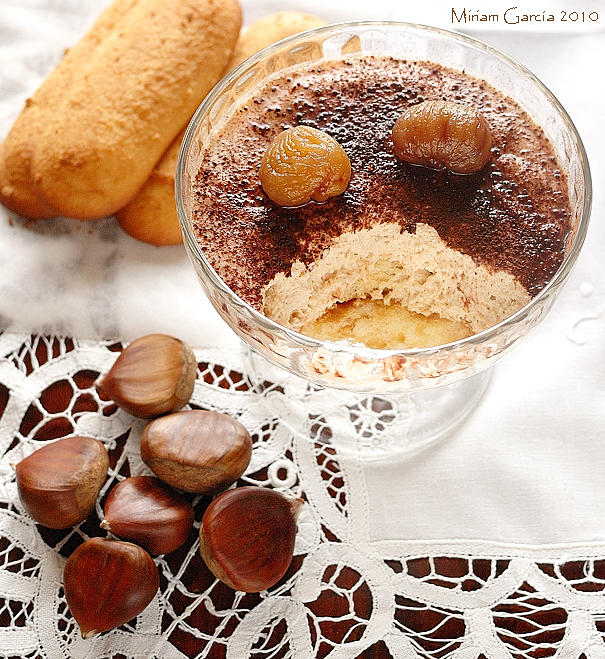
This is a variation on the classic, irresistible and delicious tiramisu, inspired by a recipe of Elle à table (this online magazine has some wonderful recipes, I strongly recommend it if you understand some French) an Italian dish sieved through the French love for chestnuts or marrons. I've modified it because the amount of added chestnut seemed simply ridiculous to me and because the eggs were added without separating whites from yolks and with little mixing, I preferred to separate the whites from the yolks, beating those until stiff as per the traditional method and make a custard with the yolks to increase slightly the conservation period of the tiramisu (I guess the true method of using the raw yolks does not give much leeway for conservation). In short, after cutting here and adding there, in the end the recipe only slightly resembles the original. But I assure you it is a terrific dessert for Christmas as it can be prepared the day before the big feast, leaving time for the yummy ladyfingers to thoroughly soak the syrup and for the custard-mousse to settle. It looks as if I had a lazy day, because I prepared the tiramisu with store-bought ladyfingers, store-bought mascarpone and store-bought chestnut puree... you can not be superwoman full time.

Chestnut tiramisu 3

Chestnut tiramisu
Yields 8 large servings

  • 4 eggs
  • 150g unsweetened chestnut puree *
  • 70g agave syrup
  • 500g mascarpone cheese
  • 350g whipping cream
  • 12-16 soft ladyfingers
  • 60cl strong coffee
  • 30cl maple syrup or golden syrup
  • Unsweetened cocoa for sprinkling
* You can replace the total weight of the puree plus the agave syrup for sweetened chestnut puree or chestnut compote, ie, 220 g, eliminating the agave. Naturally, I recommend testing the sweetness of the cream before adding the egg whites, and add more sugar or syrup if necessary. If you prepare the recipe with sweetened chestnut puree, I recommend to use powdered sugar to adjust the sweetness, because plain sugar will not dissolve well in the custard-cream-cheese mixture.
Chestnut tiramisu 2
  1. Break the eggs and separate the yolks from the whites, keep the latter in the fridge.
  2. Put the chestnut puree in a saucepan with the agave syrup on low heat and stir until well mixed. This is not necessary if you use the sweetened chestnut puree, of course. Add the yolks and heat yet very slowly, stirring continuously, until thickened so that the custard coats the back of your spoon. This can be done in a water bath or double boiler too, although it will take longer. Once the custard has thickened, remove from heat and let it temper a little.
  3. While it cools, beat the mascarpone with the cream until well blended. I added a splash of milk because the mixture was too thick.
  4. Add the chestnut custard and mix well again to blend. You should have a relatively smooth cream that can be dosed in the cups or molds after you add the beaten egg whites.
  5. Chop the ladyfingers and lay them on the bottom of eight cups or pretty bowls, preferably glass ones, one and a half or two per glass, though this depends on your personal taste.
  6. Mix the coffee with the golden or maple syrup and drizzle on the ladyfingers.
  7. Then whisk the egg whites until stiff with a stand mixer, a hand beater or whatever you have on hand.
  8. When thoroughly stiff, add the cream-cheese-chestnuts mixture and mix well with a gentle motion. Distribute the mousse among the eight cups, on the ladyfingers. If it is a bit stiff, tap the glasses carefully on a hard surface to settle the mousse and level the surface. Put the bowls in the fridge to let the tirumisu mousse set overnight. The portions are generous, if you prefer more modest rations you can divide the mixture between 10 and 12 bowls instead.
  9. The next day, when ready to serve tiramisu, decorate each serving with two or three marrons glacé (although I used chestnuts in syrup... they are cheaper and are also delicious) and sprinkle cocoa powder on top of everything in the last minute
Chestnut tiramisu 4

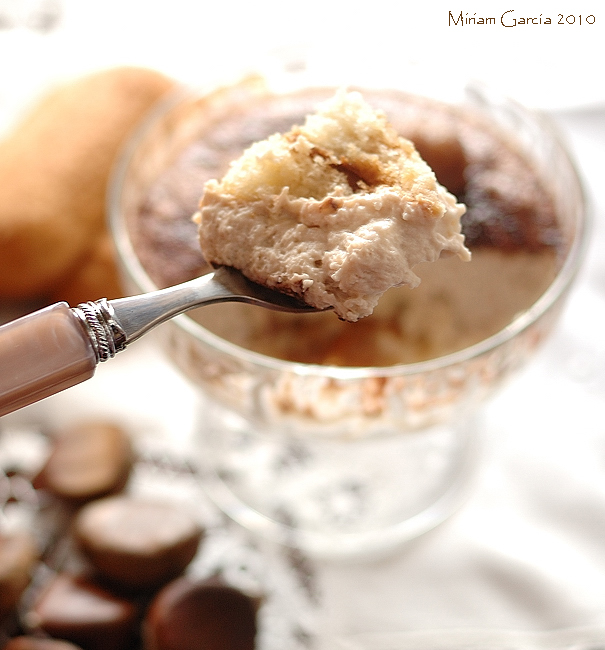
I assure you that the day I prepared it, the dessert was a hit with my guests. The result is a feathery airy and smooth cream with a subtle chestnut flavor, nicely complemented with the wet and sweet ladyfingers. Ideal to impress anyone and an elegant dessert for the holiday ahead of us.

Eager to know more?

Marzipan mousse with Christmas compote

>> Wednesday, December 8, 2010

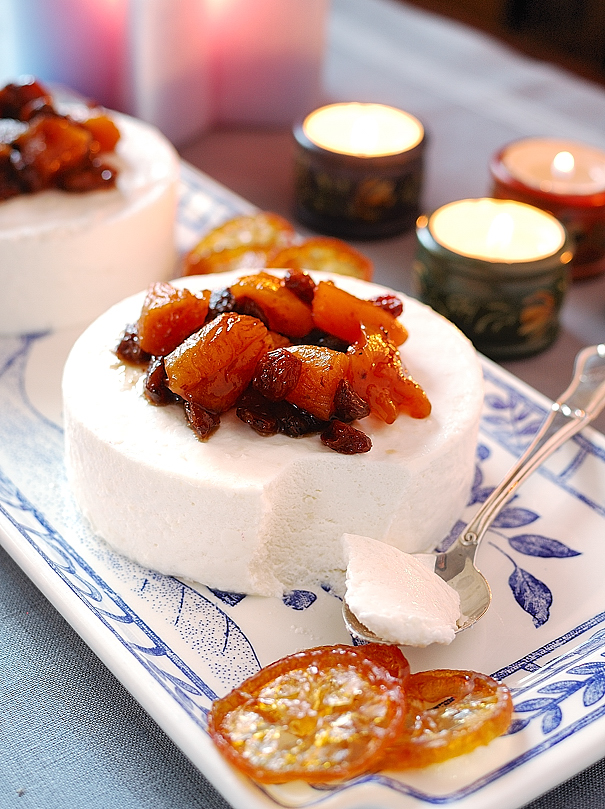
Marzipan mousse 1

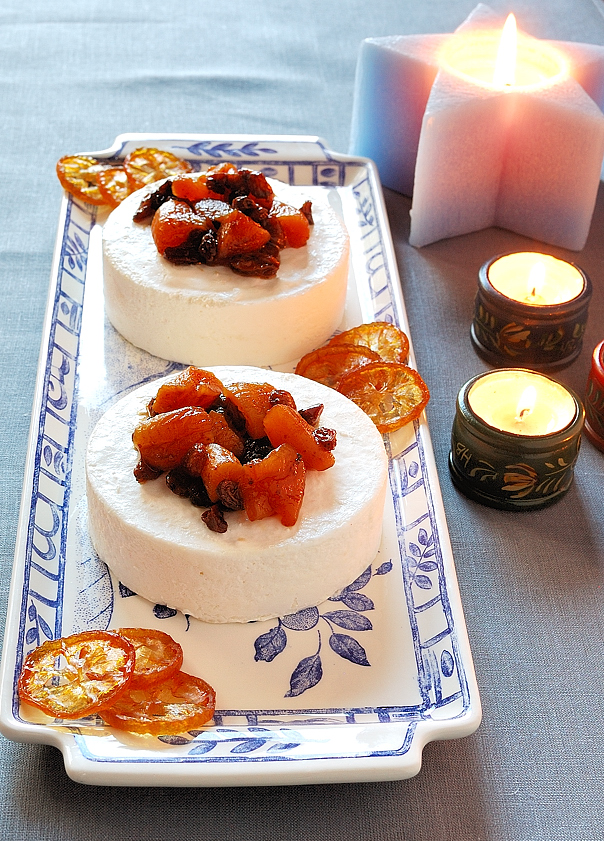
This is a reinterpretation of two typical Spanish Christmas sweets, marzipan and dried fruit compote, combined in one scrumptious dessert. The mousse recipe comes from a book by famous Spanish pastry chef Paco Torreblanca and for the sauce I used my method of cooking the dried fruit in sweet wine, without sugar added as marzipan already has plenty of it. Also it is a great alternative for those who find marzipan overly sweet or heavy... this is a lighter way to eat it.


Marzipan is one of those culinary treasures that we do not appreciate in full because here in Spain we all grow up with it and that makes it all too familiar for us... and we take it for granted. As Claudia Roden tells us, Spain is the largest commercial producer of marzipan in the world, with the beautiful town of Toledo as the center of this trade. In Toledo there is a marzipan museum, where this delicacy is described as the ancient symbol of harmony between Arabs, Jews and Christians in the city during the Middle Ages. In Toledo marzipan is made by grinding equal weights of blanched almonds and sugar until the almond oil that is released turns the mixture into a smooth paste. This paste is modeled with traditional molds and baked in the oven until it browns on top. I will say that the Germans (I have relatives in Germany) also have popular varieties of marzipan, with the peculiarity that their marzipan always carries a tiny ratio of bitter almonds, unlike the common Spanish marzipan. I assure you that bitter almonds give it a very interesting twist.

This mousse caught my attention because it seemed a very different way to taste something so ubiquitous and familiar to Spaniards as marzipan.

For the mousse:

  • 400g milk
  • 500ml whipping cream
  • 250g marzipan
  • 8 sheets of gelatin
For the compote:
  • 100g dried apricots
  • 100g seedless raisins
  • Sweet wine, preferably Muscat
Marzipan mousse 2
  1. Soak the gelatin sheets in cold water as per the package instructions.
  2. Heat the milk to 50°C approx., cut marzipan into pieces and add to the milk. Beat well in a blender or electric mixer until completely dissolved. The mixture must be fine and without very noticeable chunks.
  3. Add the drained gelatin sheets to the mixture and stir well to dissolve. Leave to cool to about 30°C.
  4. When the warm milk and marzipan mixture is tempered, whip the cream to stiff peaks. Add the liquid to the whipped cream in four or five batches and mix gently each time, being careful not to deflate the cream too much.
  5. When everything is homogenized, pour the mousse into whatever molds you want to use. Pastry rings are great for these matters, especially if we want to make small portions, but it is also possible to use a rectangular loaf dish and cut the mousse into slices. The mousse can also be poured into a round mold to use it as a layer in a cake. To easily unmold the mousse first cool it in the refrigerator and then freeze it in the freezer, better overnight. I place the pastry rings on a baking paper placed on a tray. If you use another type of mold, it’s better to line it with plastic wrap to easily unmold the mousse.
  6. The compote-sauce is prepared by cooking the dried fruit covered with the wine. Cook until the fruits are softened and the wine has thickened to your taste and turned into a beautiful syrup. I cut the fruit in small pieces for a more homogeneous look. Let cool. You can make this several days before use, for it is better to leave it to rest so that the flavors mingle.
  7. The day you want to serve the mousse, take it out of the freezer at least 2 hours in advance and transfer it to the fridge. Serve it on a beautiful dish and then top with the compote. This mousse, besides being a different way of eating marzipan (not exactly lighter...), can take advantage of all the marzipan leftovers after the Christmas celebrations.
There you have a very elegant dessert made with most traditional ingredients... this is going to turn into a classic at my household, I am sure. I hope you enjoy it in the upcoming Christmas.

Eager to know more?

Followers

About This Blog

Lorem Ipsum

  © Blogger templates Palm by Ourblogtemplates.com 2008

Back to TOP